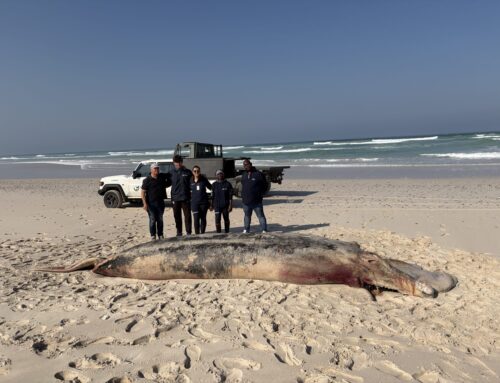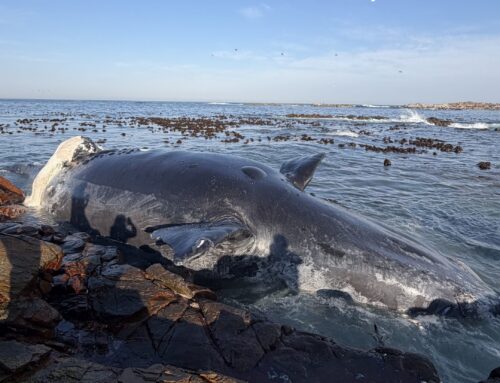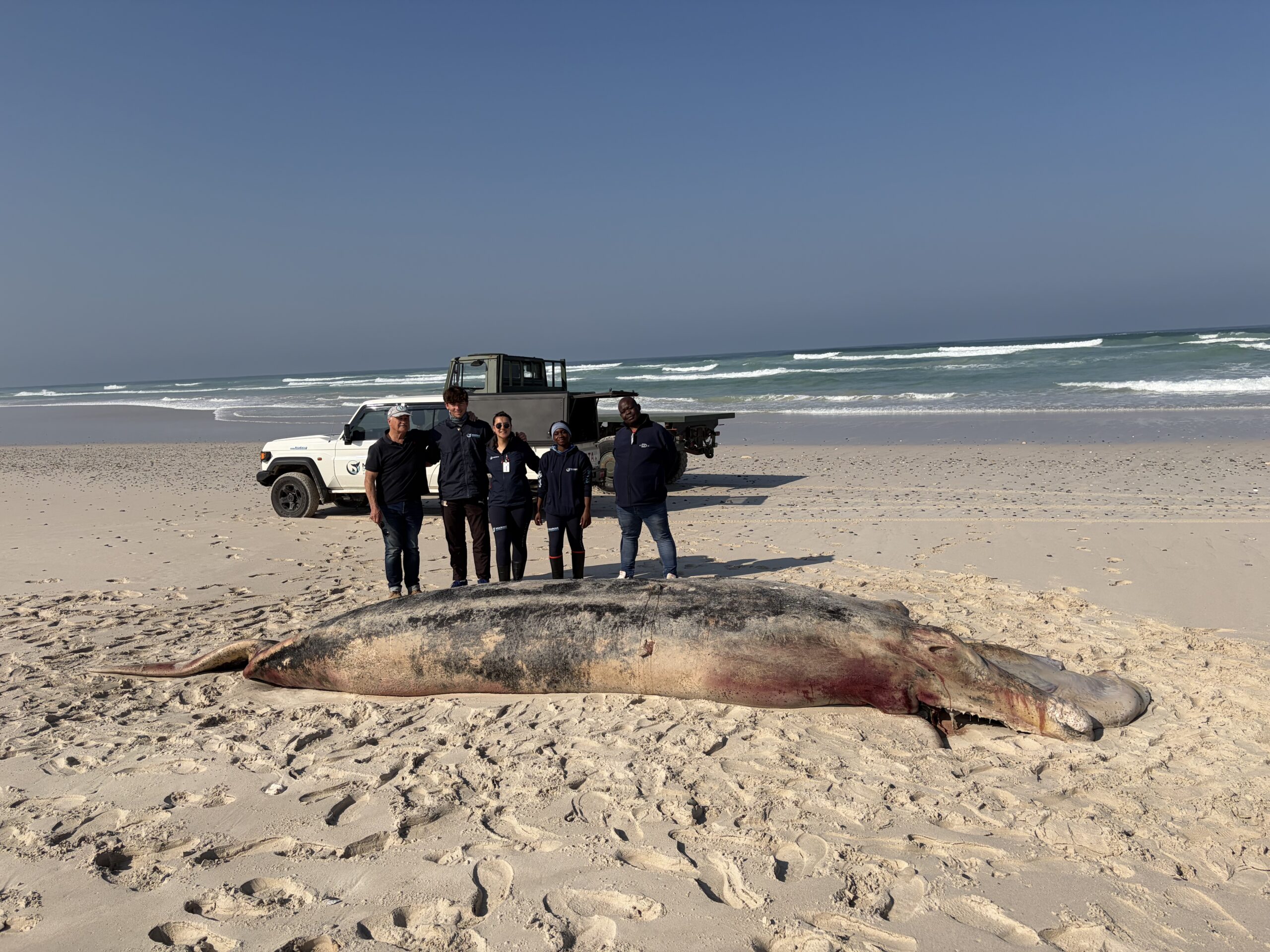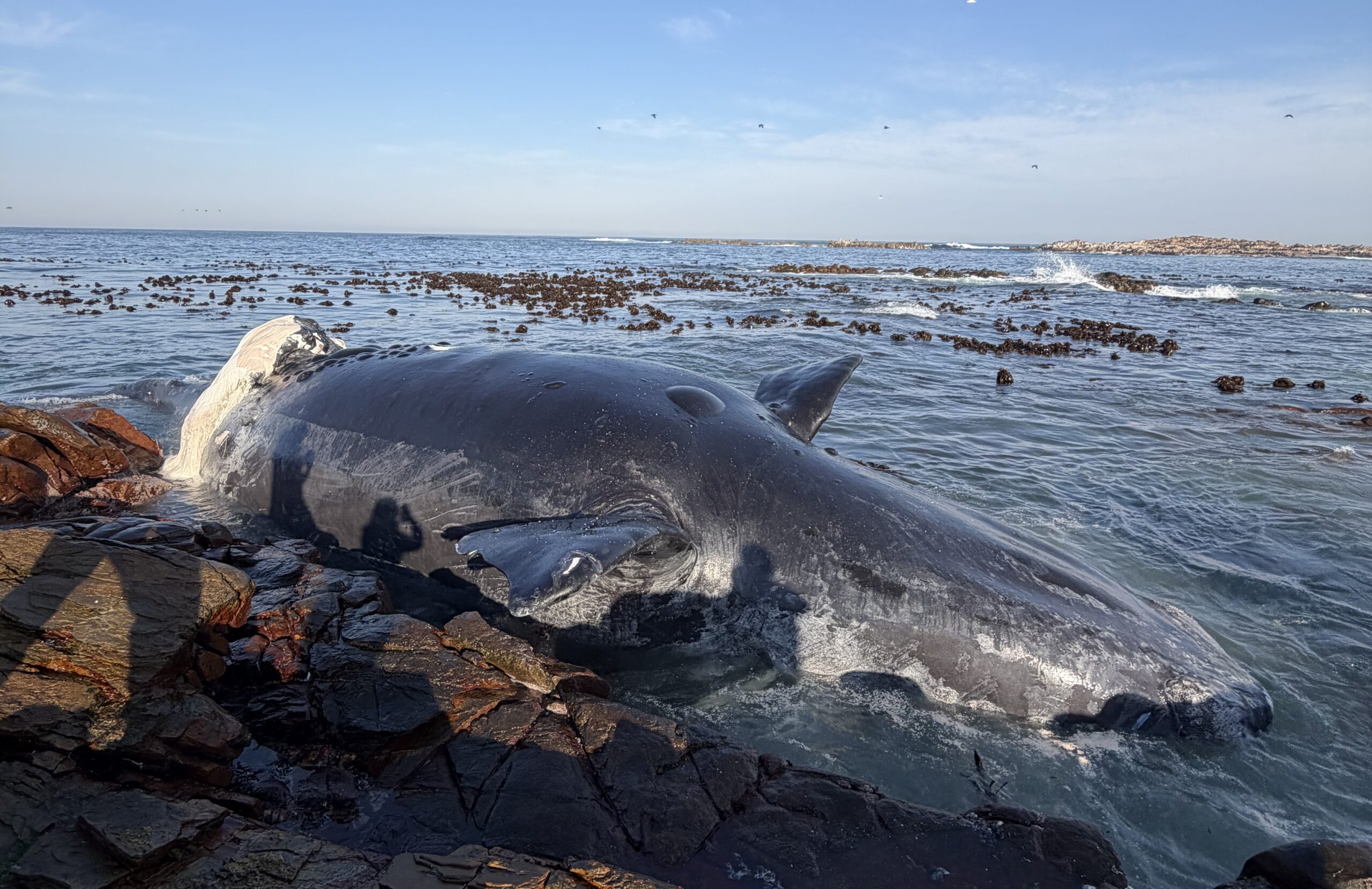
On 2 July 2026, a fin whale (Balaenoptera physalus) stranded at Die Plaat. At approximately 23 metres long, the female fin whale was an extraordinary sight and one of the rarest whale strandings encountered in the Greater Dyer Island Ecosystem.
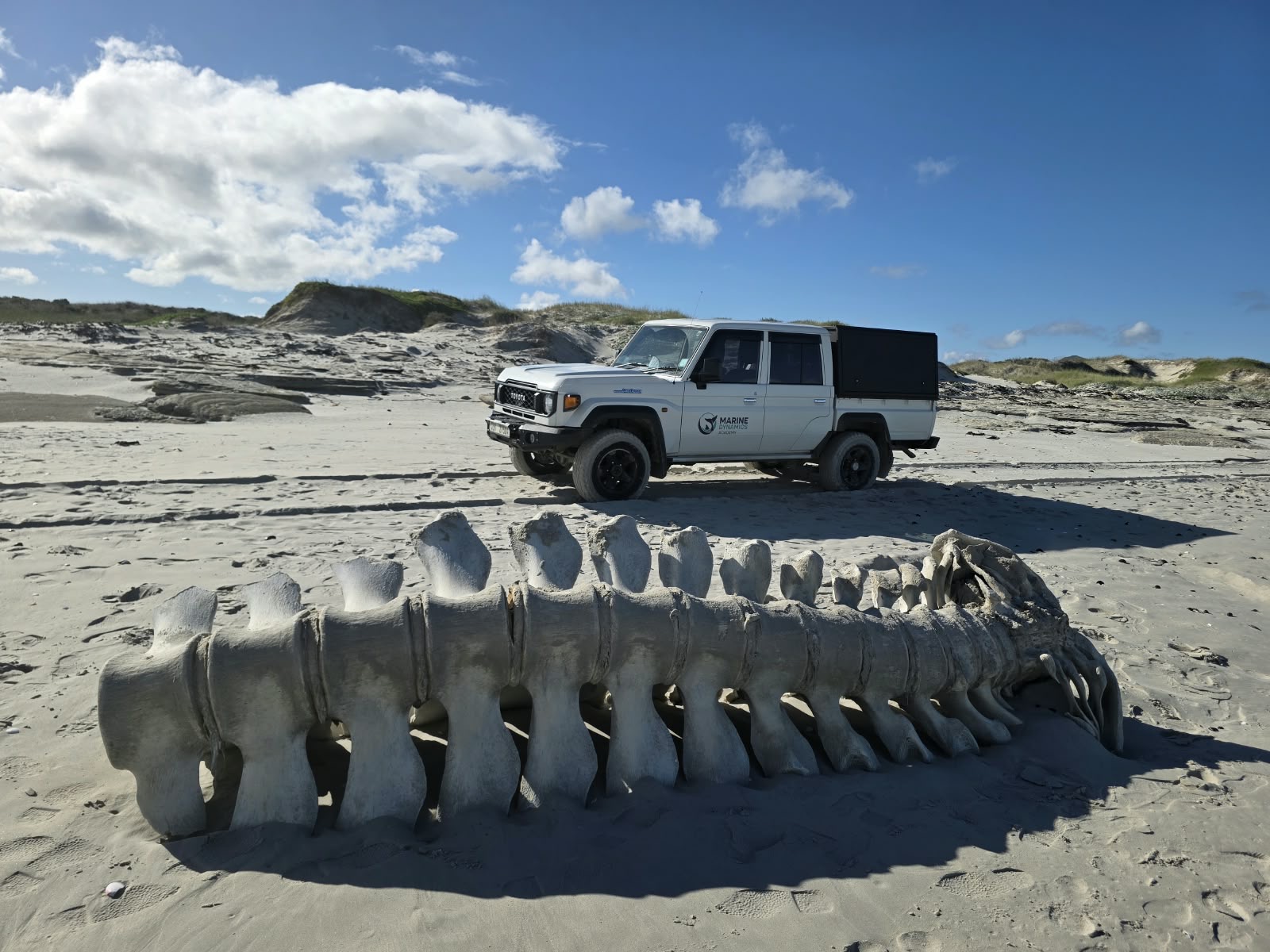
Vertebrae from the stranded fin whale ahead of a Marine Dynamics vehicle that makes attending beach strandings possible.
Following the stranding, the Dyer Island Conservation Trust team participated in a full necropsy of the animal, allowing valuable information and samples to be collected. Given this was the first fin whale stranding along the Overberg coastline, we also saw an important opportunity to preserve part of this remarkable animal for education purposes.
After the necropsy, we had to allow some time for the remaining soft tissue to decompose before the bones could be safely removed. While this process would normally take considerably longer, the necropsy had already accelerated decomposition, meaning that just over a month after the stranding, the bones were ready to be collected. Once they were ready, it was important to remove them as soon as possible to reduce the risk of them being washed back out to sea and lost. They were collected with the necessary permissions, with the intention of displaying them on Marine Dynamics property. A fin whale is an enormous animal, and being able to see its bones up close will provide visitors with a much better understanding of its size, anatomy and biology. More importantly, the display will provide an opportunity to share the story of this rarely encountered species and encourage greater appreciation for the marine environment.
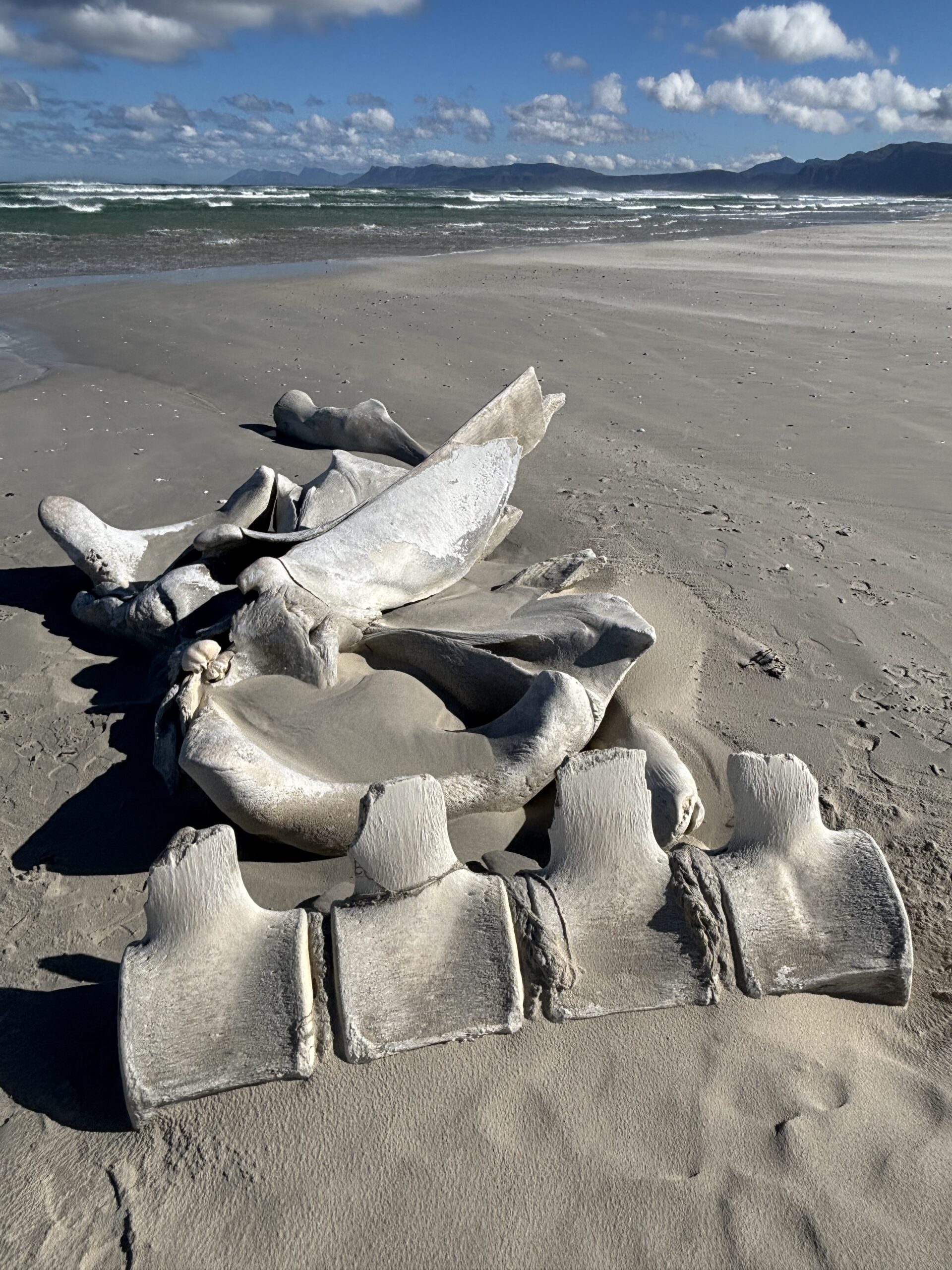
Vertebrae, the skull and the end of a lower jaw bone partially buried in the sand.
Making this possible was very much a team effort. The Marine Dynamics crew were incredible in assisting with the collection and transport of the bones, taking on what was certainly not an everyday task with plenty of enthusiasm and hard work. We were also fortunate to have assistance from the team at Grootbos, and we are extremely grateful for their support. We would also like to thank Dave Caravias from FatBike Tours South Africa for his assistance in documenting and monitoring the situation following the stranding.
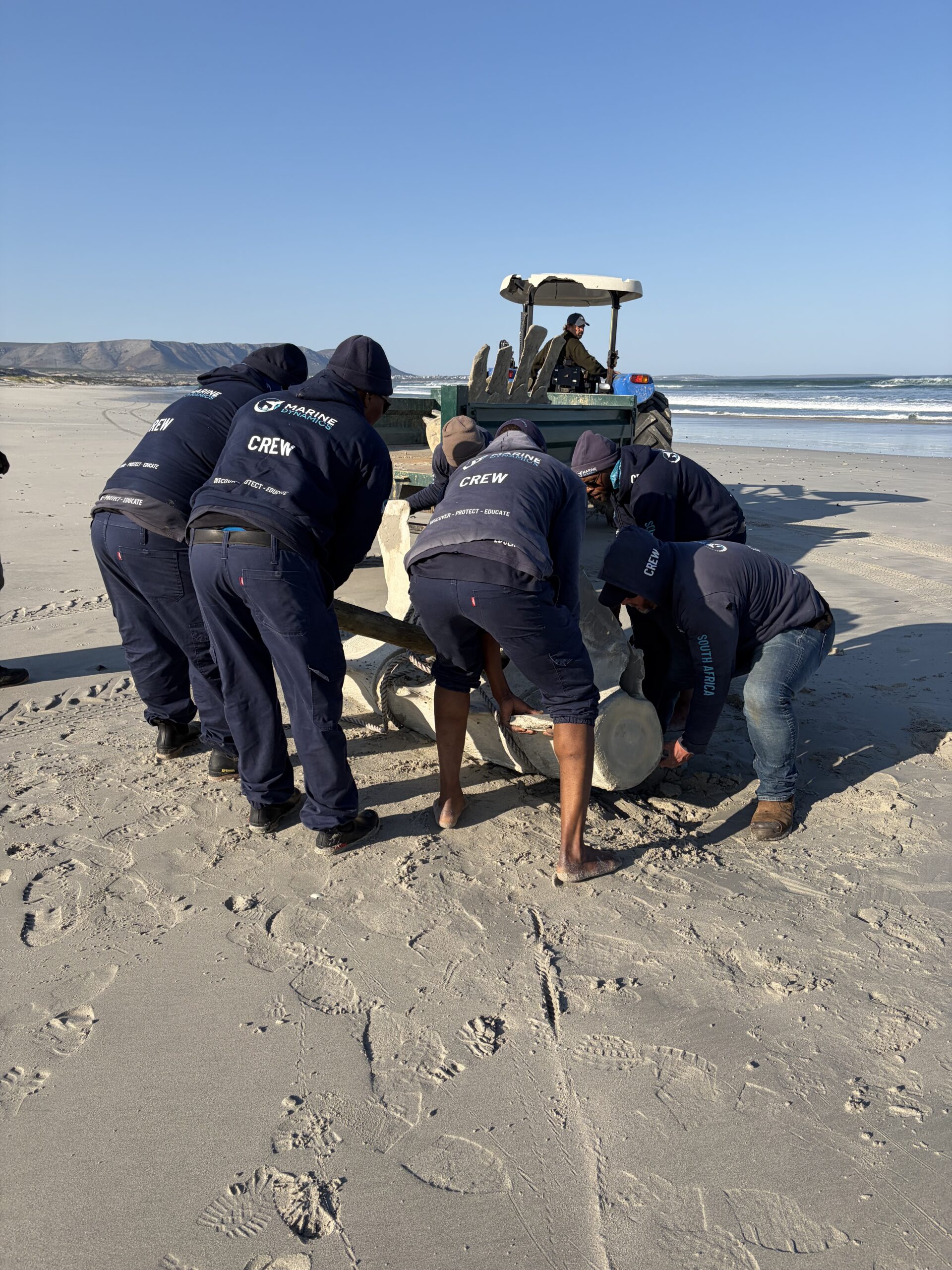
The Marine Dynamics crew and Grootbos Reserve Manager, Mike Fabricius, assisting in the collection of the fin whale skeleton.
It is important to remember that marine mammal remains are protected. While finding whale bones on the beach might seem like an exciting opportunity to take a souvenir home, collecting or possessing these remains without the appropriate permits is not permitted under the Marine Living Resources Act. If you encounter marine mammal bones or other remains on the beach, please leave them where they are and contact the appropriate authorities or conservation organisation rather than removing them yourself.
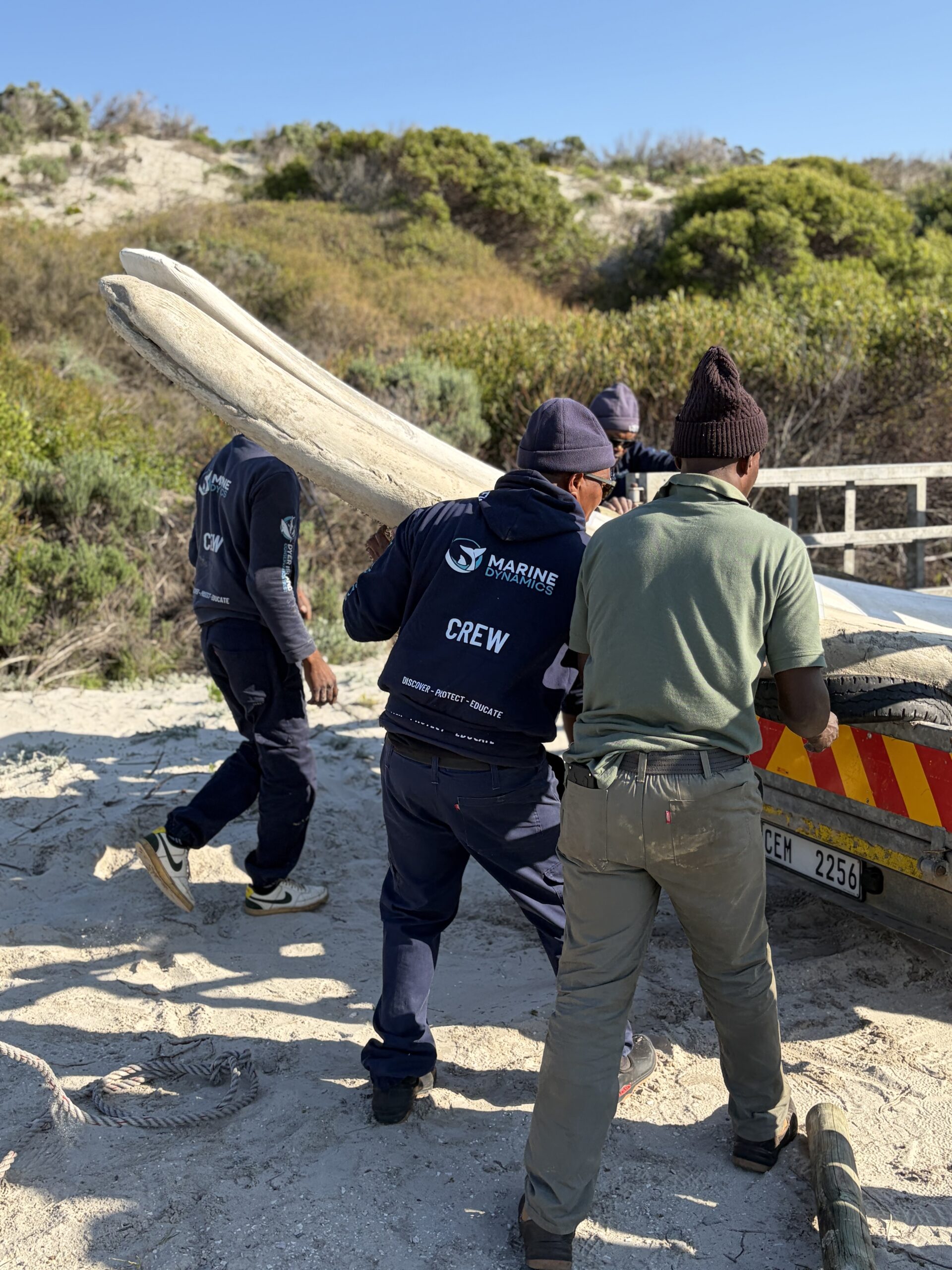
The lower jaw bones of the fin whale being lifted onto the trailer, ready for transportation.
This collection means that, although this fin whale’s life came to an end on our coastline, parts of the animal can continue to contribute to our understanding and appreciation of these incredible animals for years to come.