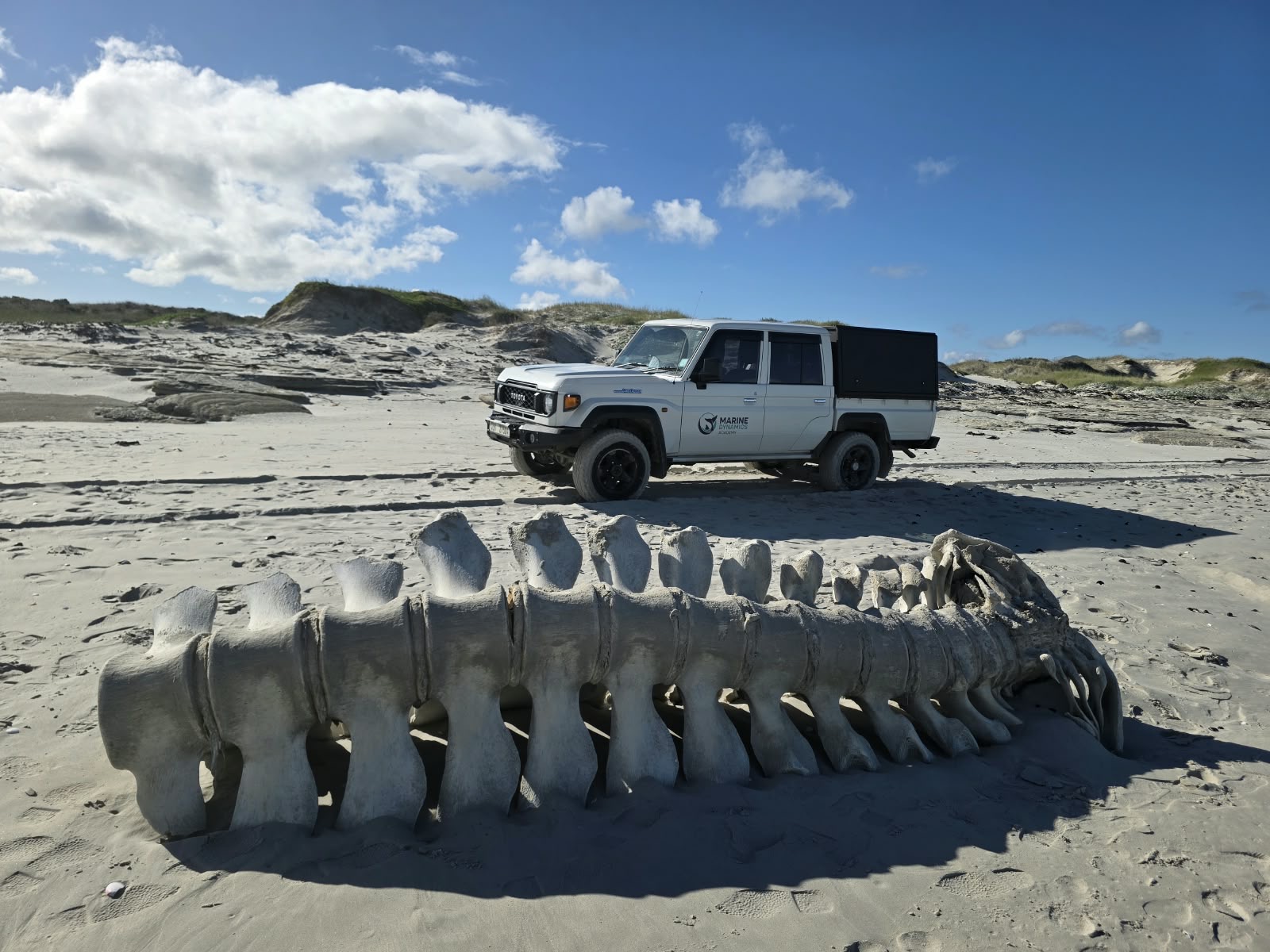
On 24 August, the Dyer Island Conservation Trust team was alerted to a stranded spotted gully shark (Triakis megalopterus) along the local Franskraal beach. Collected by senior shark guide Susy Alexandersen, the female individual was stored in the Marine Dynamics Academy lodge freezers for a necropsy on 5 September.
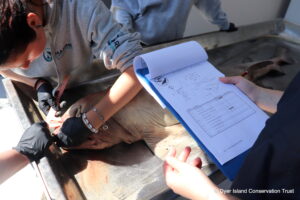
Led by shark biologist Amy Webber and assisted by marine biologist Thomas Merdy, the necropsy proceeded at the Academy facilities, with scientific interns and volunteers present. The shark measured in at 160.8cm, with maximum length achieved at approximately 200cm. Spotted gully sharks, otherwise known as sharptooth hounds, have an endemic distribution along the coastline of southern Africa between Namibia and the Eastern Cape. Their most distinctive features include irregular black spots along their dorsal side and first and second dorsal fins that are almost the same size. These species reside along rocky and sandy ocean floors, reaching depths of 50m.
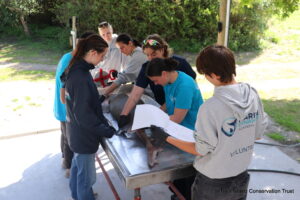
External observations made it clear that the deceased individual was pregnant, with a wide trunk width, supported by the total length that reached proximity to the maximum once fully grown. With a lifespan of 25 to 30 years, on average, this species reaches maturity at 14, providing a reduced window for reproduction within the lifecycle. Their reproductive process is classed as aplacental viviparity. With internal fertilisation, the successful embryos develop within an eggcase before hatching internally and feeding on a nutritional yolk sac. At the time of birth, the pups will be born as free-swimming individuals, with the total gestation period lasting between 20 and 24 months. The combined factors of late maturity and a long gestation period drastically increase the species’ vulnerability to overfishing at the hands of commercial longliners and recreational fishermen.
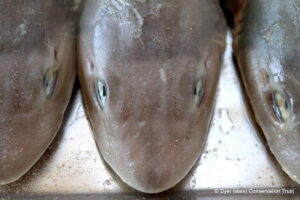
The internal inspection of the shark identified that the female was in the later stages of pregnancy, likely to give birth to the pups in the near future. We identified a total count of nine pups measuring between 41- 43.2 cm, made up of four males and five females. The stomach contents revealed two Cape Rock lobsters, still largely intact, an indication of a larger meal before stranding. The majority of the spotted gully’s diet consists of crustaceans, cephalopods and small fish, a diet well adapted with tightly packed teeth that allow hardened exoskeletons of their prey to be crushed.
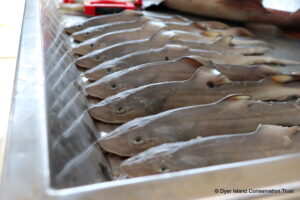
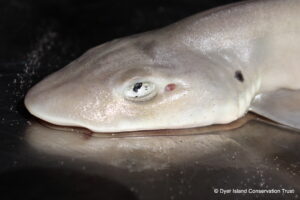
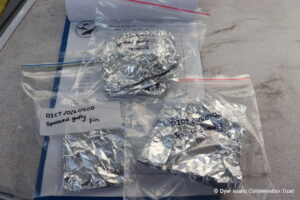
As well as the many external measurements, samples were also collected to store for future analysis. Skin and muscle samples allow insight into genetics, fatty acids and stable isotopes as an indicator of diet, with the liver used for investigations into disease or physiological stress and toxicity levels. The shark was in a very healthy condition at the time of the necropsy, with all pups present and well-developed, ruling out disease or poor health as a factor. Unfortunately, as with many of the stranded sharks attended to within the Overstrand, the cause of death was likely the involvement of a failed catch and release, supported by the presence of a hook incision at the side of the jaw. Listed as Least Concern on the IUCN Red List, the population is stable across the South African coastline. However, their slow growth rate, late maturation and extended gestation period make them vulnerable to the threat of overfishing. Case study examples like this deceased pregnant female and her pups highlight the threat of fishing to the species, particularly at crucial life stages, such as this individual, residing in shallower waters that form their nursery habitats.
For any stranded sharks and other marine species, please contact the Dyer Island Conservation Trust on +27 (0)82 907 5607, where possible, including photos and a GPS pin location to aid retrieval and response time, factors vital to consistent biological insight and conservation efforts.