3 August 2026
For the past 20 years, since Wilfred Chivell founded the Dyer Island Conservation Trust, invaluable partnerships have been built not only with scientists from around the world, but also with dedicated individuals who play a vital role in protecting our marine wildlife.
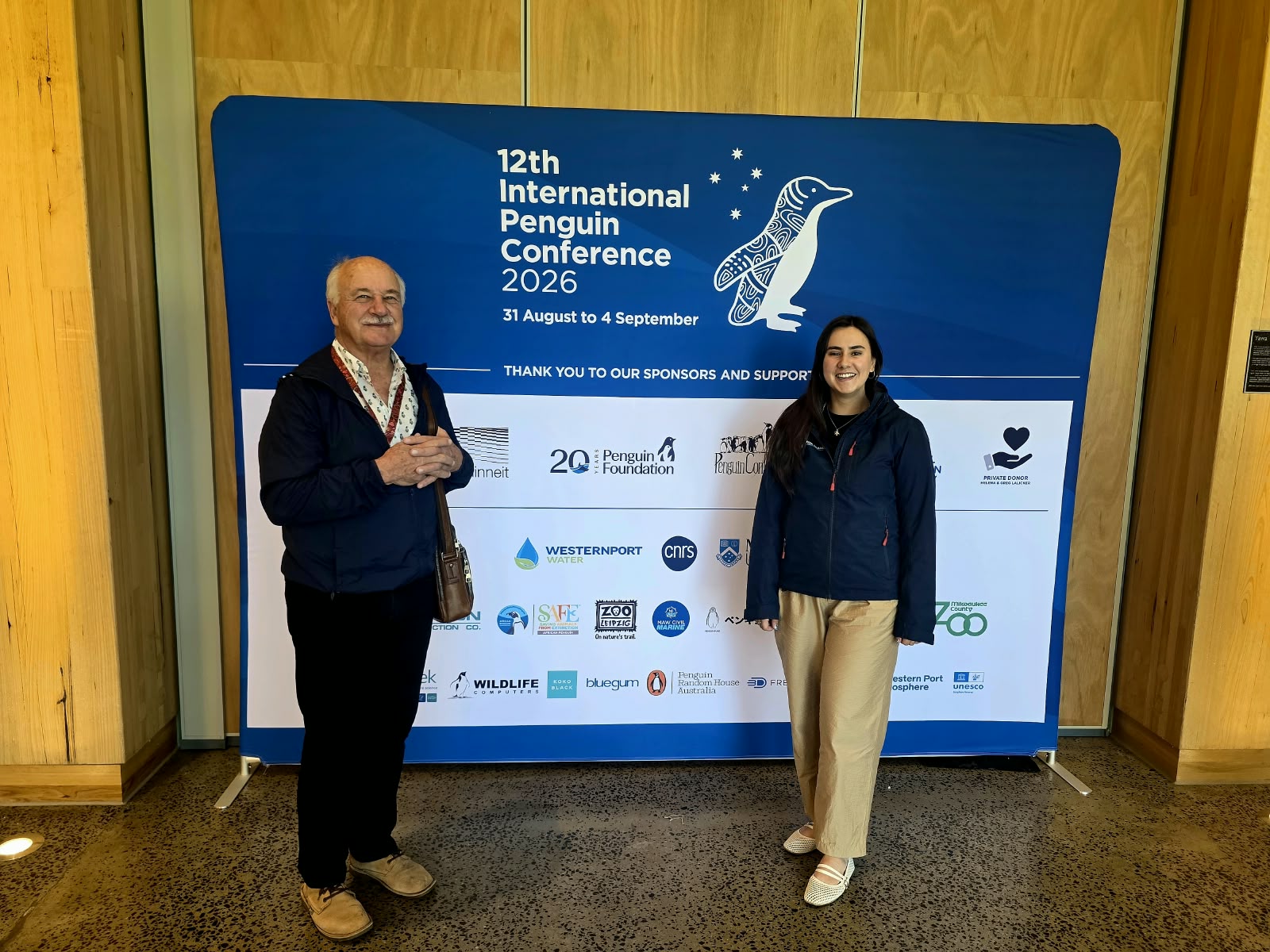
One such partnership is with Niel- and Pamela Falck, who live in Struisbaai, just over 80 kilometres from Kleinbaai, Gansbaai, where the African Penguin and Seabird Sanctuary is situated.
Niel is a well-known wild bird rehabilitator and conservationist in the Struisbaai area and is often the first person the local community calls when a bird is found injured or in distress. Together, he and Pamela have become indispensable first responders for critically endangered African Penguins in the region.
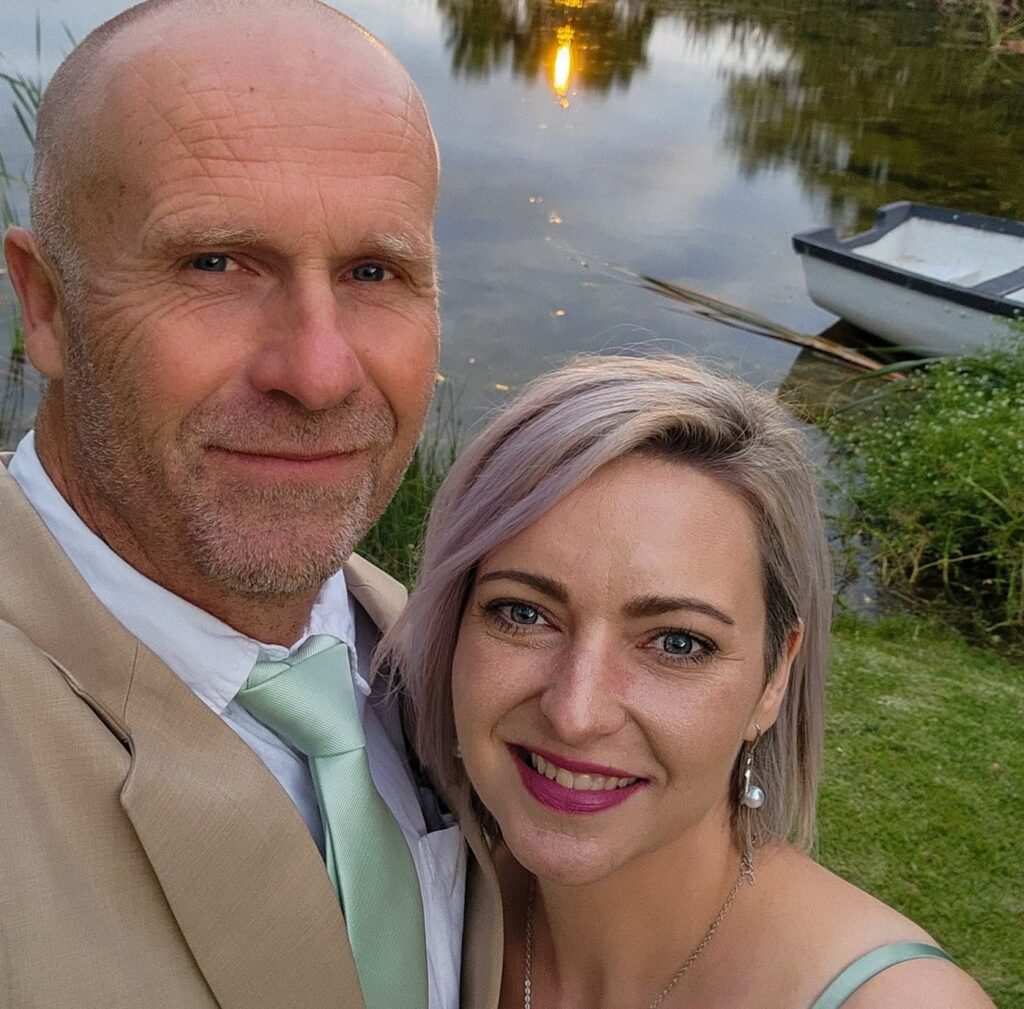
Niel and Pamela Falck
Last Monday evening, a severely injured African Penguin was discovered on the beach with what appeared to be a shark bite. A concerned community member contacted Niel, who immediately collected the bird and ensured it was kept safe until Xolani Lawu, Senior Bird Rehabilitator at the African Penguin and Seabird Sanctuary (APSS), could drive through late that evening to collect it.
The penguin was examined by Dr Annemarie Roberts, who took X-rays to assess the extent of the injuries. Thankfully, despite the severity of the wound, there were no broken bones. The bird is responding well to treatment and continues to recover under the care of the APSS rehabilitation team.
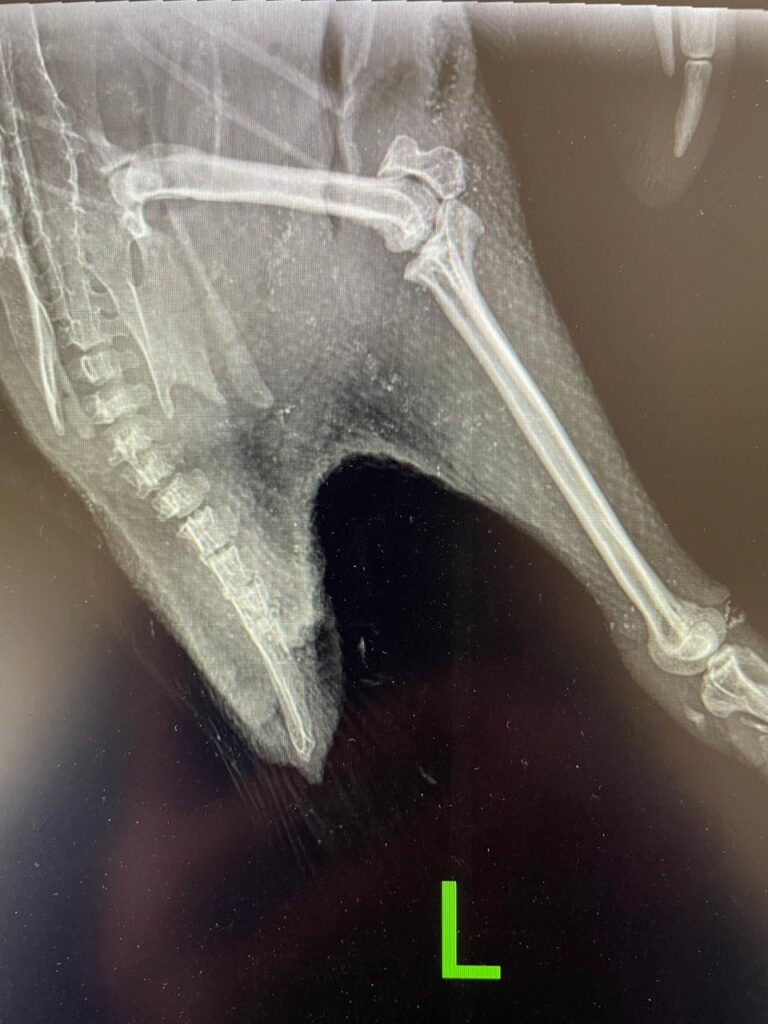
Thank goodness, no broken bones!
Just a few days later, on Friday, Niel received another call.
This time the patient was a severely emaciated African Penguin with a hard plastic band tightly wedged around its neck and through its mouth. Unable to close its beak properly, the bird had been unable to feed and was in obvious pain and distress.
Recognising that every minute mattered, Niel and Pamela carefully removed the plastic. The penguin’s beak could barely close afterwards, indicating that the plastic had likely been lodged there for a considerable time. Niel immediately administered electrolytes to stabilise the bird while Xolani made the journey from Gansbaai to collect it.
There is already encouraging news. According to Xolani, the penguin’s mouth is beginning to close again, although only slightly. It is eagerly eating small pieces of fish and, on Sunday, enjoyed its first swim since arriving at the sanctuary.
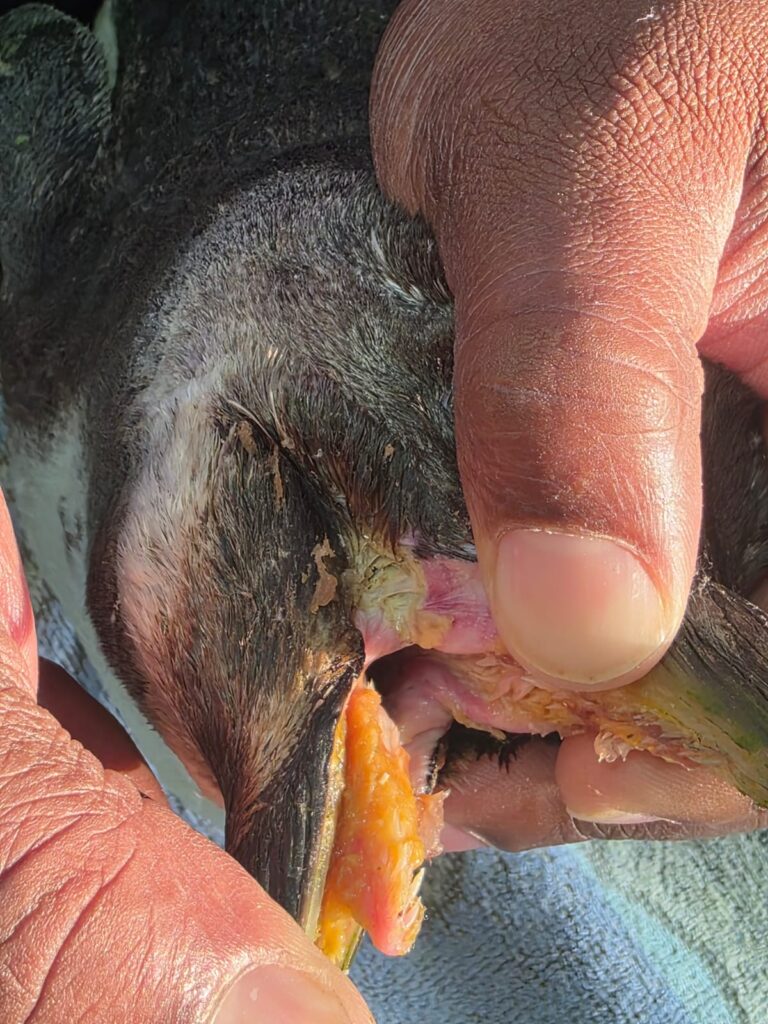
Injuries to penguin’s mouth because of the plastic band.
These two rescues are another reminder of how essential community involvement is in conserving one of the world’s most threatened seabirds.
“We can’t do this on our own. The coastline is simply too vast for the Marine Dynamics and Dyer Island Conservation Trust teams to monitor alone. We rely on communities to be our eyes and ears, and we are incredibly grateful to people like Niel, Pamela and the Struisbaai community, who are always alert and willing to help marine animals in need,” says Wilfred Chivell.
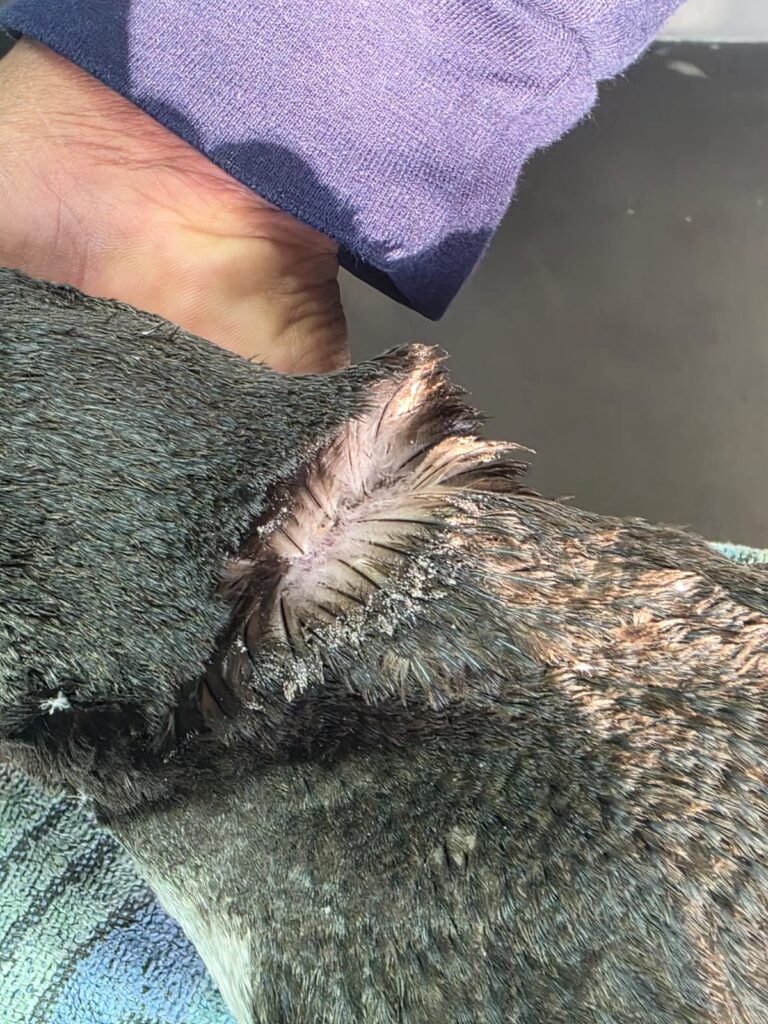
The plastic band started cutting into the penguins skin.
Every phone call, every rescue and every person who chooses to act can make the difference between life and death for an endangered African Penguin.
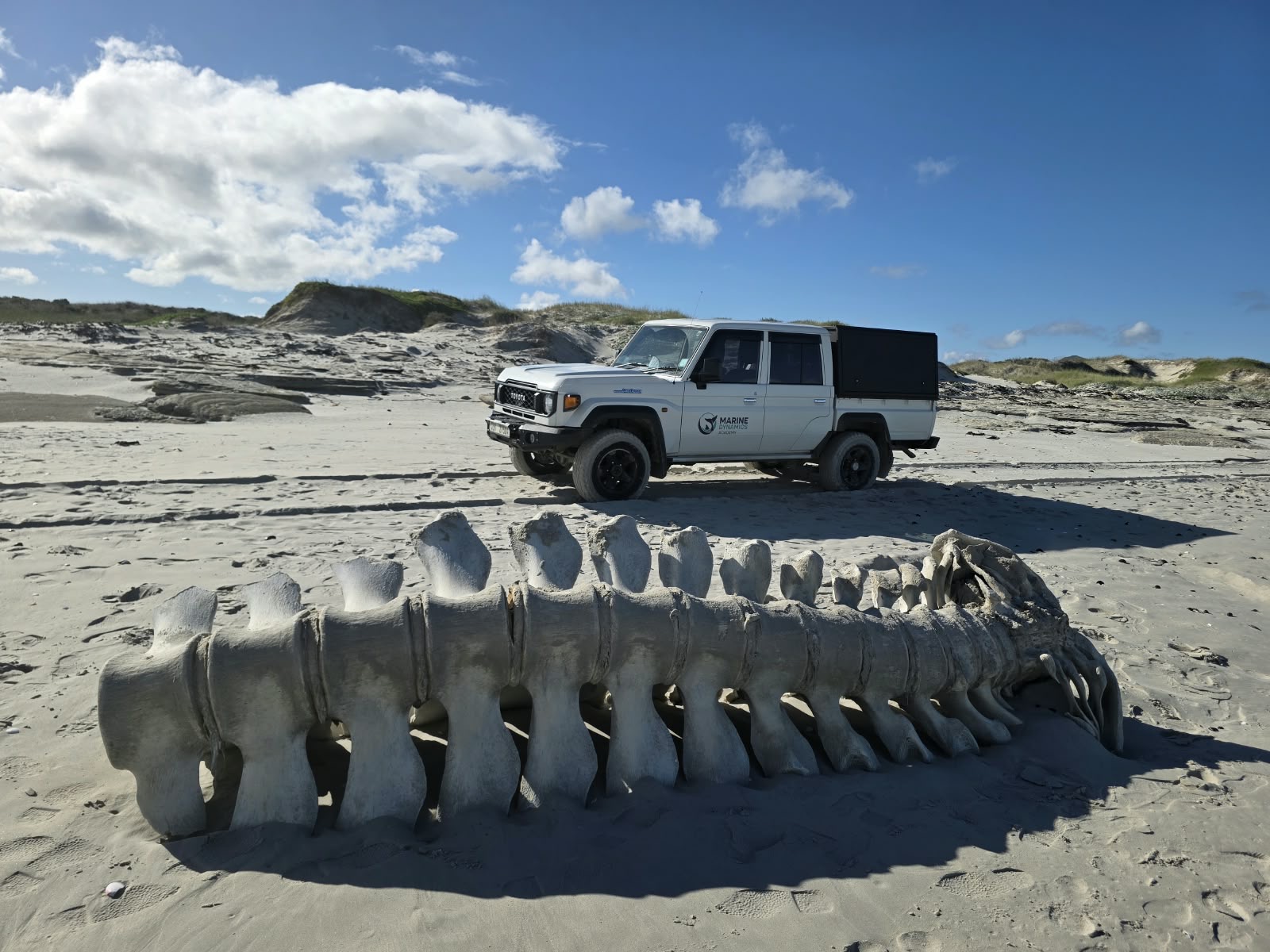
The Dyer Island Conservation Trust extends its sincere gratitude to CFAO Mobility Toyota Cape Town for sponsoring our Rescue and Response Vehicle, enabling our team to respond rapidly to wildlife emergencies along the coastline. We also thank the KruShan Foundation for making the KruShan Foundation X-Ray Room at the African Penguin and Seabird Sanctuary possible. This invaluable facility allows our veterinary team to diagnose injuries quickly and provide the best possible care for every bird that arrives at the sanctuary. Partnerships like these are essential in giving endangered African Penguins a second chance.
Christine Wessels
African Penguin and Seabird Sanctuary (APSS), Kleinbaai, Gansbaai
Rescue number: 072 598 7117