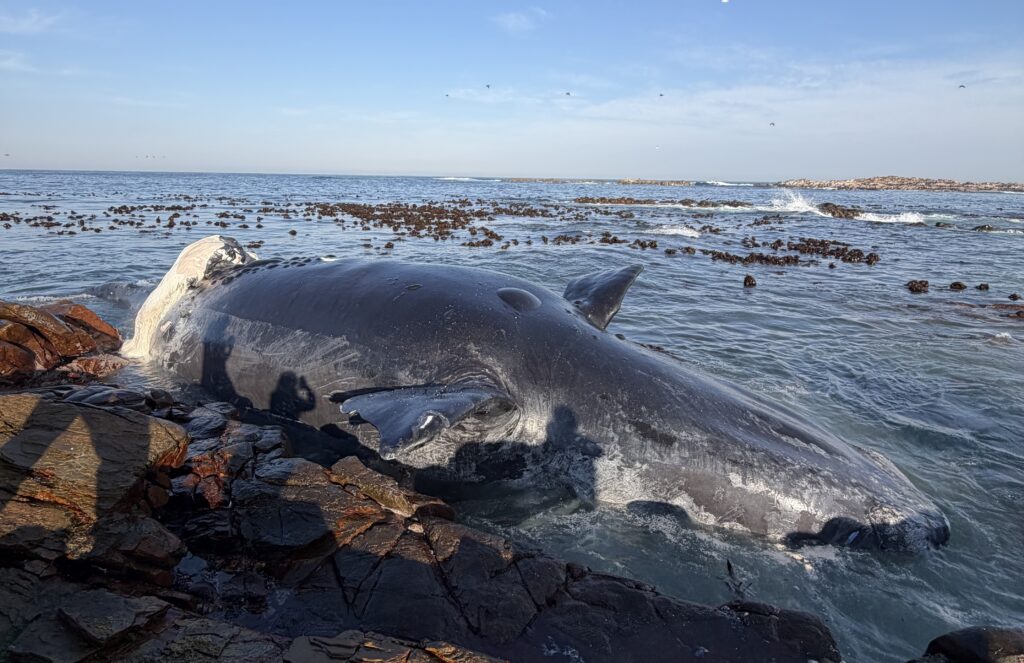
On 2 August, during one of Marine Dynamics’ Marine Big 5 trips in the Dyer Island ecosystem, our team encountered a deceased adult southern right whale floating offshore. The carcass was examined using underwater footage, revealing trauma to the head that was highly consistent with a ship strike. The injuries included the loss of the upper jaw ahead of the eye, the absence of baleen and a severed tongue. Based on these observations, the mortality was reported to the Overberg Stranding Network, with a vessel strike considered the most likely cause of death. As the apparent cause of death was already evident, no additional sampling was initially considered necessary.
The following day, on 3 August, our team encountered a second deceased southern right whale, this time a calf, floating at sea. Examination of the calf revealed it to be a male with an unhealed umbilicus, confirming that it had been born only recently.
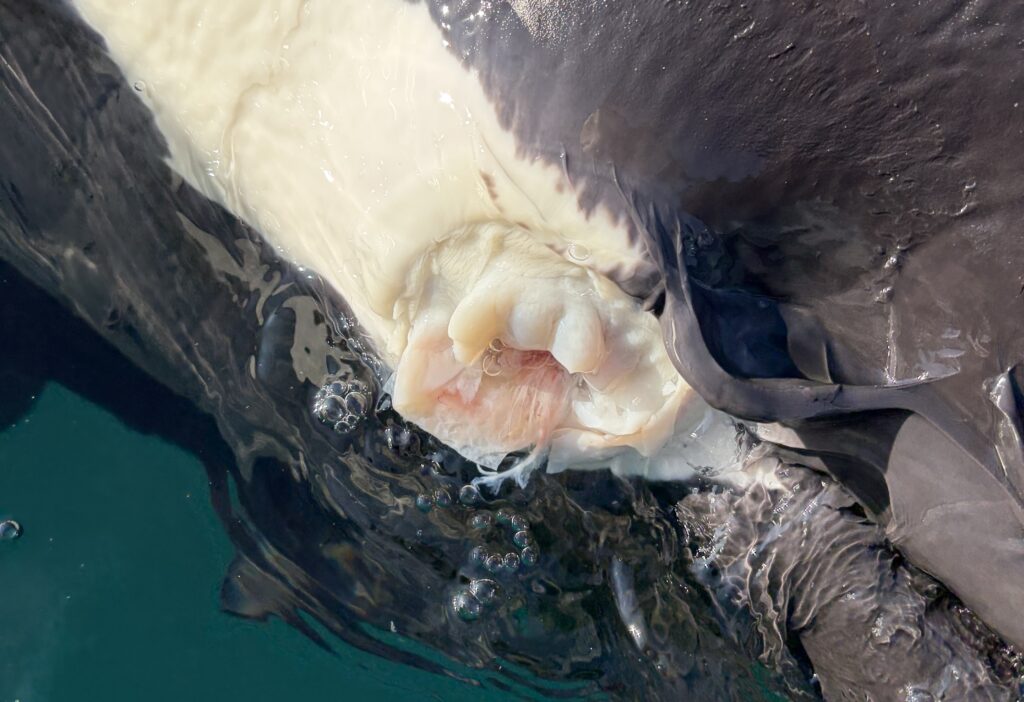
Shortly after the calf was located, our ranger stationed on Dyer Island informed us that the adult whale had washed ashore on the island. The close proximity in both time and location of the two animals immediately raised an important question: could these two animals be mother and calf?
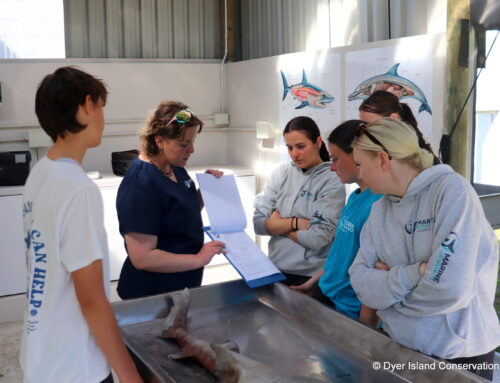
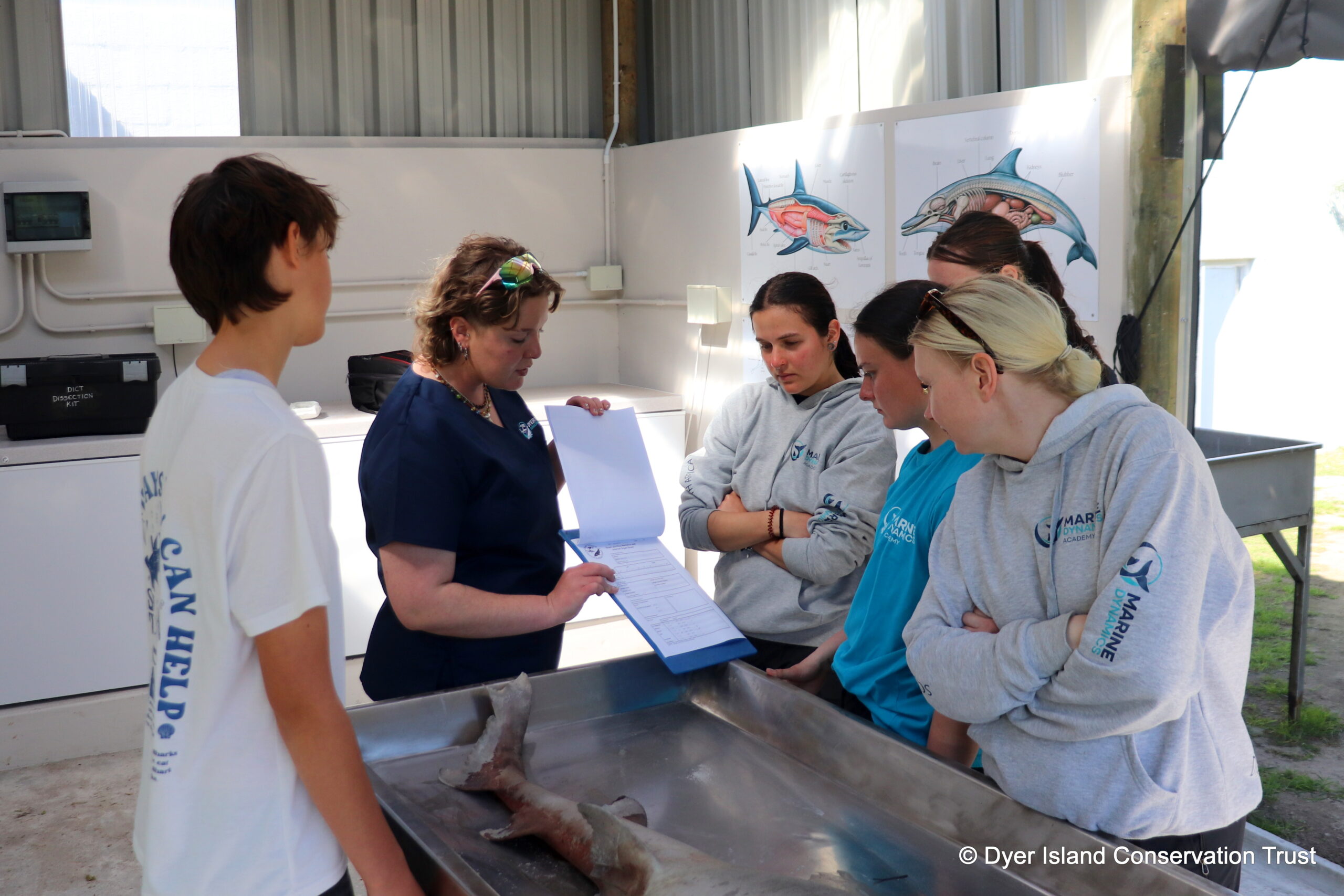
Our Head of Research, Dr Loraine Shuttleworth, together with Prof. Els Vermeulen from the Mammal Research Institute Whale Unit at the University of Pretoria, with whom we collaborate closely on cetacean strandings, collected biological samples from both whales. Genetic analysis will allow us to determine whether the two animals were related, while simultaneously contributing to a broader collaborative research project investigating ship strikes on large whales. Each documented case provides valuable information that improves our understanding of vessel strikes and contributes towards evidence-based management measures aimed at reducing their occurrence.
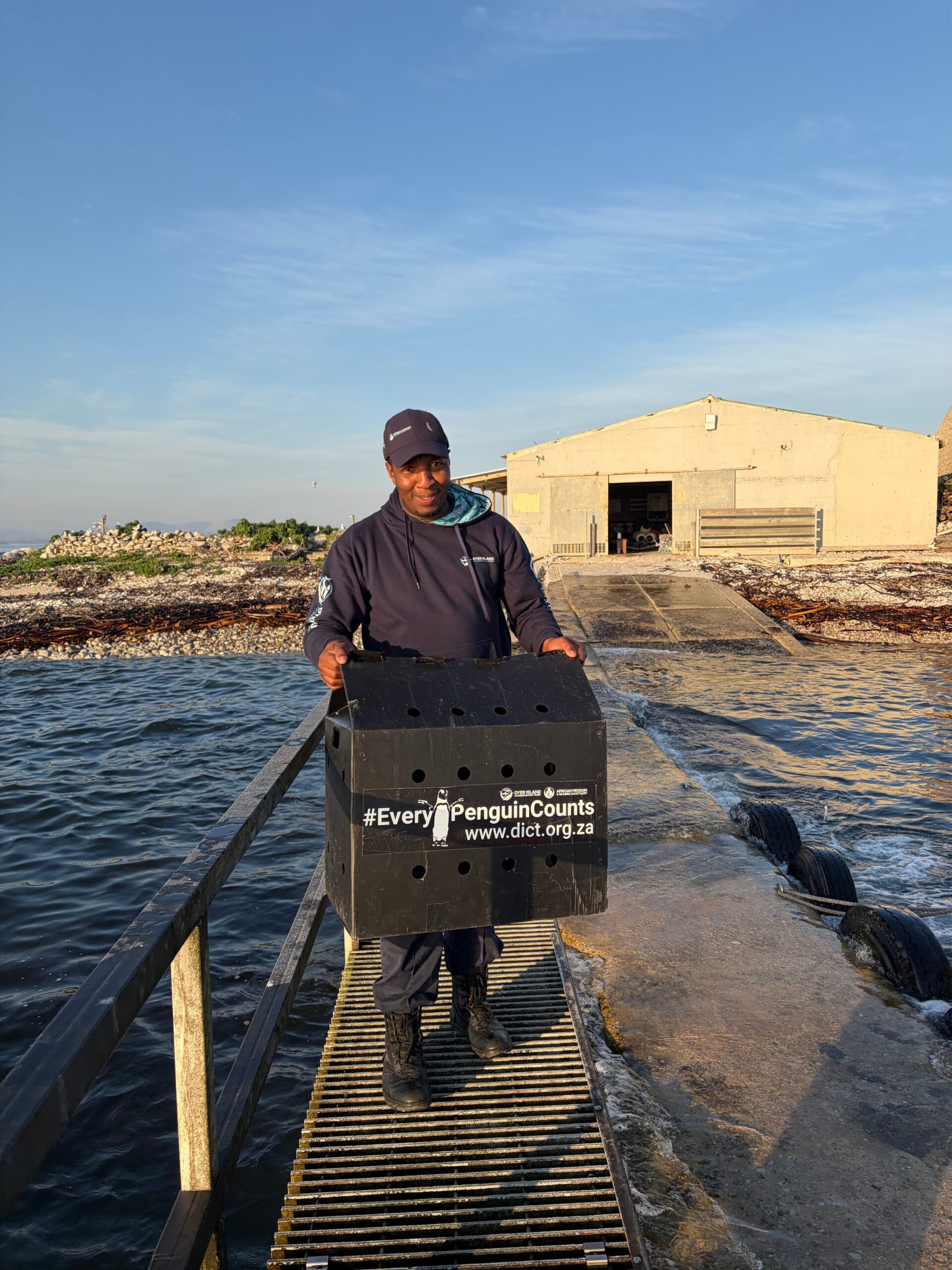
Collecting the samples required careful planning. Dyer Island is a protected nature reserve and an internationally important breeding site for numerous seabird species, including the critically endangered African penguin. Access to the island is therefore carefully managed by Cape Nature to minimise disturbance to its wildlife. Our island ranger, who lives on Dyer Island and is responsible for monitoring and protecting its bird colonies, guided the team to the carcass using routes that avoided unnecessary disturbance to nesting birds while allowing the work to be completed as efficiently as possible. While on the island, we were also able to collect an African penguin in need of rehabilitation to take to our African Penguin and Seabird sanctuary where it will receive the care it needs before being returned to the island again.
Field conditions also meant that only essential biological samples could be collected. The calf remained afloat throughout the sampling process, making detailed morphometric measurements logistically impractical while the adult had stranded amongst rocks where wave action caused the carcass to move continuously. Under these conditions, the priority was to safely obtain the tissue samples required for genetic analysis before leaving the site.
This investigation also highlights the important role that ecotourism vessels can play in marine research and conservation. Neither whale was located during a dedicated research survey. Instead, both were detected during Marine Dynamics ecotourism operations that place trained observers on the water every day. This regular presence at sea enables unusual events to be identified rapidly, reported through the appropriate networks and followed by coordinated scientific investigations. Without these routine operations, it is possible that neither animal would have been documented.
The genetic analyses are now underway, and we look forward to learning whether these two whales were indeed mother and calf. Follow our social media channels for updates as the results become available and we continue to learn more from this investigation.
We thank Prof. Els Vermeulen and the Mammal Research Institute Whale Unit at the University of Pretoria for their continued collaboration in advancing our understanding of southern right whales and the threats they face.