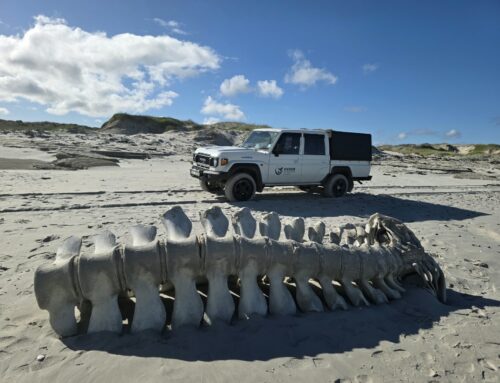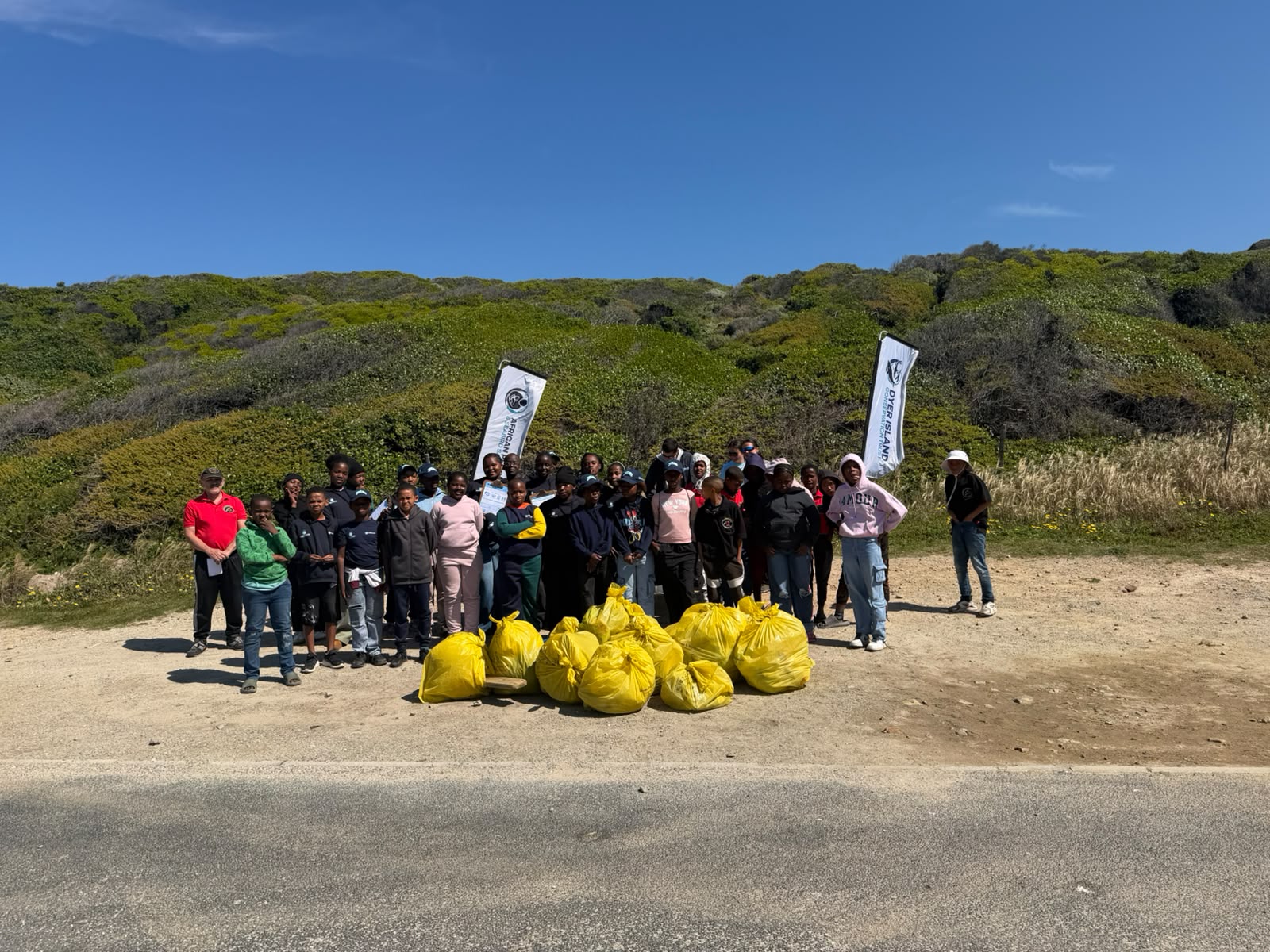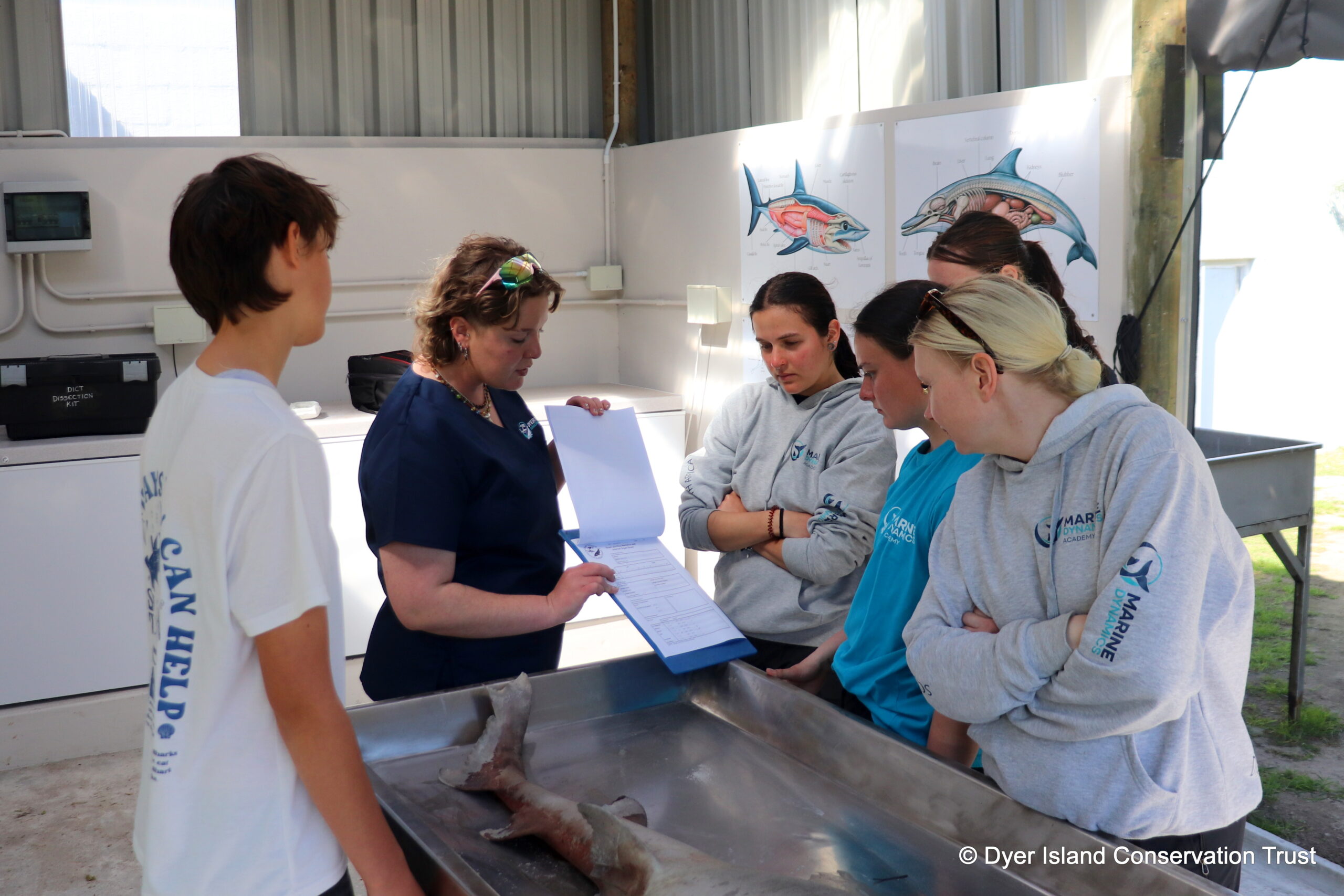
On 4 August 2026, the Dyer Island Conservation Trust (DICT) was notified of a stranded southern right whale calf along the Overberg coastline. Following the necessary arrangements to access the area, a joint DICT and Marine Dynamics team attended the stranding site on 5 August at the Denel Overberg Test Range.
The response team included DICT Head of Research Dr Loraine Shuttleworth, Marine Dynamics CEO Wilfred Chivell, Marine Dynamics guide Laticia Mudege, and Marine Dynamics Academy intern Juan Marais.
The animal was identified as a southern right whale (Eubalaena australis) calf based on its distinctive callosity patterns and the absence of a dorsal fin. The calf measured approximately 5.5 metres in length and, given that southern right whale calving season extends from approximately June to late October, with a peak in August, it would have been born earlier this year.
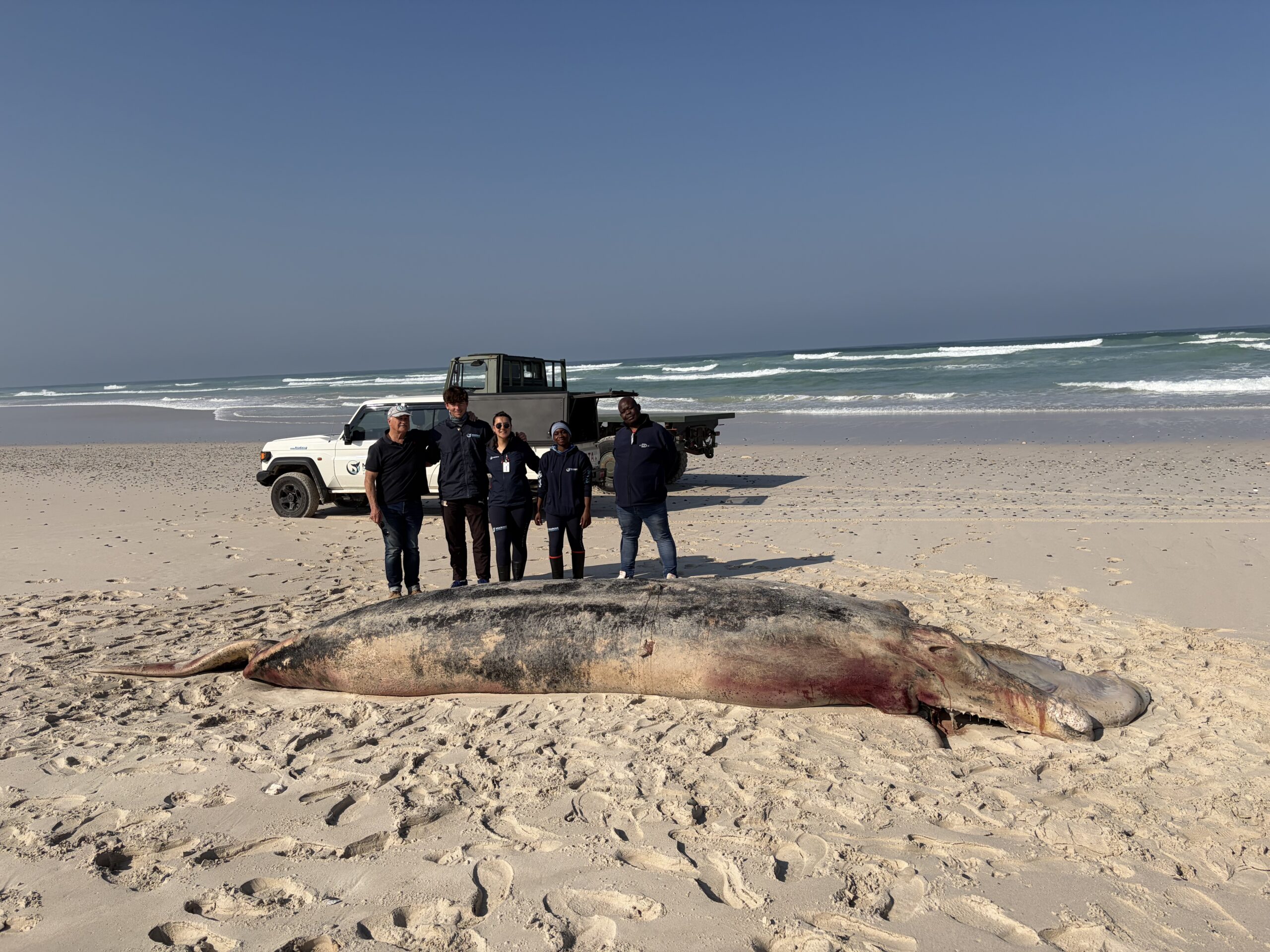
The Marine Dynamics and Dyer Island Conservation Trust stranding response team accompanied by Denel Environmental Office Mr Eric Nembilwi.
The Overberg coastline forms part of an important habitat area for southern right whales, with areas such as the De Hoop Nature Reserve recognised as important calving habitat. It is therefore not unexpected that calves may occasionally be encountered in the surrounding coastal area during this time of year.
A thorough external examination of the carcass was conducted. At the time of assessment, there were no obvious external injuries or other visible signs that could explain the cause of death, and the cause therefore remains undetermined. Samples were, however, collected from the animal that may be analysed in future as part of a broader research project in collaboration with the University of Pretoria’s Mammal Research Institute Whale Unit.
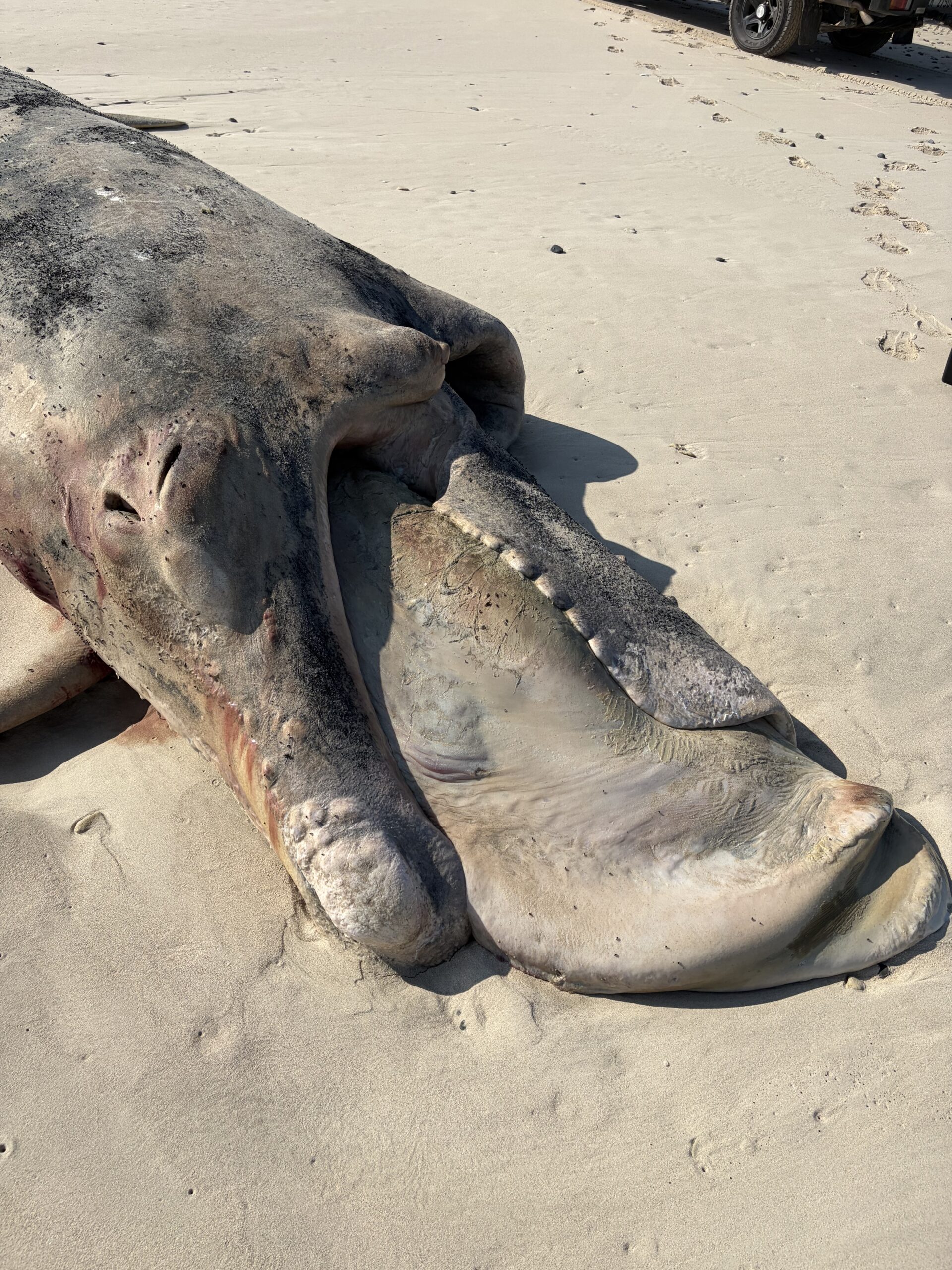
Visible callosity patterns visible on the stranded whale.
We extend our sincere thanks to Mr Danie Henning for facilitating the necessary arrangements to access the site, as well as Mr Rudolph van Vuuren, Mr Jaco van der Walt and Mr Eric Nembilwi for escorting the team to the stranded whale.
This response also marks the beginning of an important new collaboration between the Dyer Island Conservation Trust, Marine Dynamics and the Denel Overberg Test Range. Building strong relationships with organisations that regularly work along our coastline is essential for improving the effectiveness of marine wildlife stranding responses.
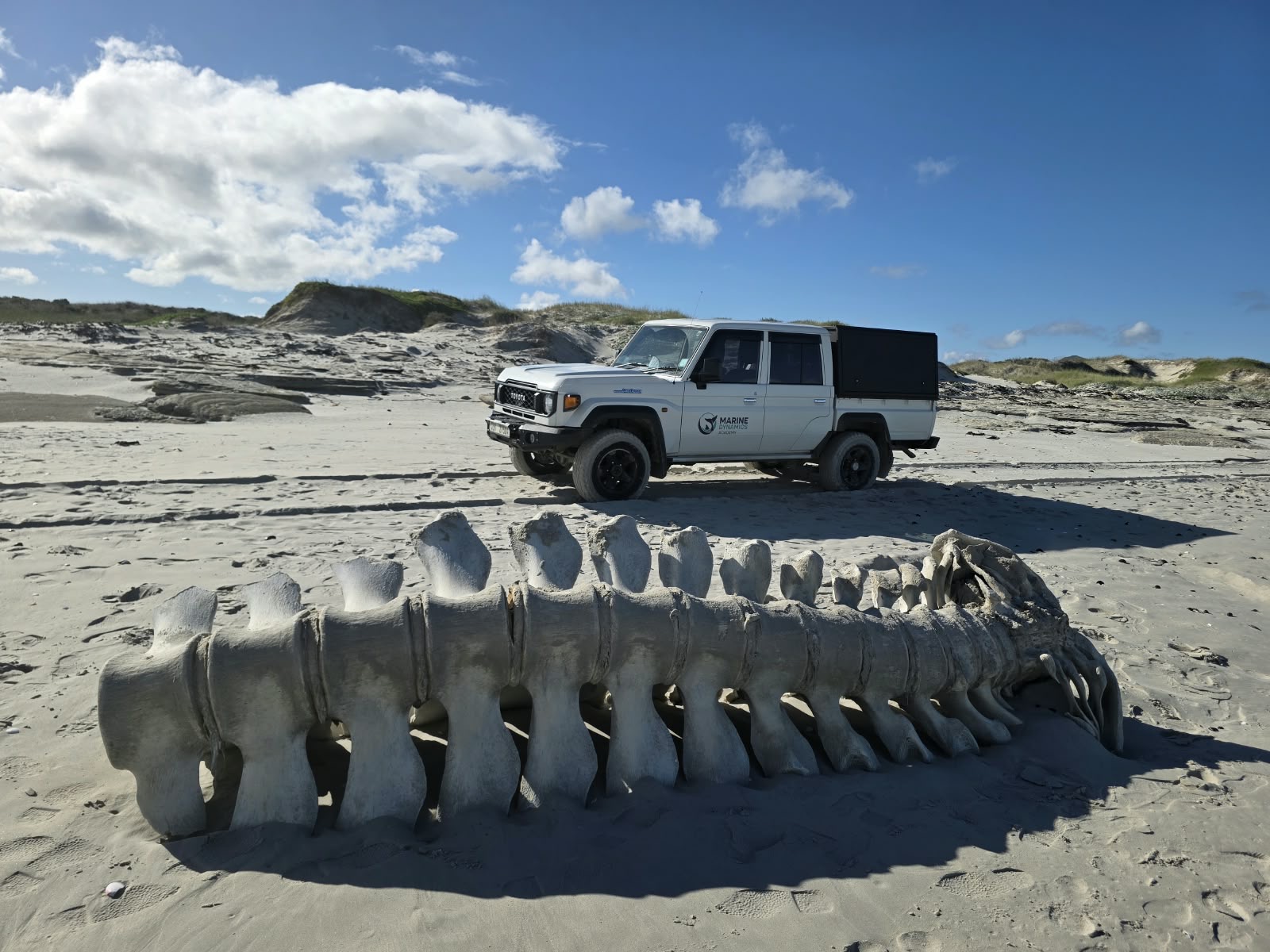
The value of this partnership was already evident during the visit. During the response, another whale carcass was observed on the same stretch of coastline. However, the remains were in an advanced state of decomposition and it was no longer possible to determine the species. Denel personnel explained that, when the carcass was first discovered, they were unsure who to contact. Through this new collaboration, they now know to report future marine mammal, elasmobranch and seabird strandings directly to our team. This will help ensure that deceased animals can be documented for research purposes and that live stranded animals can be assessed promptly and, where appropriate, receive rehabilitation through the African Penguin and Seabird Sanctuary (APSS).
As the team travelled along the beach, they also took the opportunity to remove several pieces of discarded rope and netting. Lost or abandoned fishing gear poses a significant entanglement risk to whales, dolphins, seals, seabirds and other marine wildlife, making its removal another positive outcome of the response.
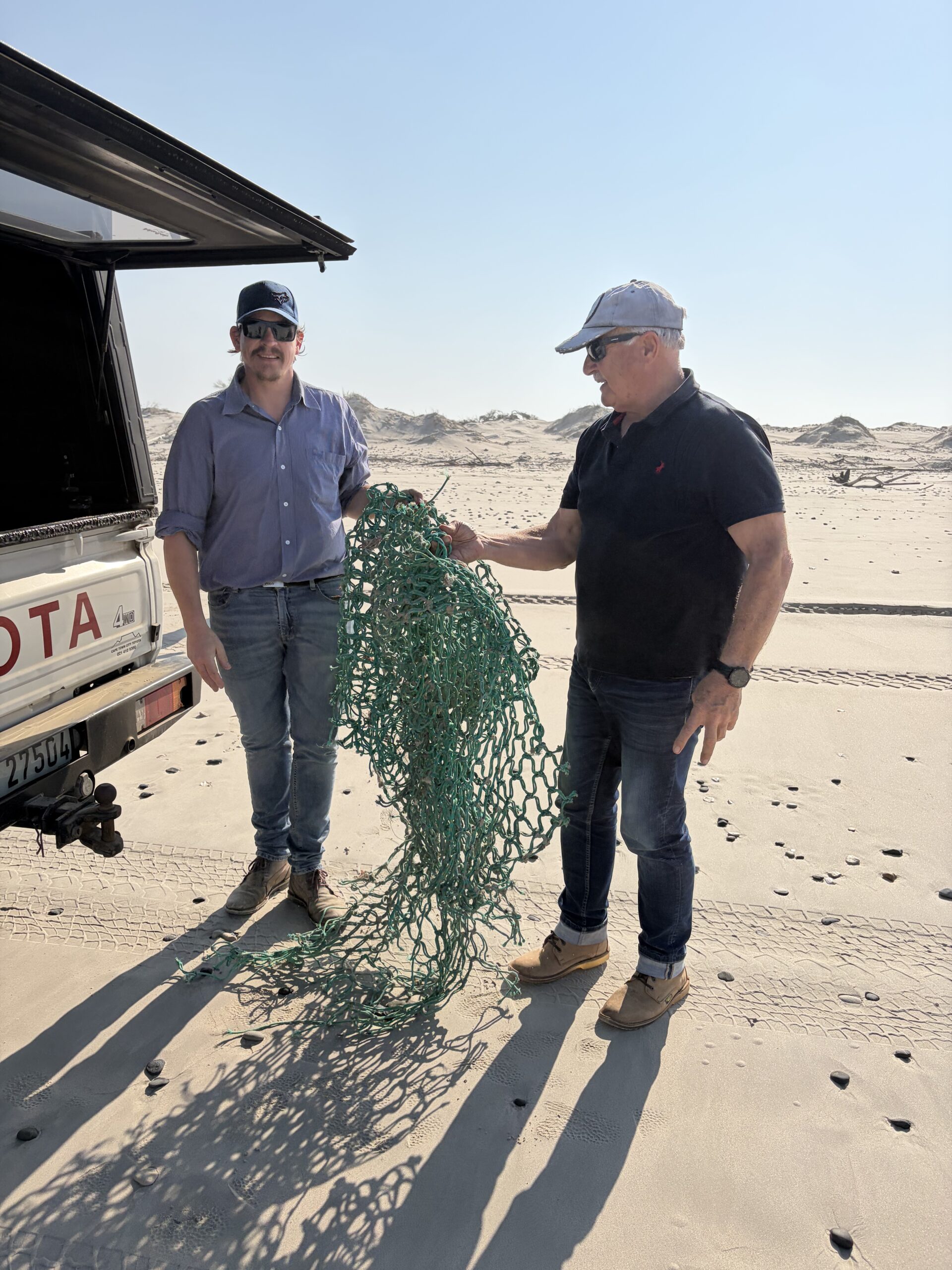
Marine Dynamics CEO, Mr Wilfred Chivell and Mr Jaco van der Walt from Denel removing discarded fishing gear from the coastline to avoid potential entanglements of marine life.
Early reporting is critical to the success of marine wildlife responses. If you encounter a stranded whale, dolphin, seal, seabird or other marine animal, please report it as soon as possible. If it is safe to do so, include an accurate GPS pin or location, photographs of the animal, and any additional information such as whether it is alive or deceased, its approximate size, and any obvious injuries. Timely reporting allows trained responders to assess each situation quickly and maximise opportunities for research, rescue and rehabilitation.