On the morning of Sunday, 5 July, the Dyer Island Conservation Trust (DICT) stranding response team attended to a stranded Risso’s dolphin found at Die Plaat between Hermanus and De Kelders. The animal was reported by a local fisherman, whose prompt notification allowed the team to document and investigate the stranding.
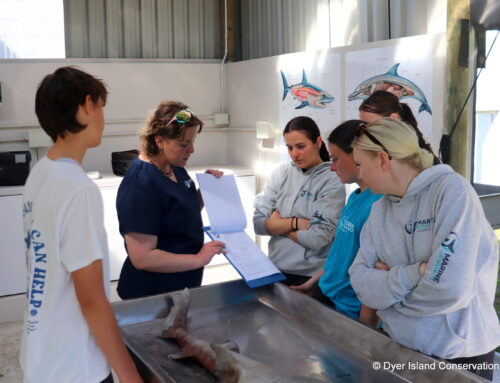
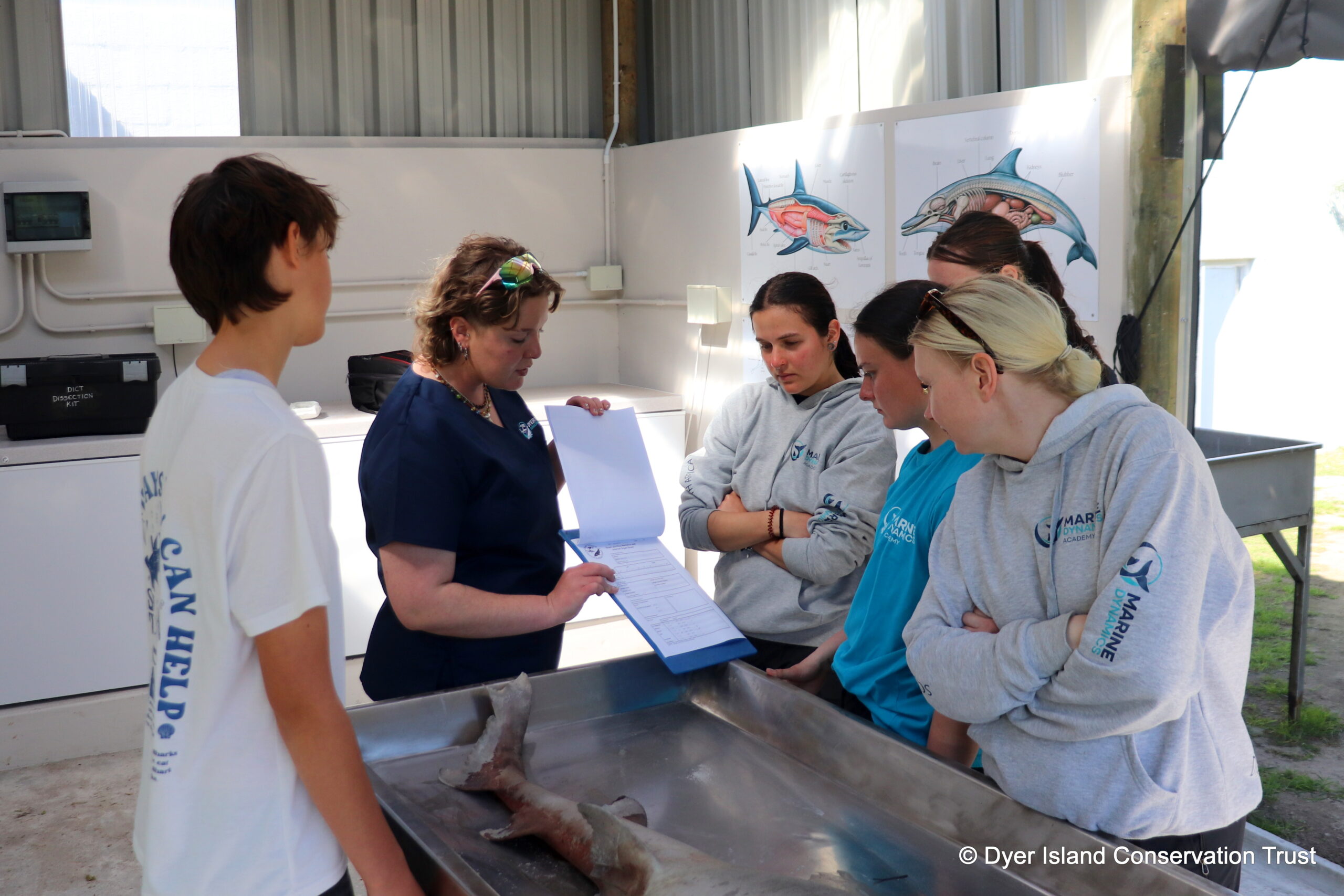
The response team included Dyer Island Conservation Trust Head of Research Dr Loraine Shuttleworth and Marine Dynamics Senior Marine Guide Susy Alexandersen, CEO Wilfred Chivell and Head of Media Leon Kriel.
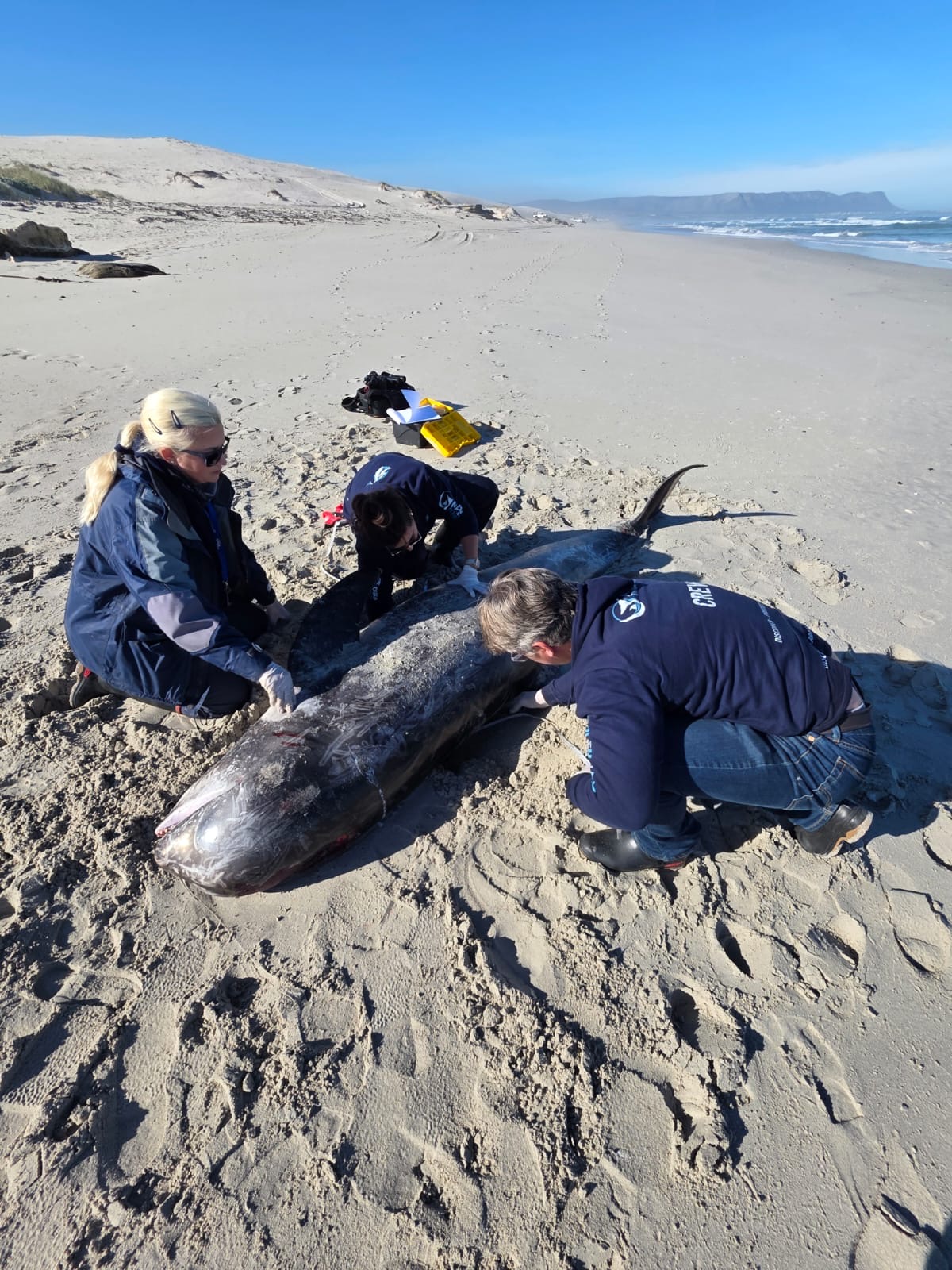
Dr Loraine Shuttleworth, Susy Alexandersen and Leon Kriel responding to the stranding
Risso’s dolphins (Grampus griseus) occur in oceans worldwide and are considered a cosmopolitan species, yet they are rarely encountered by people because they inhabit deep offshore waters, particularly along the continental shelf edge and slope. They are capable of diving to depths of at least 300 metres and can remain submerged for up to 30 minutes. Adults are easily recognised by their pale grey to almost white colouration and extensive scarring, caused by interactions with other dolphins and circular scars left by their cephalopod prey. While the species itself is not uncommon globally, strandings in the Overberg region are relatively rare. Since 2009, only three Risso’s dolphins have been recorded stranding in the area.
The stranded animal was an adult male measuring approximately 2.7 metres in length. A full necropsy was conducted, during which standard tissue samples, including skin, blubber and muscle, were collected for future analyses. Examination revealed an empty stomach, which can be indicative of underlying disease or compromised health. The dolphin’s teeth were also heavily worn, suggesting it may have been an older individual. In several dolphin species, advanced tooth wear can expose the tooth pulp, increasing susceptibility to infection. Unlike most other dolphin species, Risso’s dolphins possess remarkably few teeth, with only two to seven pairs of conical teeth in the lower jaw and none in the upper jaw, a unique adaptation linked to their squid-dominated diet.
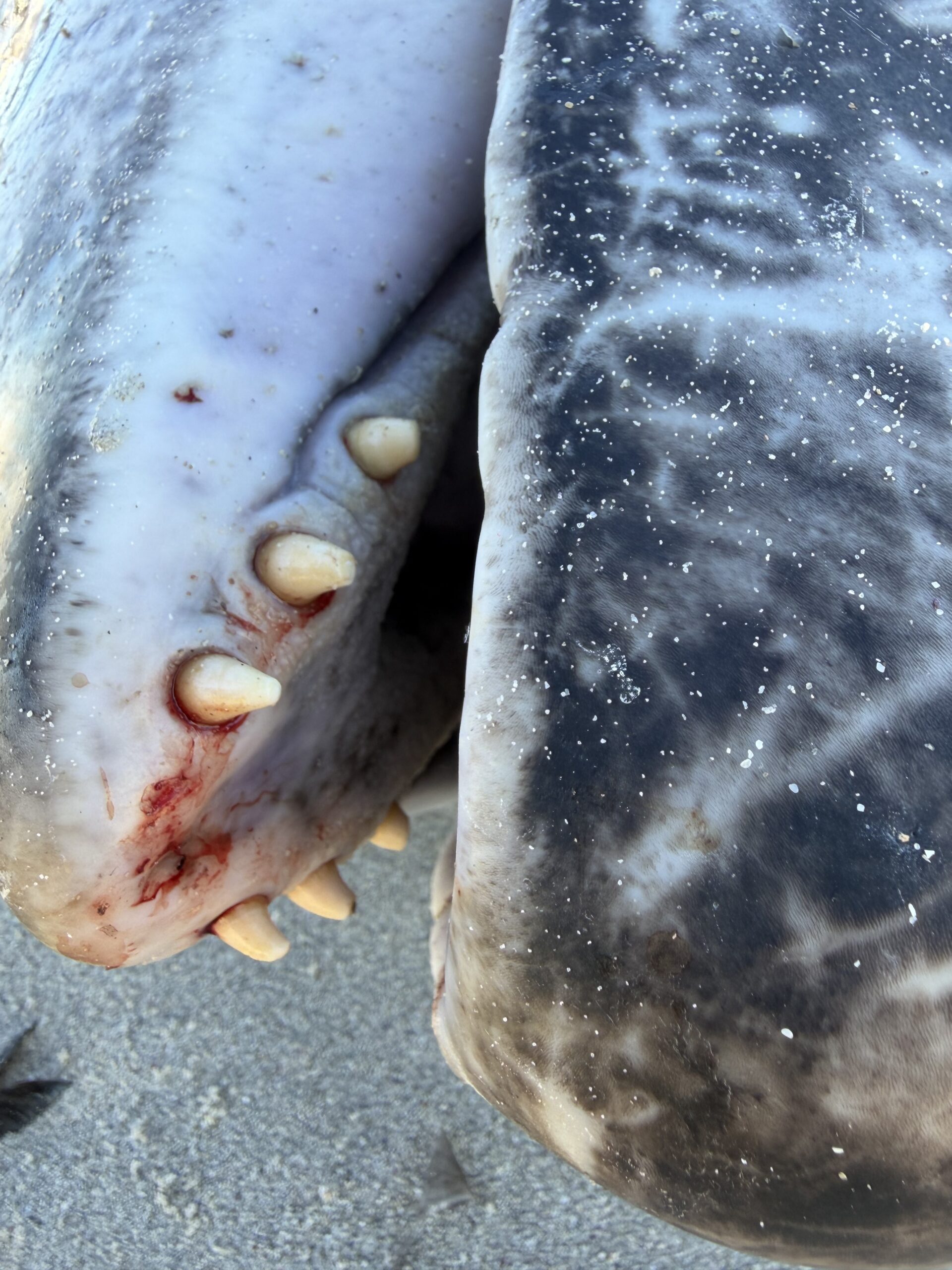
Worn teeth in the lower jaw of the stranded Risso’s dolphin
The exact cause of this individual’s stranding remains unknown. However, Risso’s dolphins are known to face a range of human-induced threats, including the accumulation of environmental contaminants in their blubber, which can impair immune and reproductive function, as well as exposure to intense underwater noise, which has been associated with stranding events in this species.
Every stranding provides a valuable opportunity to improve our understanding of marine mammal health, ecology and the threats they face. Long-term documentation of these events helps scientists identify patterns that may otherwise go unnoticed.
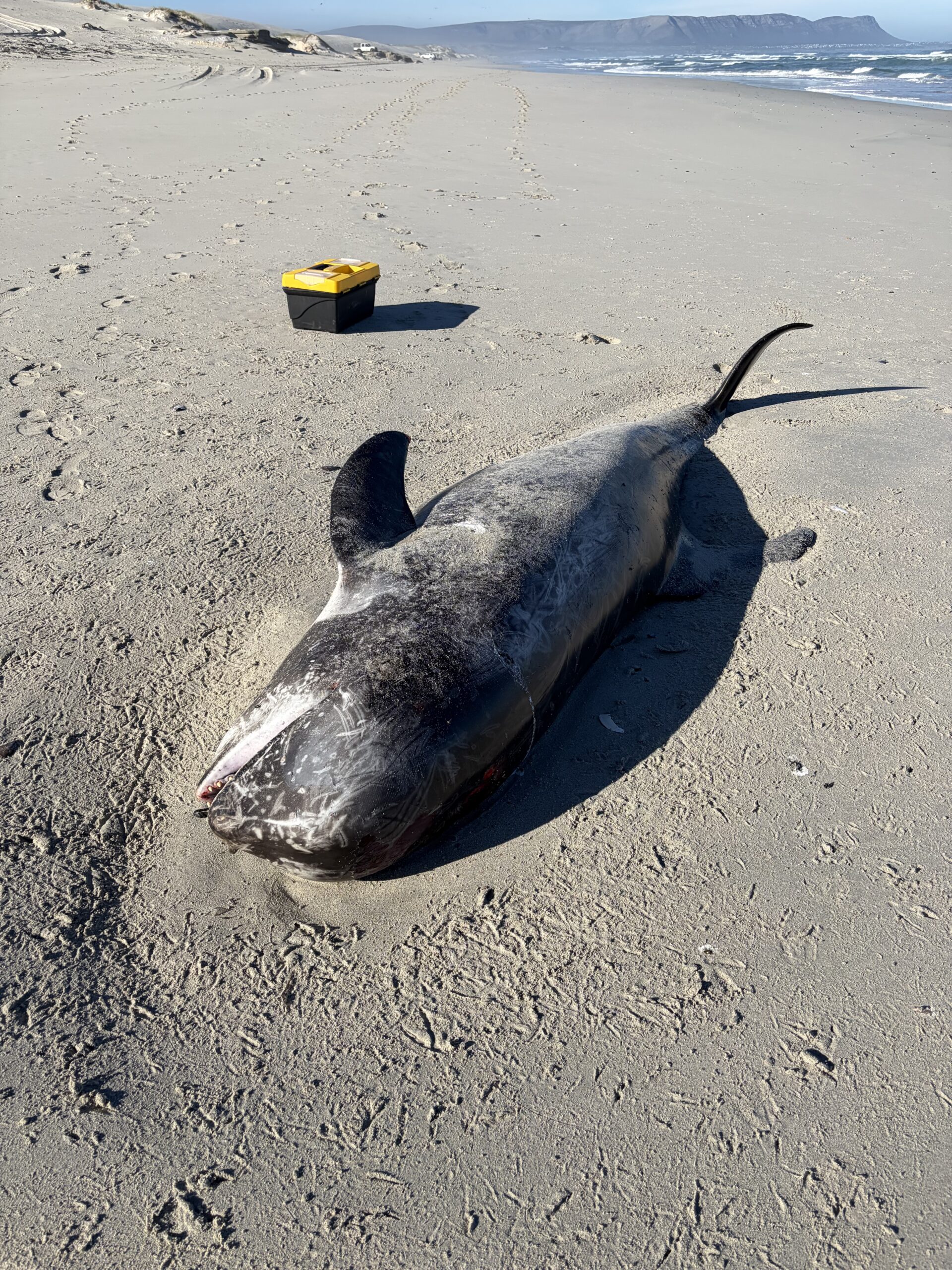
The stranded Risso’s dolphin found between De Kelders and Hermanus with visible scarring.
DICT extends its sincere thanks to the local fisherman who reported this stranding. The success of our marine mammal stranding network depends on the vigilance and support of members of the public, whose observations play a vital role in ensuring these important events are documented and investigated.