The Marine Dynamics and Dyer Island Conservation Trust (DICT) teams were alerted on Wednesday, 1 July, by Jason Stafford of Ivanhoe Sea Safaris, who reported a deceased whale close to Gansbaai Harbour. The whale later washed up at Die Plaat, and our team immediately responded to assess the animal and begin documenting the stranding.
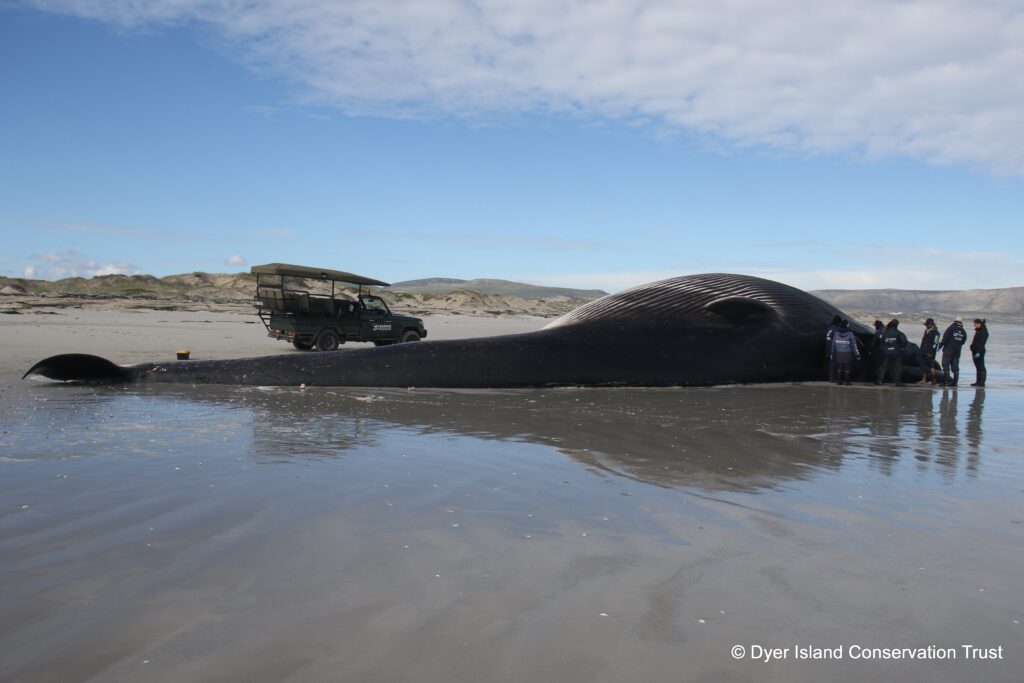
Upon arrival, the team confirmed that the whale was a female fin whale (Balaenoptera physalus) of 23 metres, the second-largest whale species on Earth after the blue whale. Fin whales are large baleen whales found in oceans across both the Northern and Southern Hemispheres, generally inhabiting offshore and deep-water environments. However, they do move through productive temperate and cooler waters in search of food. They are sleek, fast-moving whales that can reach up to 27 metres in length and weigh more than 70 tonnes (70,000 kilograms). The species is currently listed as Vulnerable on the IUCN Red List following severe global declines caused by industrial whaling.
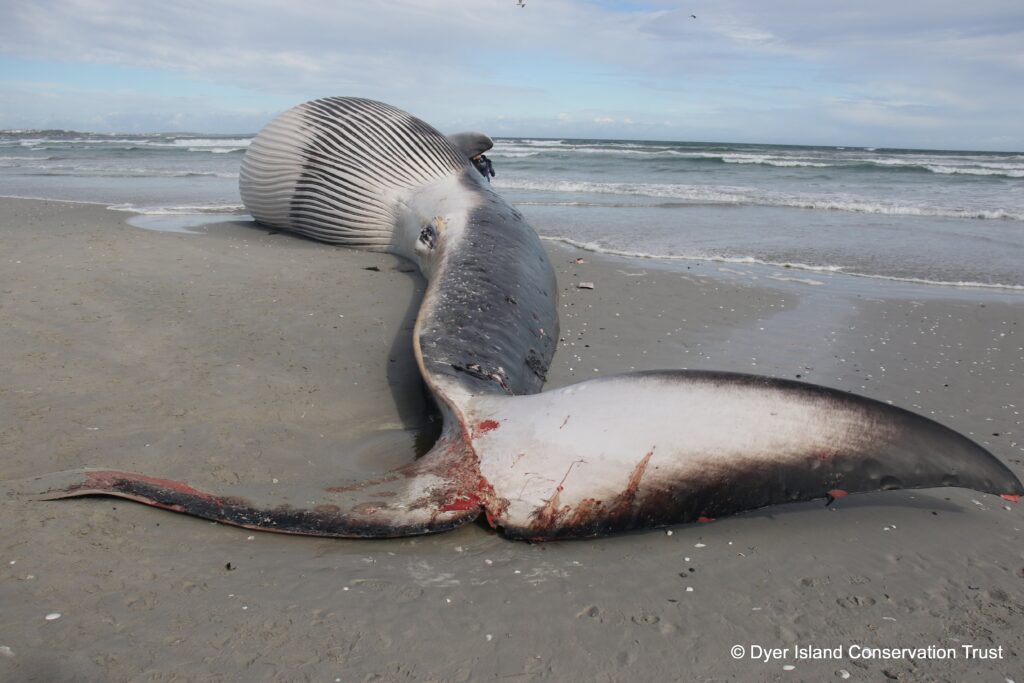
The whale was identified as a fin whale based on several distinguishing features observed by the Dyer Island Conservation Trust research team. These included the asymmetrical colouring of the baleen, with only the first few baleen plates on the left side showing white outer edges, while on the right side the first 100–200 plates are white to pale in colour. Fin whales can also be identified by their ventral grooves, which may extend as far as the umbilicus, as well as the amount of white visible along the right side of the throat and tail region. Together, these features helped DICT scientists confirm that the stranded whale was a female fin whale. Fin whales are known for this striking asymmetry in pigmentation, particularly on the head and baleen.
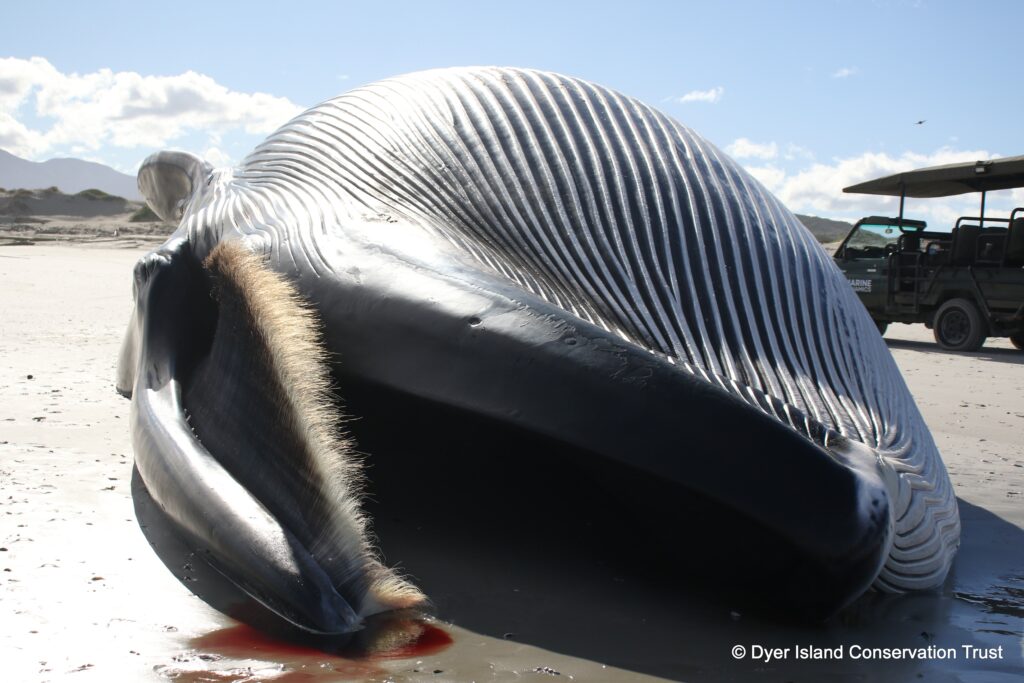
According to Wilfred Chivell, Founder of the DICT and CEO of Marine Dynamics Eco Tours, this is the first time he has ever seen a fin whale stranded along the Greater Dyer Island area coast.
Following the initial assessment, the Dyer Island Conservation Trust team returned to the site together with scientists from the University of Pretoria’s Mammal Research Institute Whale Unit to conduct a comprehensive necropsy. While full necropsies are not routinely undertaken on whales of this size due to the considerable logistical challenges involved, the rarity of a fin whale stranding in the area presented a valuable scientific opportunity that warranted a detailed examination.
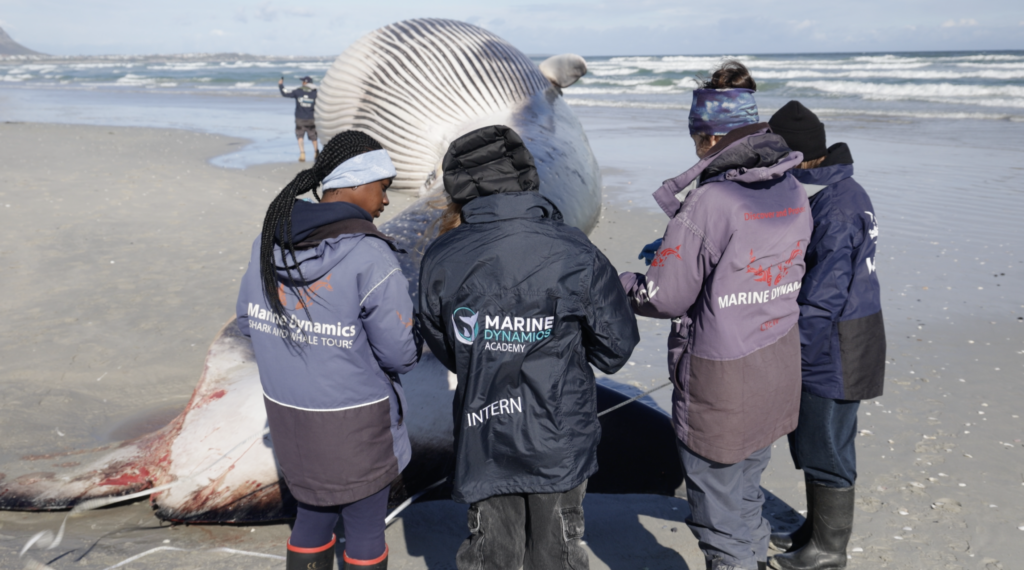
The primary objective of the necropsy was to investigate the cause of death. Particular attention was given to investigating evidence of vessel strike, including fractures to the ribs and other signs of blunt force trauma. Ship strikes are currently an important area of concern following two Bryde’s whale mortalities in the region during April. The increase in commercial shipping traffic around South Africa, associated with vessels being rerouted because of conflict in the Middle East, has heightened awareness of this potential threat to baleen whales. Despite a thorough examination, no obvious evidence of ship strike or any other clear cause of death was identified. However, a range of tissue samples was collected for further laboratory analyses, which may provide additional insight into the circumstances surrounding the whale’s death. Additionally, as the whale was a mature female, the examination also sought to determine whether she was carrying an unborn foetus, however, no foetus was present.
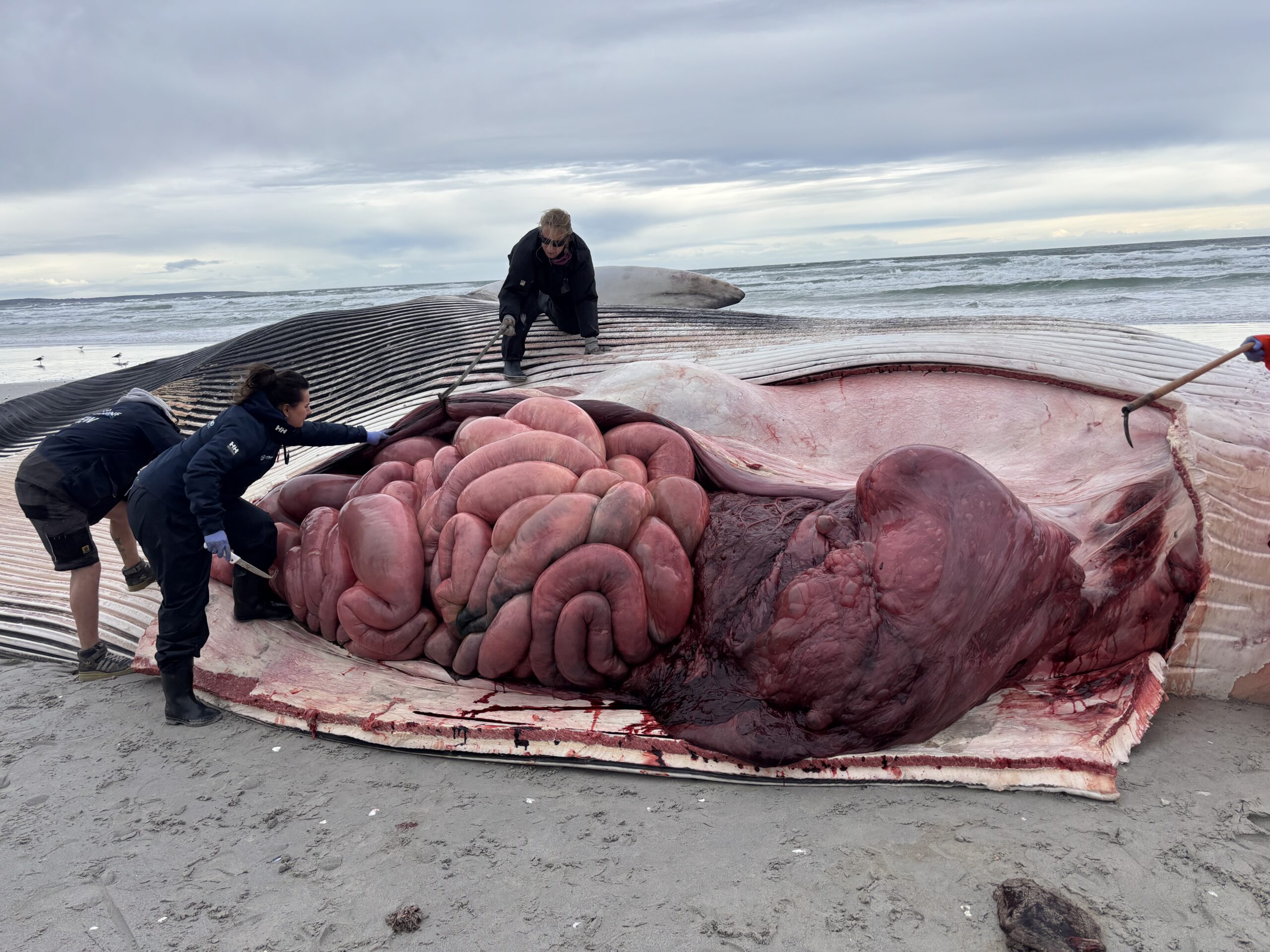
The response team conducting a full necropsy of the stranded baleen whale.
The necropsy also provided a rare opportunity to recover baleen plates from the whale. Baleen is far more than a feeding structure. It serves as a biological archive, recording information about a whale’s life over several years. By sampling at consistent, successive intervals along the baleen, researchers can use stable isotope analysis to investigate changes in diet, foraging areas and migration patterns through time. Endocrine analyses can further reveal aspects of the whale’s life including reproductive history, or periods of physiological stress associated with events such as entanglement or other significant challenges. Recovering baleen from stranded whales is, however, not always possible. In many cases, the mouth remains tightly closed after death and cannot be safely opened. Even when the mouth is accessible, removing the baleen plates from the gum is an extremely difficult and labour-intensive process. The position of this whale therefore provided a rare opportunity to successfully recover these valuable samples for future research.
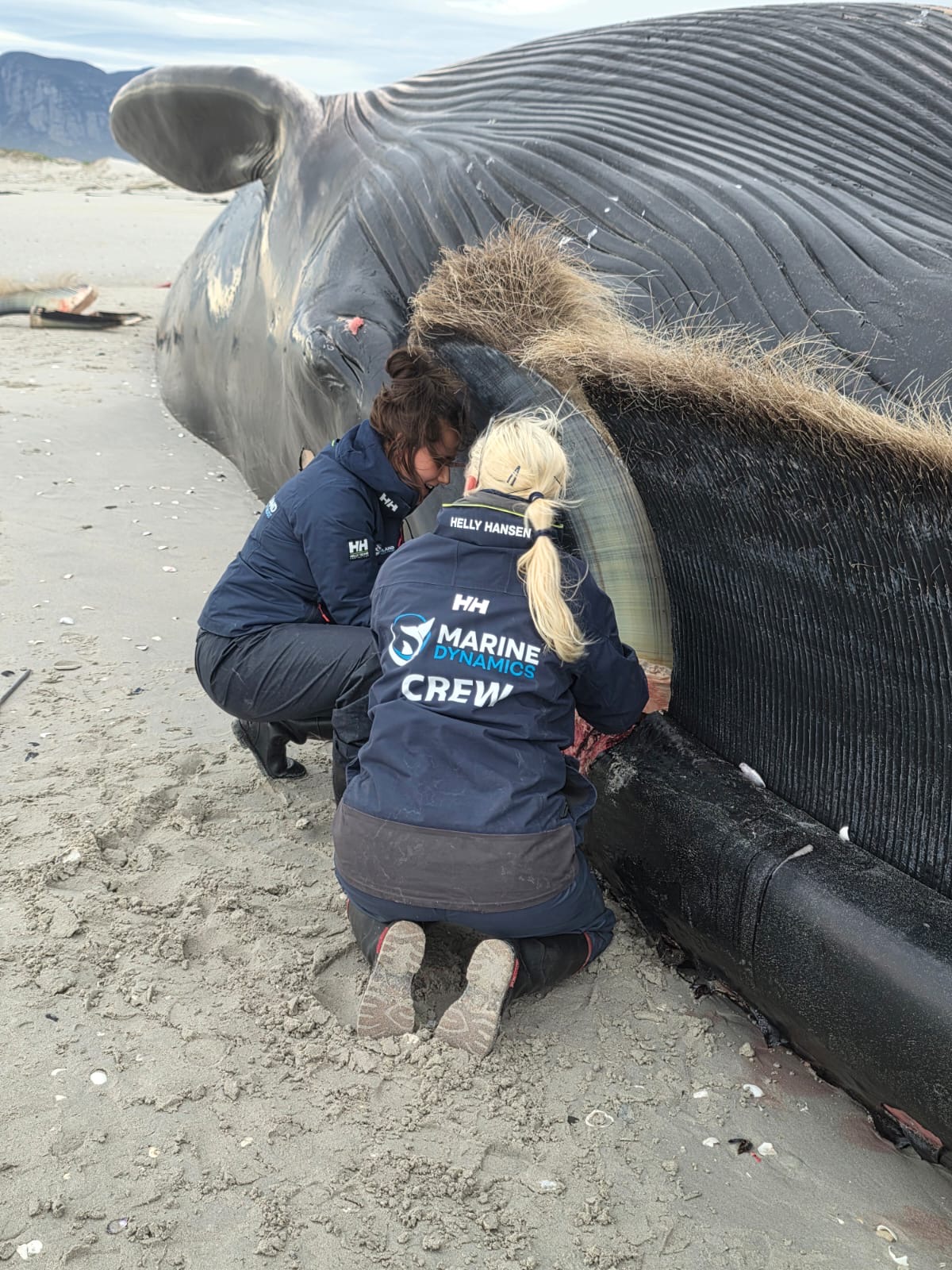
Dr Loraine Shuttleworth and Susy Alexandersen of the Dyer Island Conservation Trust and Marine Dynamics removing baleen plates from the jaw of the stranded fin whale.
Although the loss of this magnificent animal is a sad event, strandings such as this provide invaluable opportunities to improve our understanding of these elusive giants. Every sample collected and every piece of information gathered contributes to ongoing research that helps build our understanding of whale biology, health and the threats these animals face, ultimately informing their conservation for generations to come.