With heavy storms and winds of up to 125 km/h sweeping through the Overstrand, our hearts go out to everyone who lost their homes and are now beginning the difficult task of rebuilding. We also think of those who stocked up on food and winter supplies in the freezer, only to lose everything after four days without electricity, with power restored only in the early hours of Friday, 15 May.
But it was not only humans who suffered during the severe weather.
African Penguin and Seabird Sanctuary Senior Bird Rehabilitator Xolani Lawu, Dr Annamarie Robberts, and the rehabilitation team have been extremely busy rescuing feathered and shelled animals in need.
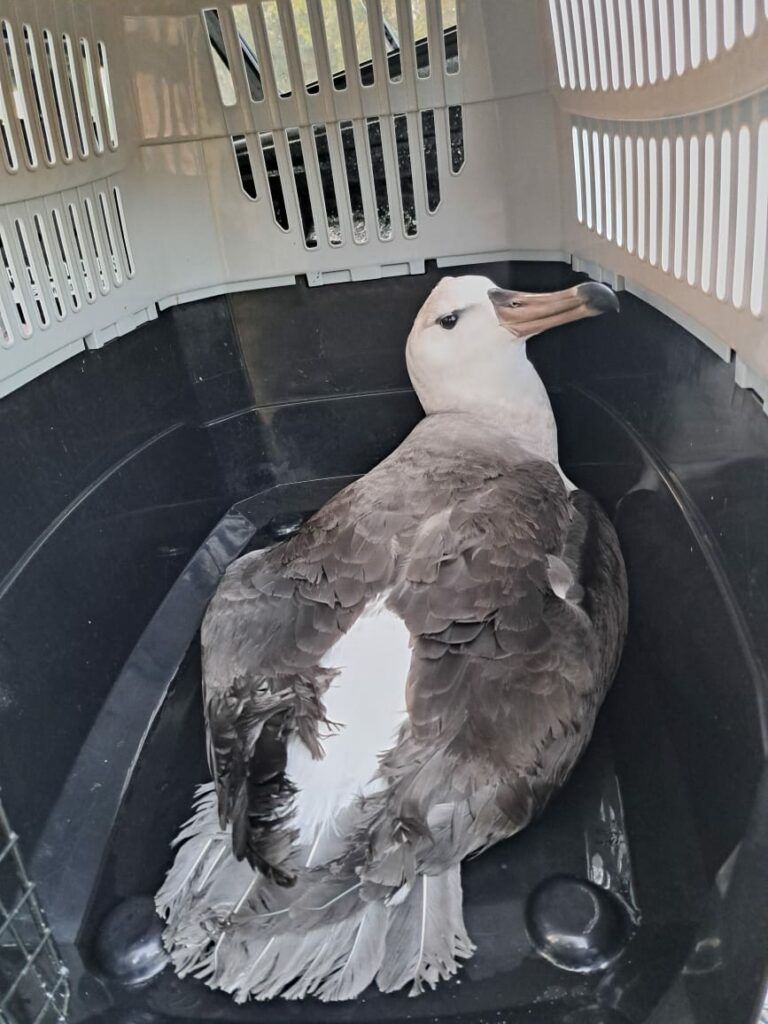
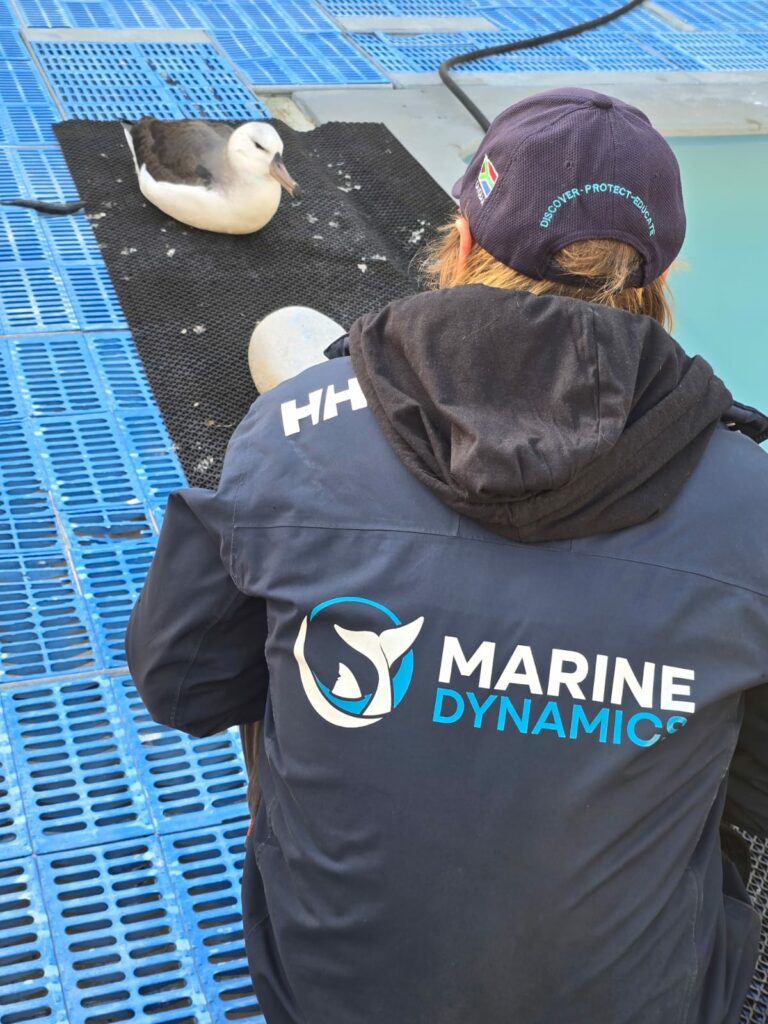
A concerned resident contacted Xolani after spotting a juvenile Black-browed Albatross on a farm outside Stanford, completely windswept and unable to fly. Another resident reported a Skua that was also unable to take to the air.
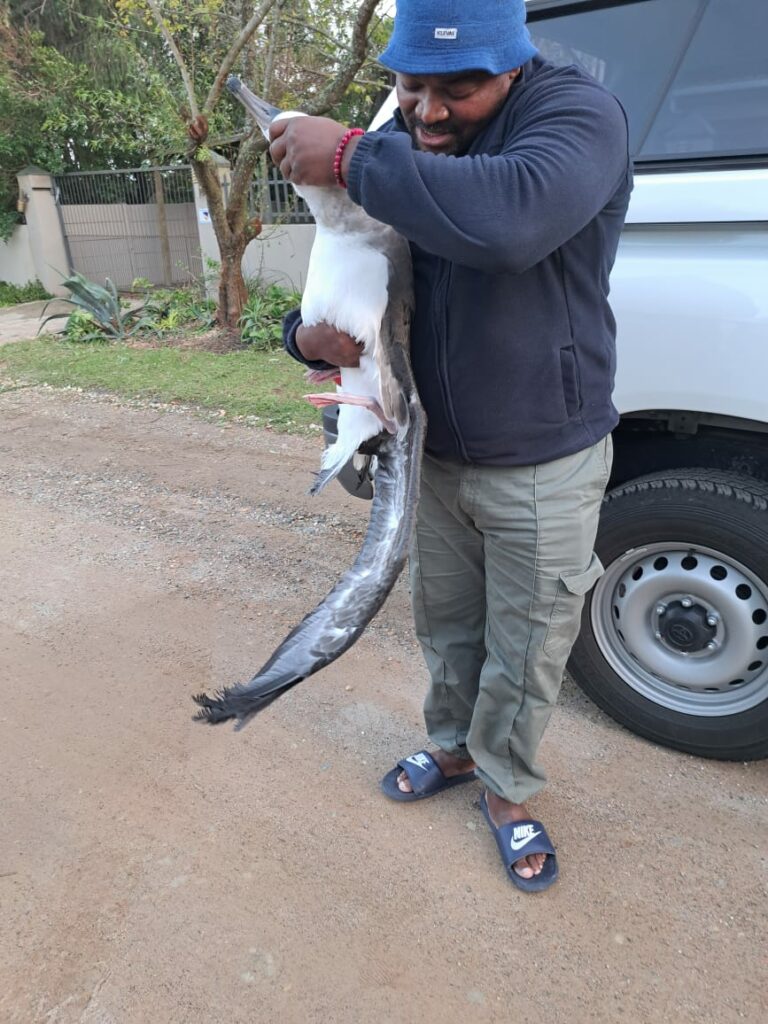
After medical evaluations, no serious injuries were found on the young Black-browed Albatross. Sadly, the Skua had suffered a severe knock to the left side of its head, including damage to its beak and a serious injury to its left eye.
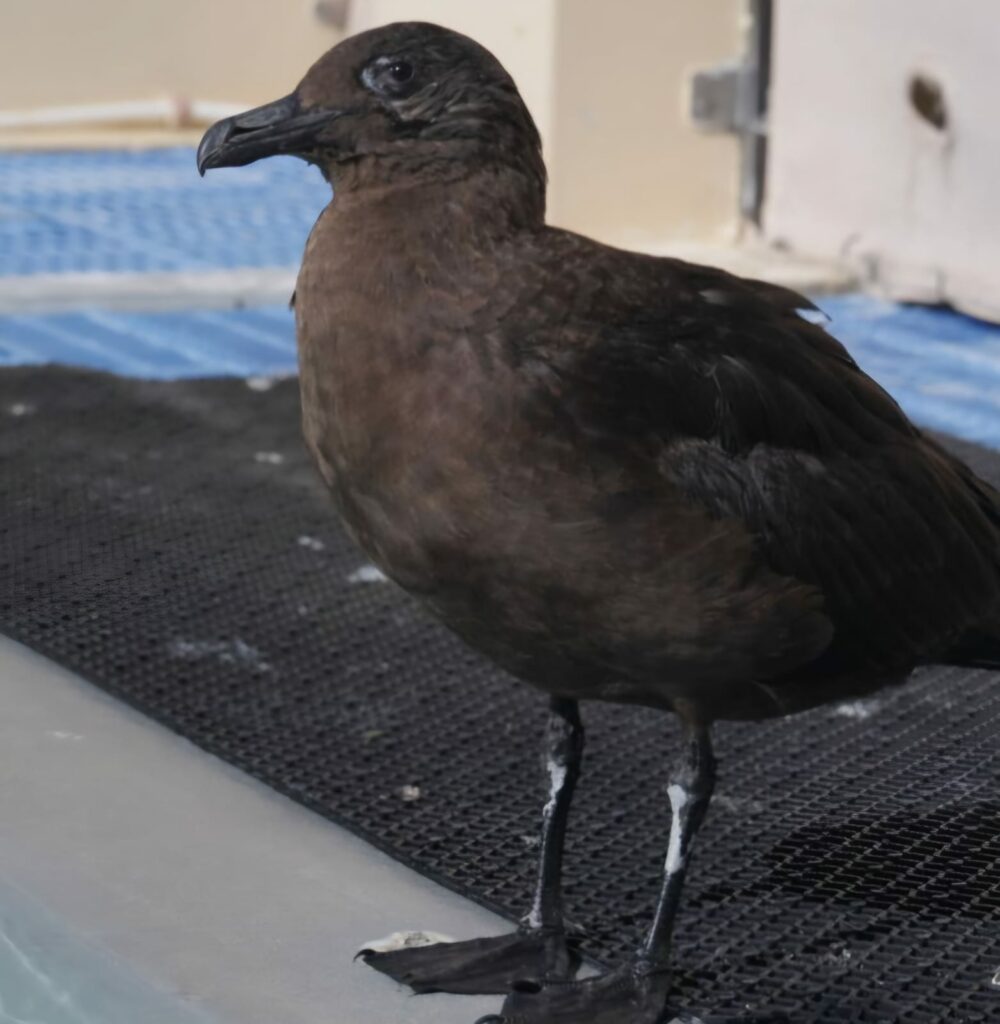
The good news is that both these feathered visitors — who travel thousands of kilometres to reach the southern tip of Africa — are expected to make a full recovery after receiving expert care, nutritious meals, warmth under infrared lights, and a healthy dose of TLC.
Although the juvenile Black-browed Albatross is absolutely magnificent to look at, do not underestimate this powerful ocean wanderer. These opportunistic hunters feed on fish, squid, crustaceans, carrion, and even fishery discards, and are known to steal food from other seabirds. One wrong move during treatment and Xolani’s finger could very easily be mistaken for a squid — making rehabilitation no easy task!
Black-browed Albatrosses
The Black-browed Albatross is one of the most widespread albatross species, found throughout the southern oceans. It breeds on islands across the Atlantic, Pacific, and Indian Oceans, including the Falkland Islands, South Georgia, Chilean islands, Heard Island, and the Crozet and Kerguelen Islands.
There are an estimated 1.2 million birds remaining globally, with approximately 600,000 breeding pairs. However, despite these numbers, populations are declining in many areas due to threats from longline and trawl fisheries. Fisheries remain one of the leading causes of mortality for these magnificent seabirds.
Black-browed Albatrosses are extraordinary ocean travellers, capable of covering vast distances using wind currents over the southern seas. Birds from South Georgia have even been recorded foraging in South African waters along the Benguela Current.
These birds are also highly social and vocal, using loud calls and elaborate displays during courtship. Juveniles may return to breeding colonies after two to three years, although they only begin breeding at around 10 years old.
And even more remarkable is the thought that this beautiful albatross, if it can avoid the many dangers posed by humans, may live for up to 70 years.
Skuas
Skuas nest on the ground in temperate, Antarctic, and Arctic regions and are remarkable long-distance migrants. They have even been sighted at the South Pole.
Isn’t it incredible that these birds — without technology or navigation systems, relying only on instinct, wind, waves, and the stars — can travel such immense distances across our oceans?
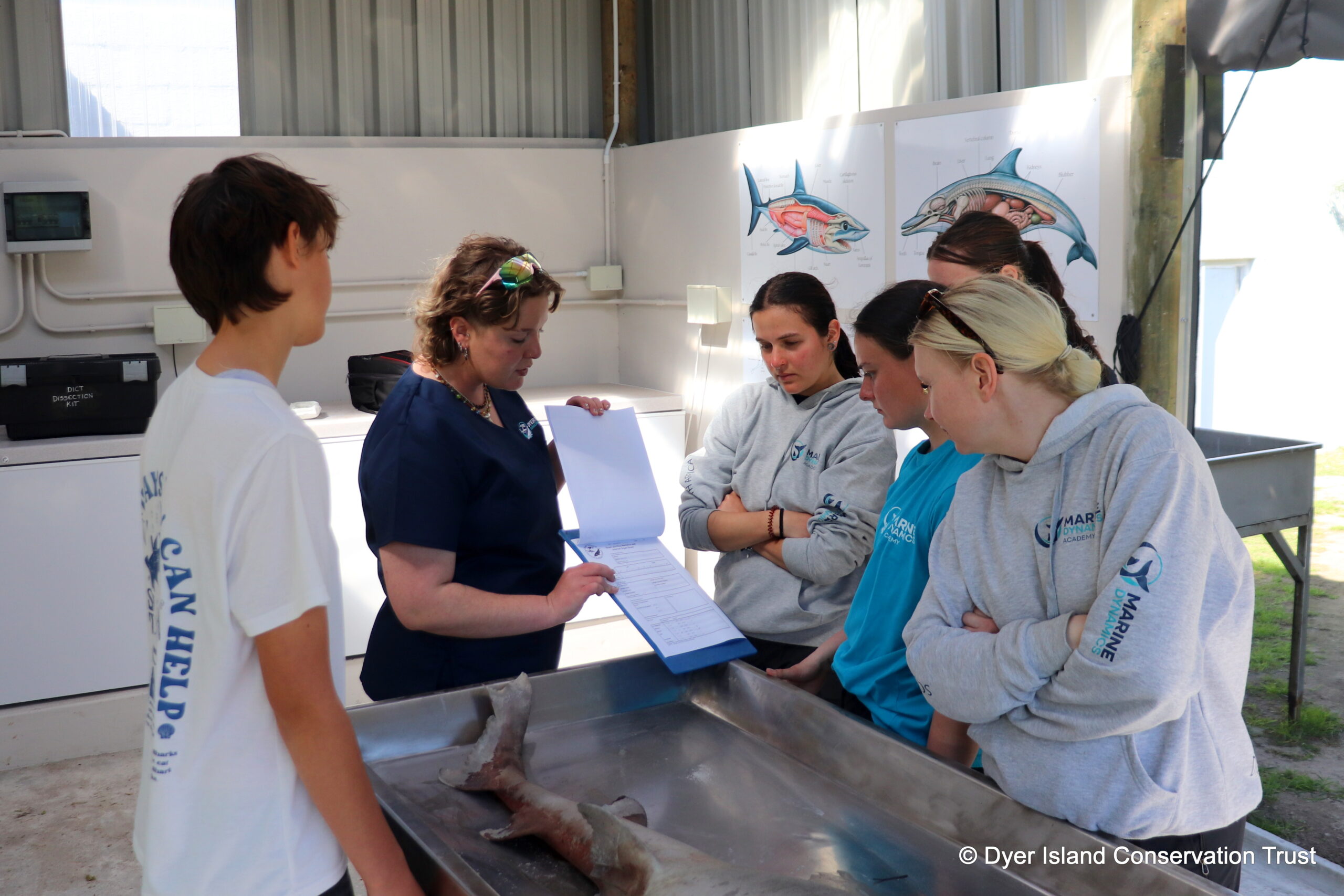
The teams at Marine Dynamics and the Dyer Island Conservation Trust were incredibly excited to meet these two special patients and cannot wait to see them released back into the ocean where they belong.
Another rescue took place yesterday evening when Xolani was alerted to a stranded turtle hatchling after the storm. As the African Penguin and Seabird Sanctuary forms part of the Two Oceans Aquarium Turtle Rescue Network, Xolani safely collected the tiny hatchling, which will now be transported to the Two Oceans Aquarium for rehabilitation.
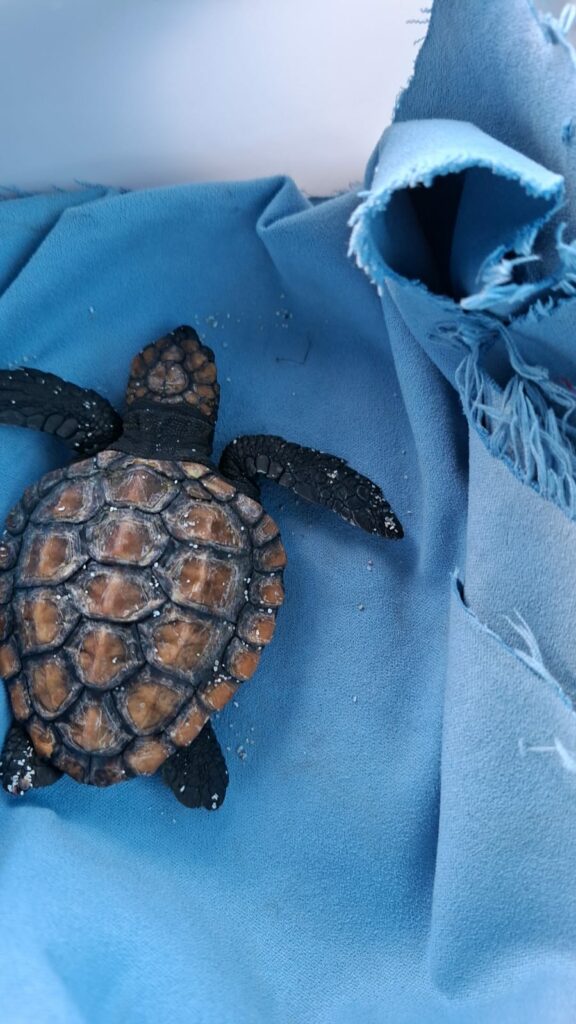
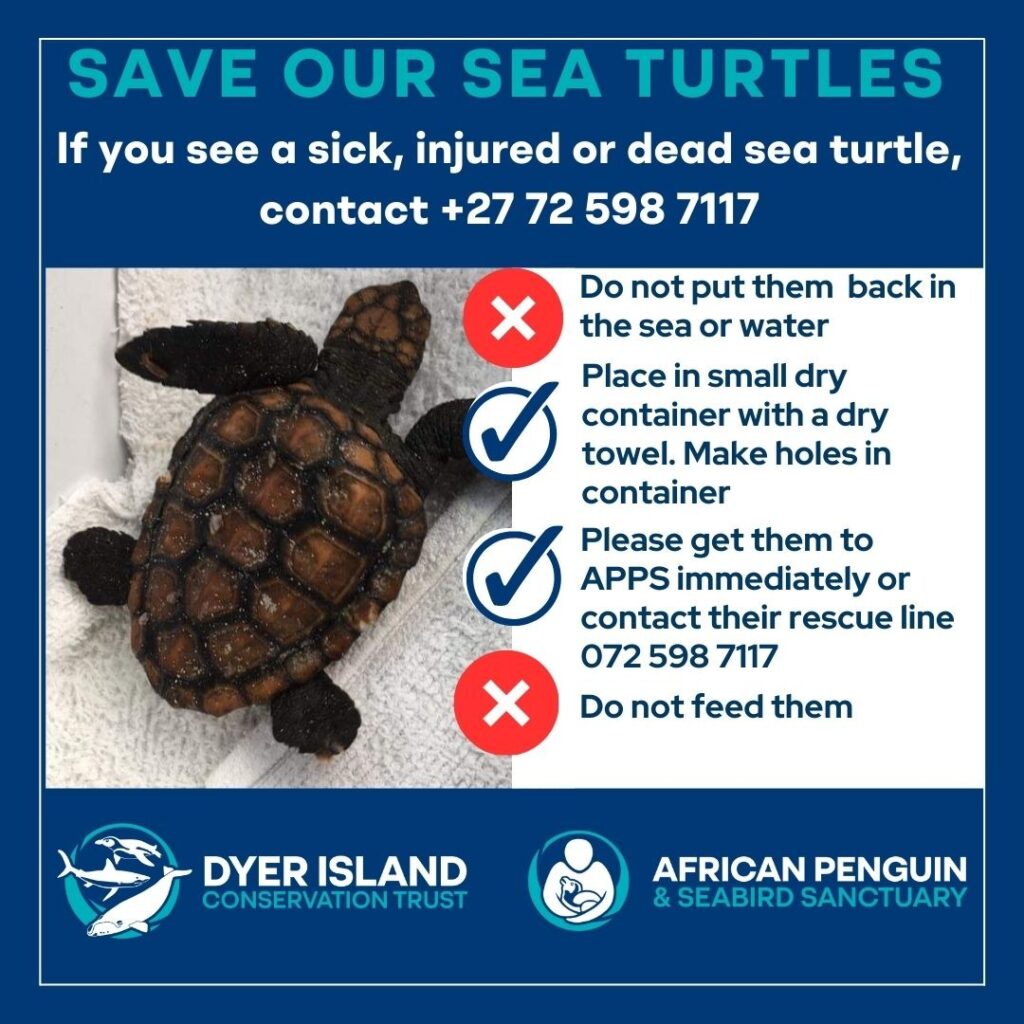
If you find a stranded turtle hatchling on a Western Cape beach, please do not put it back into the water. Immediately contact the Turtle Rescue Hotline on 083 300 1663. Keep the turtle dry, warm, and out of the wind in a ventilated container lined with a towel until it can be rescued.
Alternatively, you can contact Xolani Lawu on 072 598 7177.
Please remember to visit the African Penguin and Seabird Sanctuary when you are in the area. Enjoy a warm cup of coffee, buy a souvenir, and help support the Sanctuary in keeping its doors — and hearts — open to every animal in need.
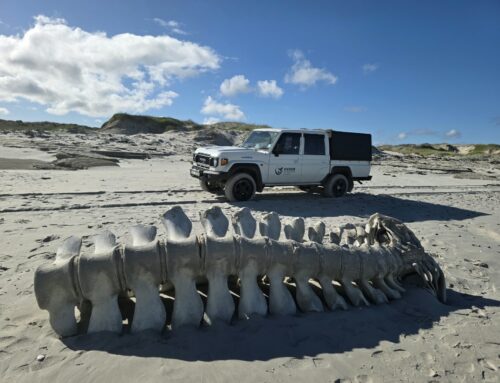
And a special thank you to CFAO Mobility Toyota Cape Town for our trusted Toyota Hilux, which enables the team to respond to difficult wildlife rescues along our coastline — often in harsh weather conditions and challenging terrain. Reliable transport plays a vital role in ensuring stranded and injured marine wildlife can receive urgent care as quickly as possible.
For more information, visit DICT – Dyer Island Conservation Trust.
Christine Wessels
[email protected]