On Thursday, 7 May, a collaborative necropsy of a ragged-tooth shark (Carcharias taurus) was performed by members of the Dyer Island Conservation Trust Team and the Two Oceans Aquarium. Stranded near Struisbaai, the individual was collected on 31 March by DICT’s Xolani Lawo and transported to the Marine Dynamics Academy lodge for storage.
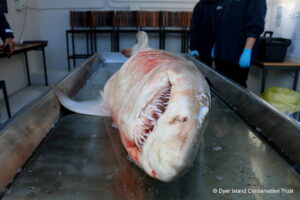
Ragged tooth sharks, commonly known as “raggies” in South Africa, are one of the coastlines’ most iconic and recognisable shark species, with unique spotted patterns along their dorsal side and rows of protruding teeth extending from their jaws. At the Two Oceans Aquarium, these sharks can be viewed within the I&J Exhibit, where wild-caught individuals are temporarily monitored and studied before tagging and rewilding, such as the recent Blue, who spent 8 years at the Aquarium before her release on 18 March 2026. With a widespread distribution, these sharks can be found in the waters of Cape Town to the coast of Mozambique, with a major migratory route along the Eastern Cape and KwaZulu-Natal. Occupying sandy gullies and rocky caves, they are typically found within water from 10 to 40 metres deep.
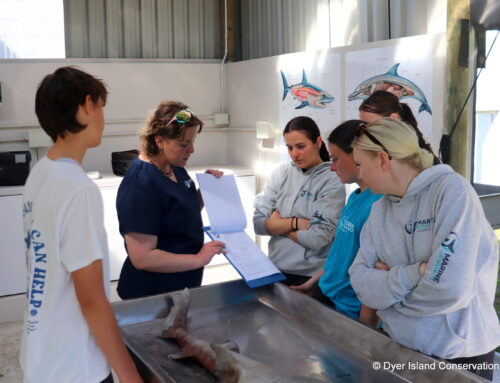
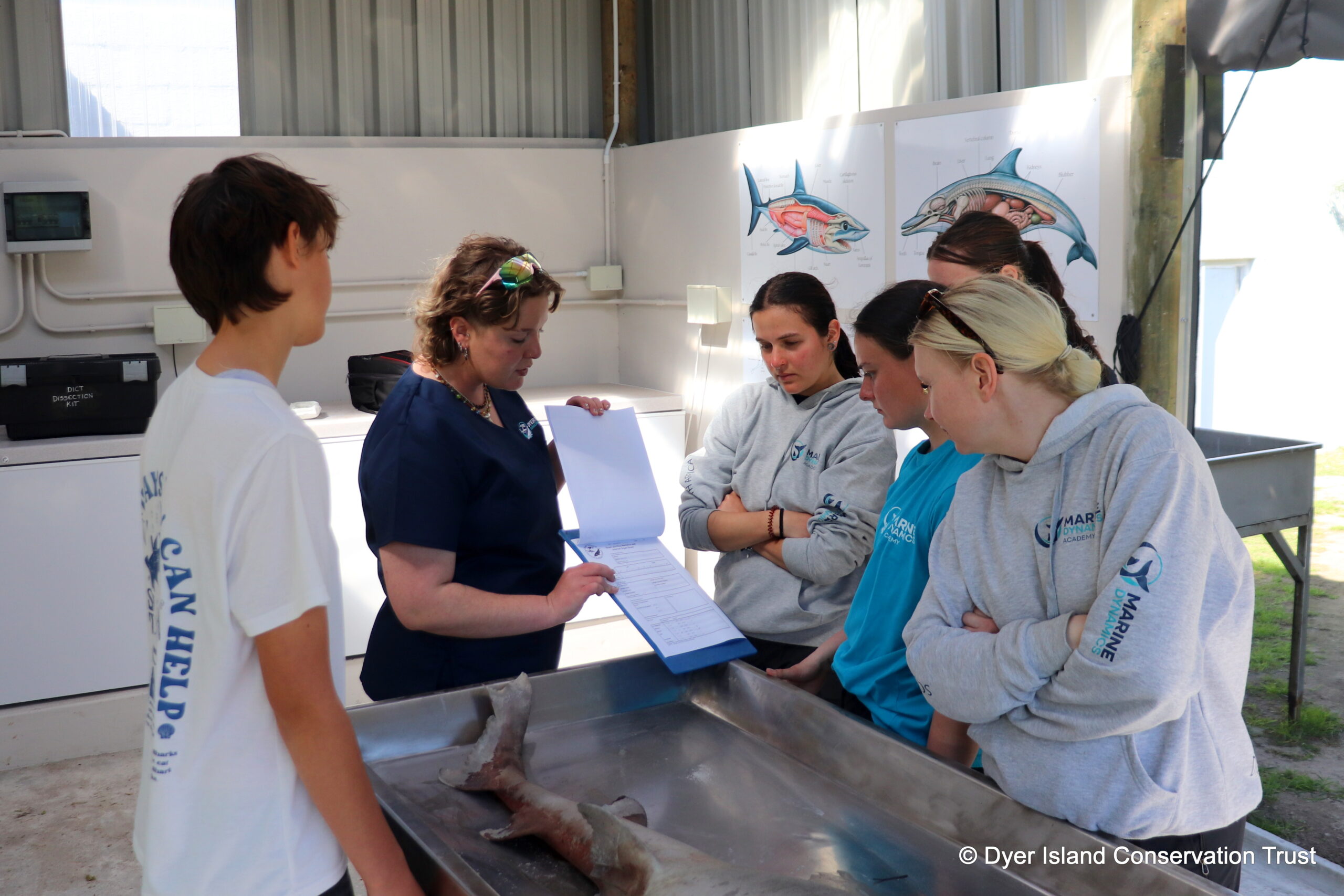
The post-mortem was completed at the necropsy facility of the Marine Dynamics Academy, beginning with external examinations and measurements by shark biologist Amy Webber, head of research, Dr Loraine Shuttleworth and lead shark guide Susy Alexandersen. The external appearance of the shark provided no signs of trauma, with slight bruising to the ventral side. Measuring at 2.21m, this ragged-tooth shark was identified as a younger female. Living up to 30 years, raggies can reach lengths of 3.2m, with females typically growing larger than males; a natural adaptation defined as sexual dimorphism.
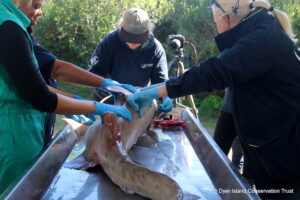
The internal investigation of the shark was conducted by aquarium veterinarian, Dr Ilze Jenkinson and senior quarantine aquarist, Inge Adams. The studied individual offered a rare and fascinating opportunity to learn and educate the team and spectators about the internal anatomy of sharks. All organs were present and in good condition, with Dr Jenkinson identifying signs of haemorrhaging and infection on the liver and stomach line, a likely cause of death for this ragged-tooth. Infections in sharks can result from bacterial presence, environmental stress or reduced water quality. The specific shark had an empty stomach, with infection often resulting in reduced metabolism and digestive abilities. Ranked globally by the IUCN as Critically Endangered due to population decline and slow reproductive rates, the impact of infection is often exacerbated by human-based activities such as angling, habitat destruction and changing sea surface temperatures.
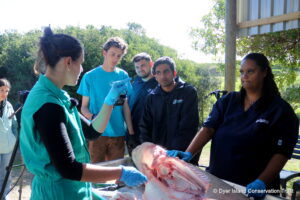
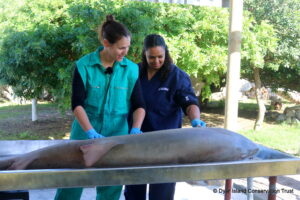
Strandings such as these offer insight into the biology, distribution and threats faced by specific species. A thank you to the team of Two Oceans for attending the stranding and assisting the DICT on-site to make the most of this unique opportunity.
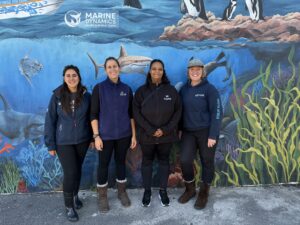
Dr Loraine Shuttleworth, Dr Ilze Jenkins, Inge Adams and Amy Webber.
We urge members of the public who encounter stranded marine animals to report the sighting immediately to Dyer Island Conservation Trust at +27 (0)82 907 5607. Reports should include detailed descriptions, accurate locations and photographs if safe and possible. Responsible reporting ensures that trained personnel can respond promptly, maximising both conservation and research outcomes.