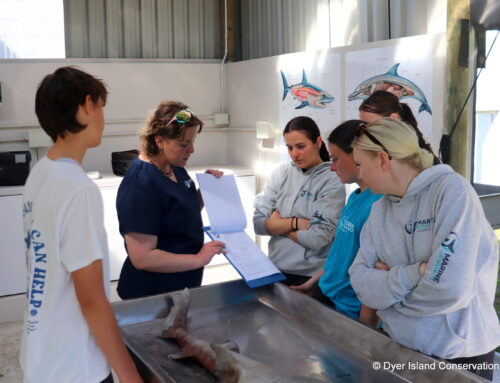
The DICT is a member of the South African Strandings Network and serves as one of the primary responders in the Overstrand region. Over the past few months, the team has responded to a number of cetacean strandings. Although strandings are never easy to encounter, they provide valuable scientific information. Since September 2025, the team has attended strandings of baleen whales, offshore toothed whales, and dolphins, with each event contributing varying levels of insight.
As part of ongoing efforts to strengthen our research capacity, construction of a new, dedicated necropsy facility is currently underway. This facility will significantly enhance our ability to process stranded animals and collect high-quality data to support marine conservation.
Southern right whales
On 5 October and 12 December 2025, two southern right whales (Eubalaena australis) were reported stranded at Pearly Beach and Buffeljags, respectively. Both individuals were calves, each measuring slightly over 5 m in length.
The calf found at Buffeljags was relatively fresh, with no visible injuries aside from postmortem abrasions likely caused by contact with rocks at the stranding site. In contrast, the individual at Pearly Beach was moderately decomposed and showed clear signs of predation, including multiple shark bite marks near the fluke.
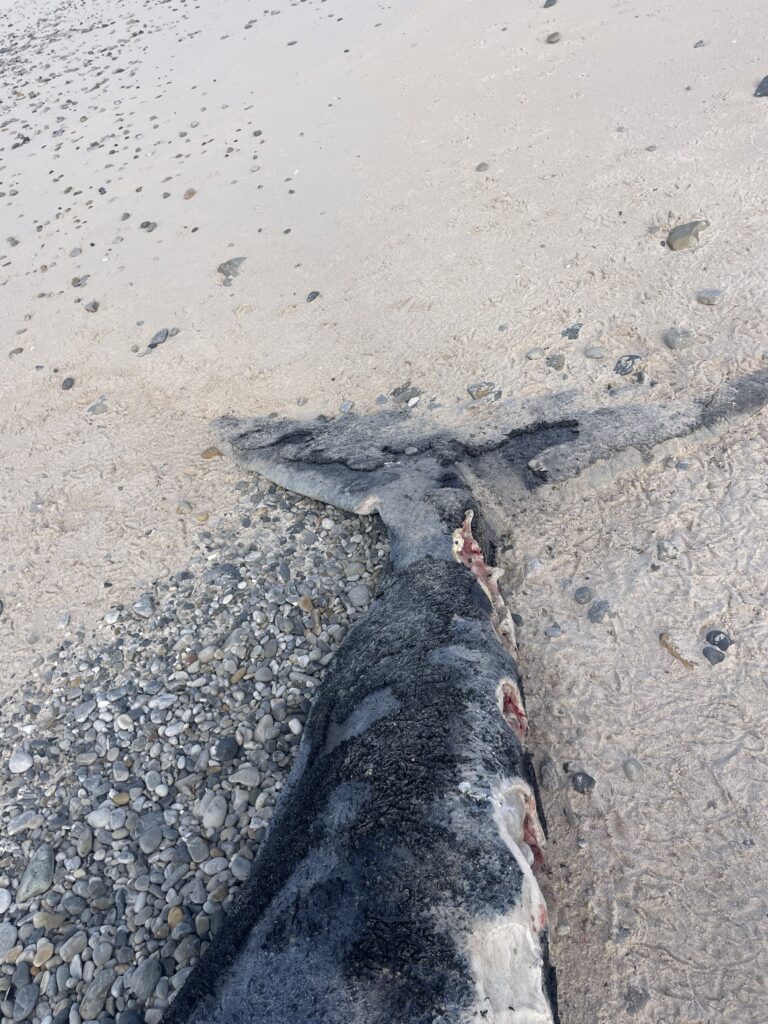
Evidence of predation near the fluke on the ventral side of the body.
Due to logistical constraints associated with the size of southern right whales, only limited measurements were taken on site. Skin and blubber samples were collected from both animals for further analysis.
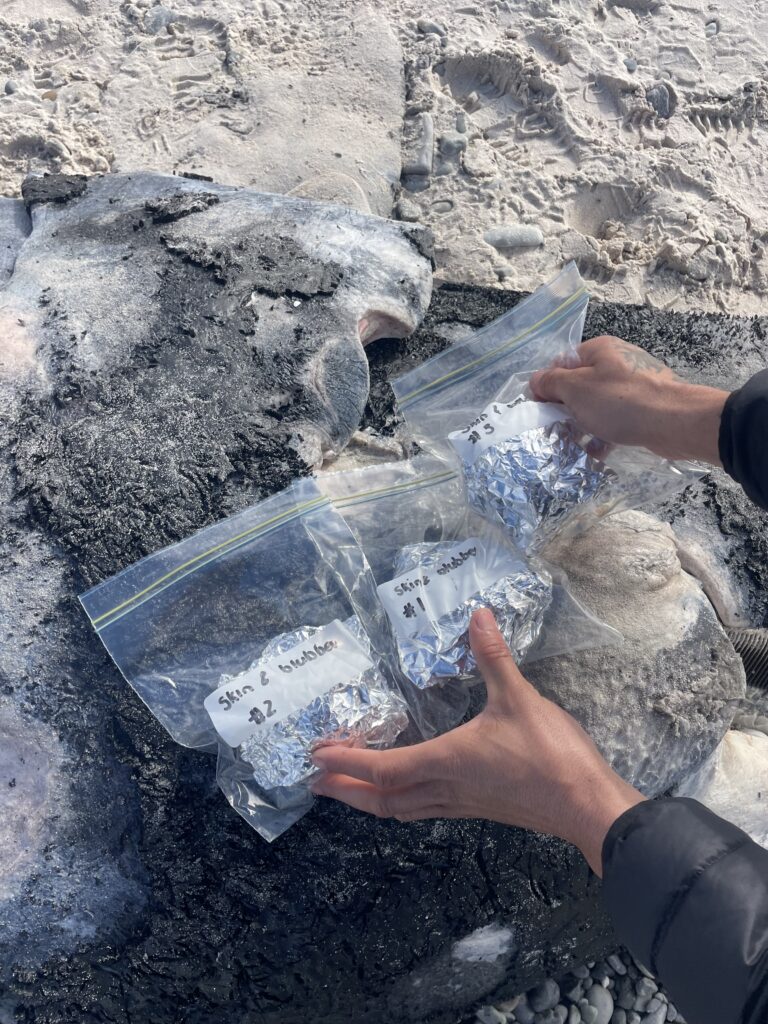
Skin and blubber samples collected from one of the southern right whales.
Kogia species
The genus Kogia includes the pygmy sperm whale (Kogia breviceps) and the dwarf sperm whale (Kogia sima). These species were only formally recognised as distinct in 1966. Observations of Kogia spp. at sea are rare and typically occur under exceptionally calm conditions. When sighted, individuals are often seen resting at the surface in a behaviour known as “logging.”
Both species are currently classified as Data Deficient, reflecting the limited knowledge of their biology, distribution, and population size. As a result, strandings provide particularly valuable research opportunities.
Two Kogia strandings were attended: one on 11 December 2025 at Die Gruis and another on 15 March 2026 at Die Plaat. The December individual was in an advanced state of decomposition, and standard measurements and samples including blubber, muscle, and teeth, were collected.
The individual found at Die Plaat was fresh and was therefore transported for cold storage. It will undergo a full necropsy once the construction of DICT’s new dedicated necropsy facility is completed, which will significantly enhance the team’s capacity to process and study strandings in detail.
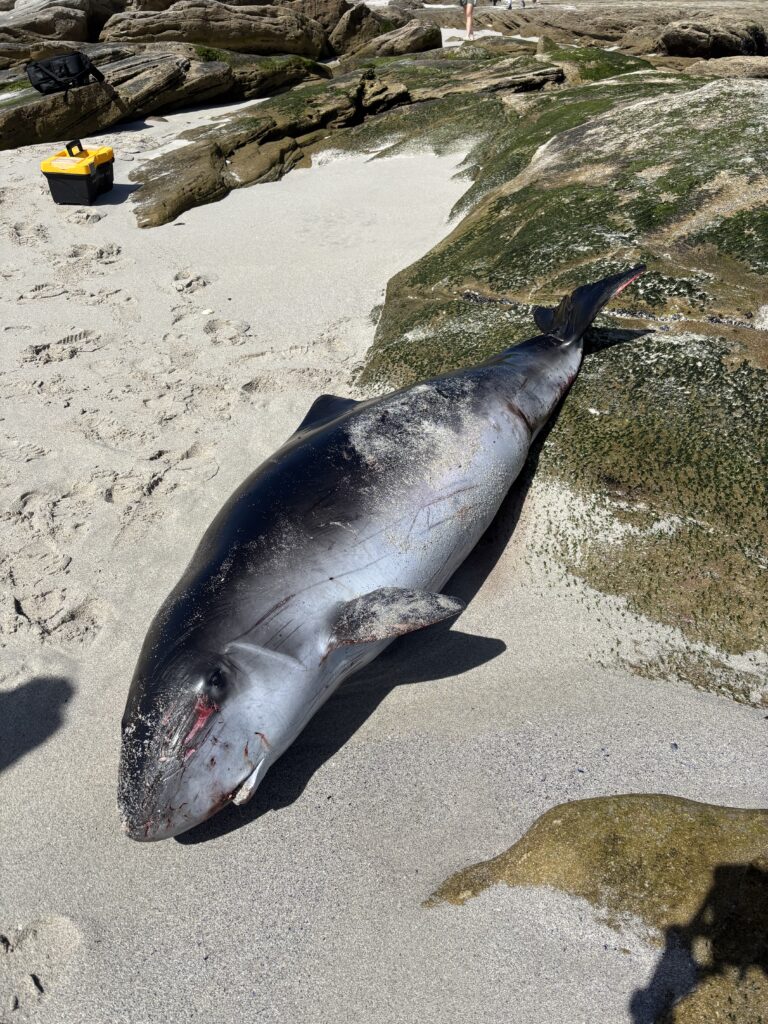
Kogia sp. stranded at Die Plaat
Dolphins
During this period, the majority of strandings attended involved dolphins, with all but one individual identified as calves. Five animals were identified as common dolphins (Delphinus delphis) based on the characteristic “hourglass” or “crisscross” pattern, including a distinctive yellowish or tan patch typical of the species.
One additional dolphin was recorded; however, its advanced state of decomposition prevented accurate species identification.
Three individuals were measured and sampled at the time of stranding, while the remaining three were collected and placed in cold storage. These will undergo full necropsies at the new facility once operational.
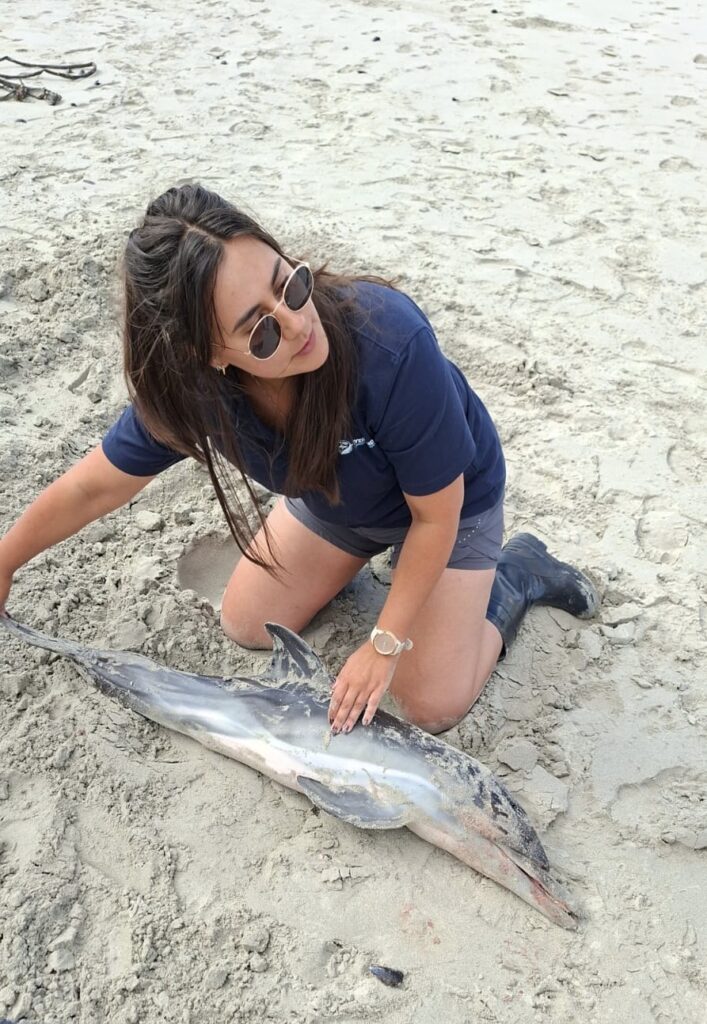
Loraine Shuttleworth, Head of Research, with a common dolphin calf stranded at Grotto beach, Hermanus.
How you can help
Public awareness and rapid reporting play a vital role in marine conservation. If you encounter a stranded marine animal in the Overstrand area:
- Contact the Dyer Island Conservation Trust immediately: +27 (0)82 907 5607
- Provide clear details, including the exact location and a photograph if it is safe to do so
- Avoid touching or moving the animal
Timely reporting helps ensure that strandings are managed appropriately and that valuable scientific data can be collected to support ongoing conservation efforts.
A big thank you to Cape Town City Toyota for sponsoring the Dyer Island Conservation Trust team with yet another Hilux for our rescue and retrieval missions. We couldn’t do this without your support.
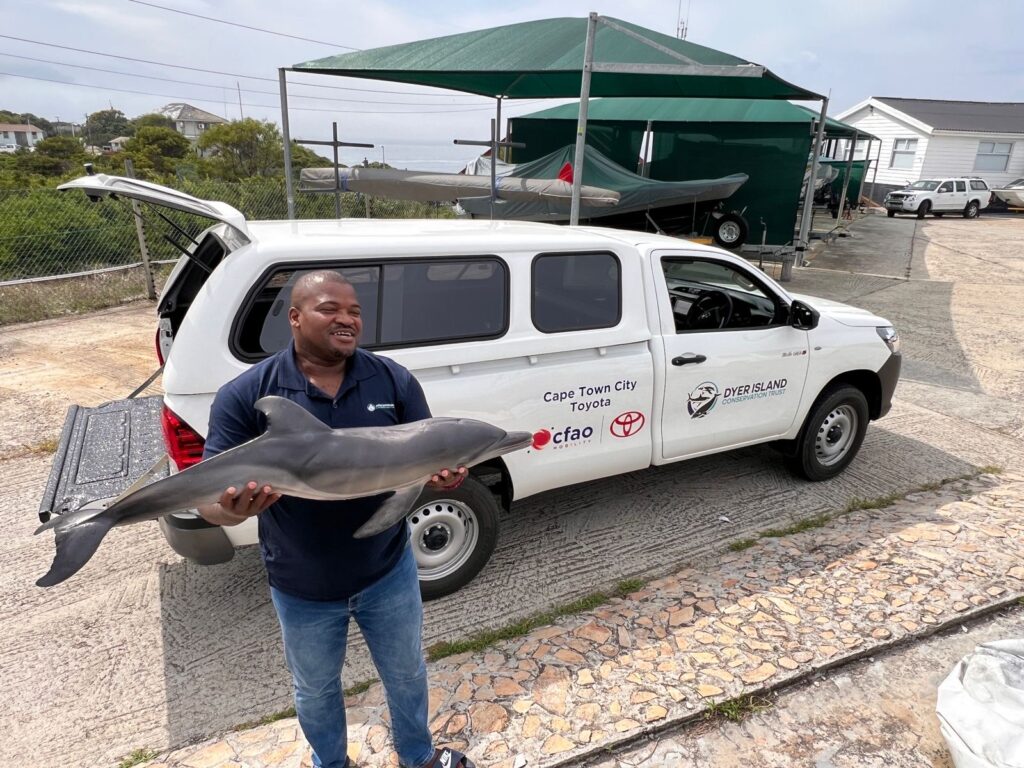
Xolani Lawu, senior bird rehabilitator, with a common dolphin calf found at Hermanus New Harbour