Marine Dynamics – Dyer Island Conservation Trust Team Completes Whale Disentanglement Training
The Marine Dynamics – Dyer Island Conservation Trust team has completed an intensive two-day whale disentanglement training course with Mike Meyer from the South African Whale Disentanglement Network (SAWDN). The organisation is immensely proud of the team members who undertook the rigorous training to prepare themselves to assist in one of the most challenging and dangerous marine rescue situations. CEO of Marine Dynamics, Wilfred Chivell, and his son, skipper Dickie Chivell, have been involved with whale disentanglement for the past 25 years.

The training was undertaken in response to the sobering reality of whale entanglements along the South African coastline. Each year, whales migrating along our shores face the very real threat of becoming entangled in fishing gear such as trap lines, gillnets, and other ropes in the water column. These incidents can lead to severe injury, prolonged suffering and, in many cases, death.
Globally, an estimated 386,000 whales, dolphins and porpoises die each year due to entanglement in fishing gear. In South Africa, entanglement incidents have increased in recent decades, largely due to interactions between recovering whale populations and coastal fisheries. Scientists note that because many whales sink or swim away after becoming entangled, only a fraction of these incidents are ever documented.

Research focusing on the Western Cape recorded 82 entanglement incidents involving southern right whales between 1999 and 2019, with three confirmed deaths caused by entanglement during that period. Most of these incidents occurred along the Western Cape coast between July and November, when southern right whales visit coastal nursery areas.

Further studies examining trap fisheries across South Africa between 2006 and 2020 found that 68% of whale entanglements were linked to the West Coast rock lobster fishery, with 90% of those incidents occurring in the most heavily fished zones. The species most frequently involved were humpback whales (64%), followed by southern right whales (25%) and Bryde’s whales (11%). There is also evidence that humpback whale entanglements have increased along the entire South African coastline.

Entanglements tend to peak when whales are closest to shore during migration. Humpback whales are most often affected during feeding aggregations from January to March, while southern right whale entanglements occur most frequently between July and November, during their calving season along the coast. Vertical ropes from traps to surface buoys are particularly dangerous, as whales swimming through these areas can become wrapped around their fins, tails or mouths.
The consequences for the whales are often devastating. Entangled whales rarely die immediately. Instead, they may drag heavy fishing gear for months, suffer deep rope wounds, lose the ability to feed, or drown if they cannot reach the surface to breathe. Many eventually die from infection, starvation or exhaustion.
Wilfred Chivell, Founder of Marine Dynamics and the Dyer Island Conservation Trust, says he has personally witnessed the devastating consequences of whale entanglements.
“I have been involved in several of these terrible incidents over the years between Pearly Beach and Hermanus. It is truly devastating to see what we as humans do to these animals. Watching a whale struggling with ropes cutting into its body is something you never forget. I wanted to make sure that both new and long-standing team members receive proper training, or refresher training, so that we can continue assisting these whales in need.”

The Marine Dynamics – Dyer Island Conservation Trust team will work together with partners such as the NSRI and the South African Whale Disentanglement Network whenever needed.

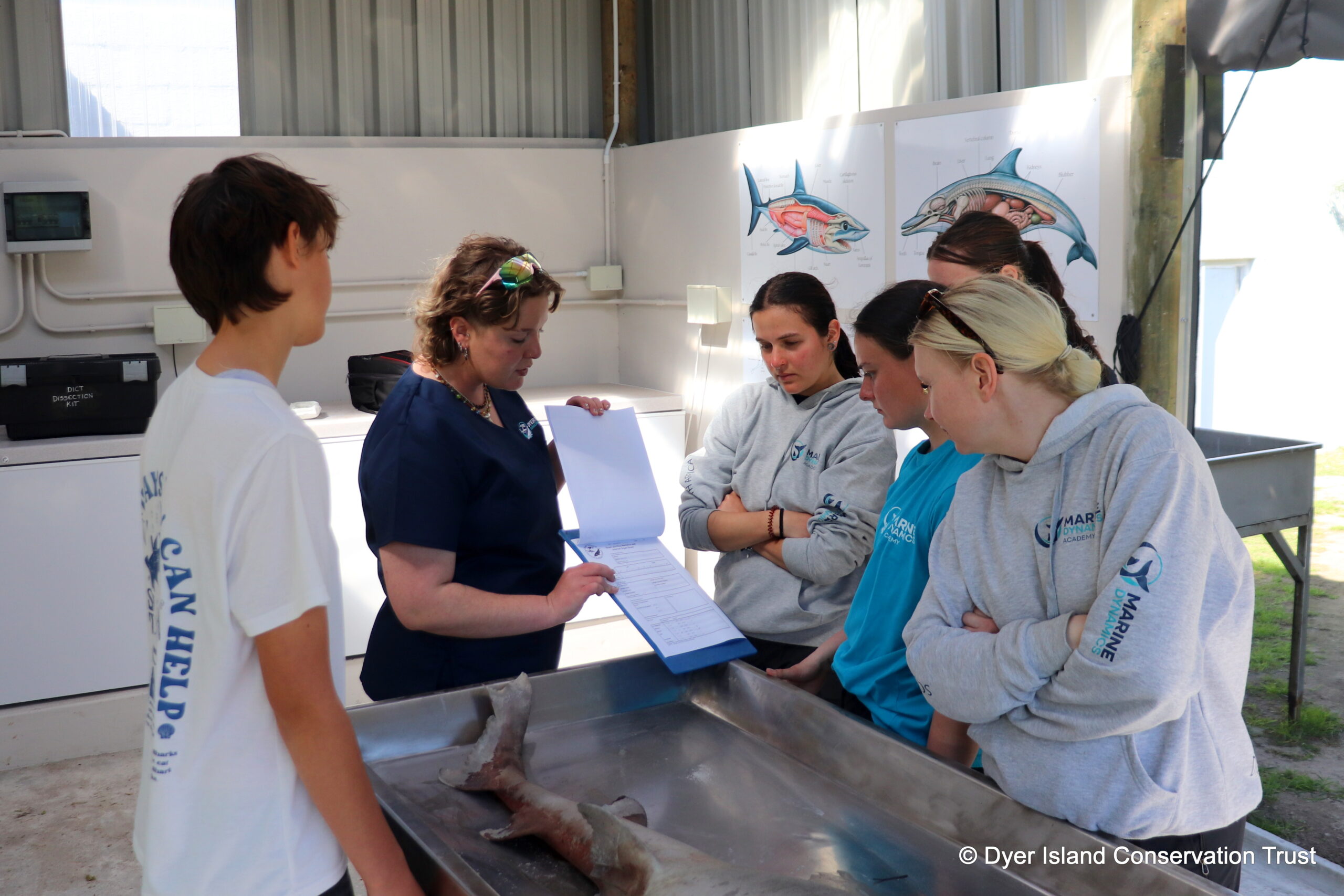
The team members who completed the training include Dr Loraine Shuttleworth, Dickie Chivell, Hendrik Odendaal, Kira Matiwane, Francois Swart, Benz Nomandela and Wiehann Myburg. Over the two days, they were equipped with the knowledge and practical skills required to respond safely and effectively to entanglement situations, learning the best-practice techniques used internationally to assist large marine animals in distress.

The organisations extend their sincere gratitude to Mike Meyer, who continues to play a vital role in training response teams and sharing his extensive knowledge built over decades of experience. His guidance emphasised the delicate balance required when assisting a stressed and entangled whale — doing everything possible to free the animal while ensuring that rescuers do not put their own lives at risk.

Through collaboration, preparedness and shared expertise, the team hopes to contribute meaningfully to responding to these challenging situations and to safeguarding the magnificent marine life that migrates along South Africa’s coastline.

Watch the video here: https://youtu.be/e5GMd0tZvD0
Christine Wessels