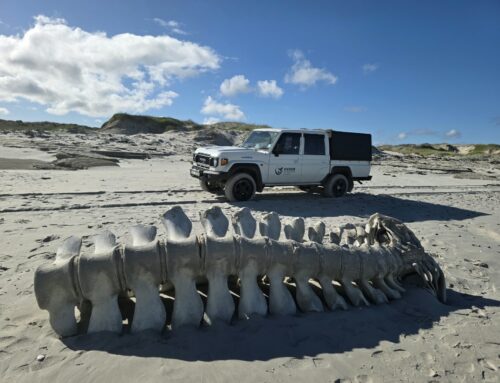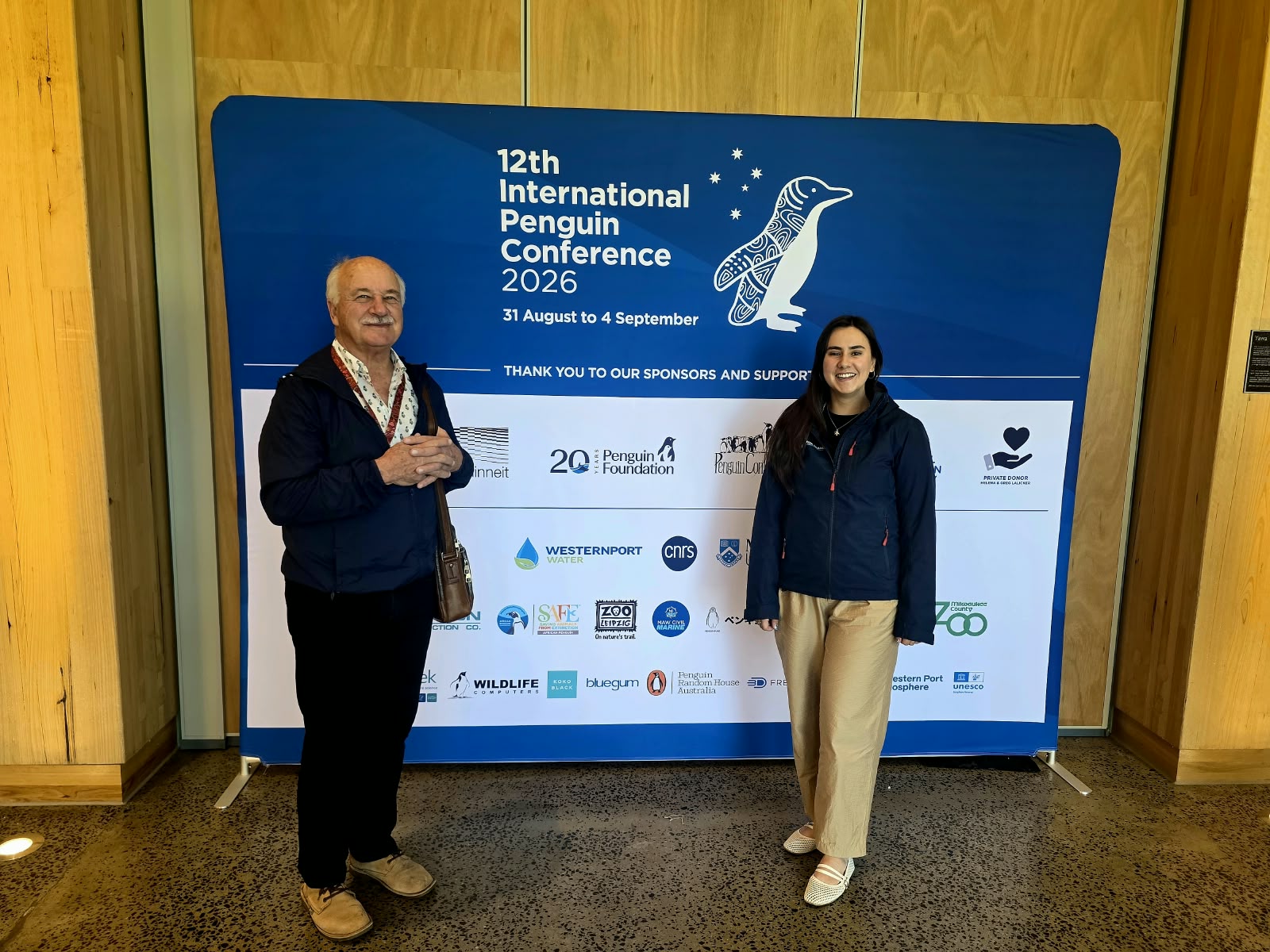
At the Dyer Island Conservation Trust, the new year began with an early morning call to Franskraal beach, where the team attended a stranding of a spotted ragged-tooth shark (Carcharias taurus). Members of the DICT and Marine Dynamics team were alerted to the stranding by Natasha van Greunen, who was waiting on site with her father, Richard. Upon arrival, senior shark guide Susy Alexandersen completed initial measurements and photography of the shark before transportation to the International Marine Lodge to be frozen for dissection.
Ragged tooth sharks, otherwise known as sand tiger sharks or grey nurse sharks, have a widespread distribution within temperate to subtropical waters, reaching depths just shy of 200m. Along the South African coastline, these sharks are distributed from southern Mozambique to the waters of False Bay. Despite impressive depth ranges, they are more commonly distributed at depths between 10 and 40m, inhabiting sandy-based gullies and inshore rocky caves.
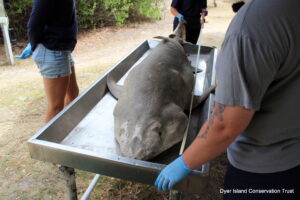
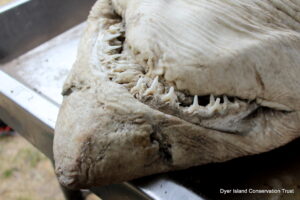
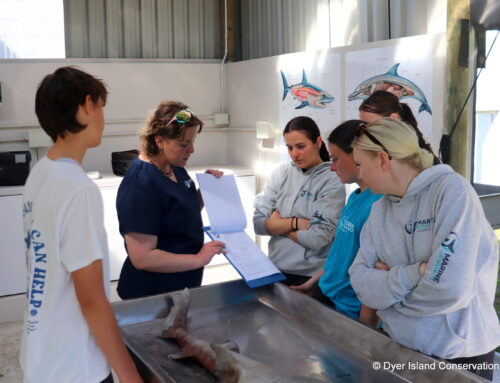
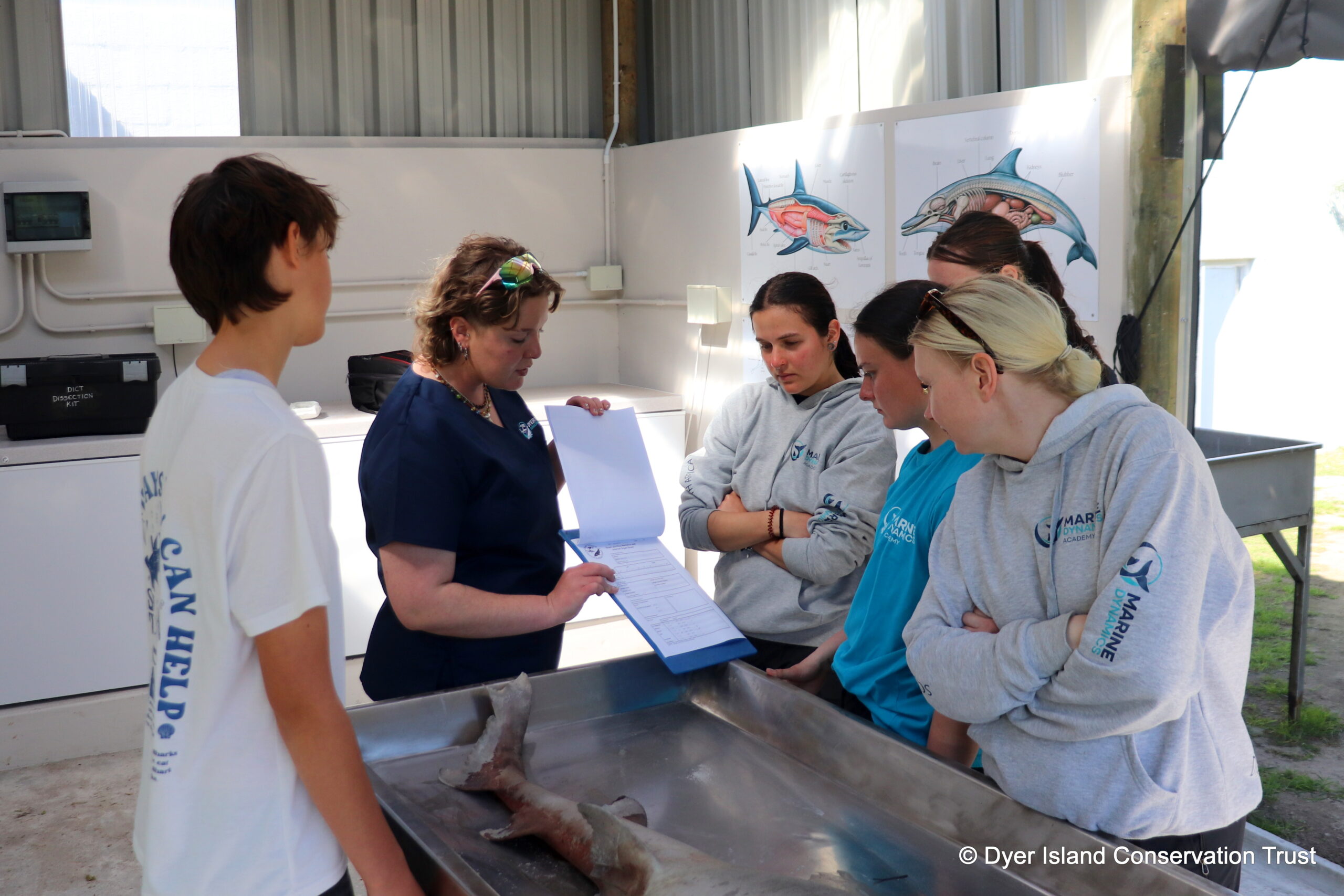
On Tuesday, 6 January, marine biologist Amy Webber led the dissection of the ragged-tooth shark, assisted by Susy, marine biologist Thomas Merdy and research coordinator Loraine Shuttleworth, with Marine Dynamics Academy volunteers and newest intern, Sophie, present. The shark was identified as male, measuring 254cm, and of mature age, as confirmed by the calcified reproductive organs, the claspers. The maximum length achieved by the species reaches 326cm, with a total lifespan just shy of 40 years. Based on the size of the male shark, the estimated weight was identified at approximately 102kg, utilising the precaudal length and Oceanographic Research Institute length to weight database. External observations did not identify specific causes of death, with no parasites or external injuries recorded. Intricate measurements were further completed, with a total of 103 measurements taken, details which are paramount to broadening our understanding of shark biology and metrics.
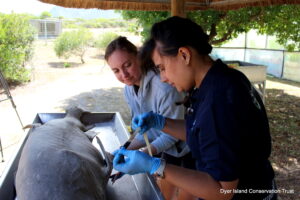
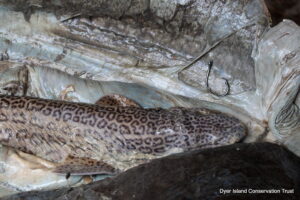
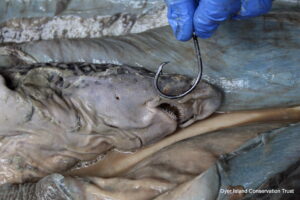
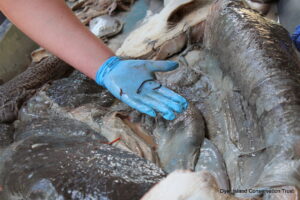
Samples of the fin, muscle and a growth found on the dorsal were collected and stored. Internal biology was next on the agenda to investigate organ health and stomach contents. A ventral incision exposed the perfectly organised organs, with the signature double-lobed liver of sharks, an organ vital to their energy storage and buoyancy within the water column, taking up the majority of the body cavity. At the time of inspection, it was clear that before passing, this specific shark had consumed a sizeable last meal. The stomach contents revealed the predation of an unidentifiable partially digested skate or ray, as well as a leopard catshark (Poroderma pantherinum) in perfect condition. The biggest surprise, however, was the presence of a less natural food source, a 5cm circle hook. The leopard catshark measured at 68cm and was also identified as male. These catsharks are well known for their striking rosette pattern and are an endemic species to the South African coastline. Due to the pristine condition of the catshark, the team were able to identify that the hook had been ingested along with the catshark. A small incision beside the jaw indicated the original hook positioning. The presence of squid within the stomach of the ingested shark species further confirmed the observations, utilised as a popular bait choice for fishing, locally known as chokka. The life history of this specific leopard catshark was nothing short of dramatic, with an initial capture and release with the inset hook before ingestion by the ragged-tooth shark. Small sharks and rays constitute a portion of the ragged-tooth shark’s diet, as well as fish and crustaceans.
Ragged-tooth sharks are currently defined as Critically Endangered by the IUCN Redlist, with slow reproductive rates, low fecundity and inshore distribution making them susceptible to varying anthropogenic threats. In 1998, the shark species was protected against commercial capture, mainly targeted for the use of their fins. Ragged-tooth sharks are targeted by sporting anglers along the South African coast, and are sensitive to temperature changes as a result of ectothermic biology. Despite no indication of the shark being landed by fishermen, it is undeniable that irresponsible and unsustainable fishing practices continue to harm the stability of multiple shark species. As well as this, an average of 168 ragged-tooth sharks are caught in the KwaZulu-Natal shark nets annually alone. Responsible angling guidelines can be found on the Oceanographic Research Institute, with the correct treatment being the defining factor between a successful survival or death of these vulnerable sharks.
For any strandings in the wider Overstrand area, please contact the Dyer Island Conservation Trust or Marine Dynamics. Public alerts are paramount to the rare opportunities provided, aiding research and supporting evidence-based conservation efforts upon which our ocean and its inhabitants rely.
Resources:
Oceanographic Research Institute: https://saambr.org.za/wp-content/uploads/2023/03/ORI-Fish-Fact-Spotted-ragged-tooth-shark-ZC-LB.pdf
Two Oceans Aquarium: https://www.aquarium.co.za/animals/ragged-tooth-shark