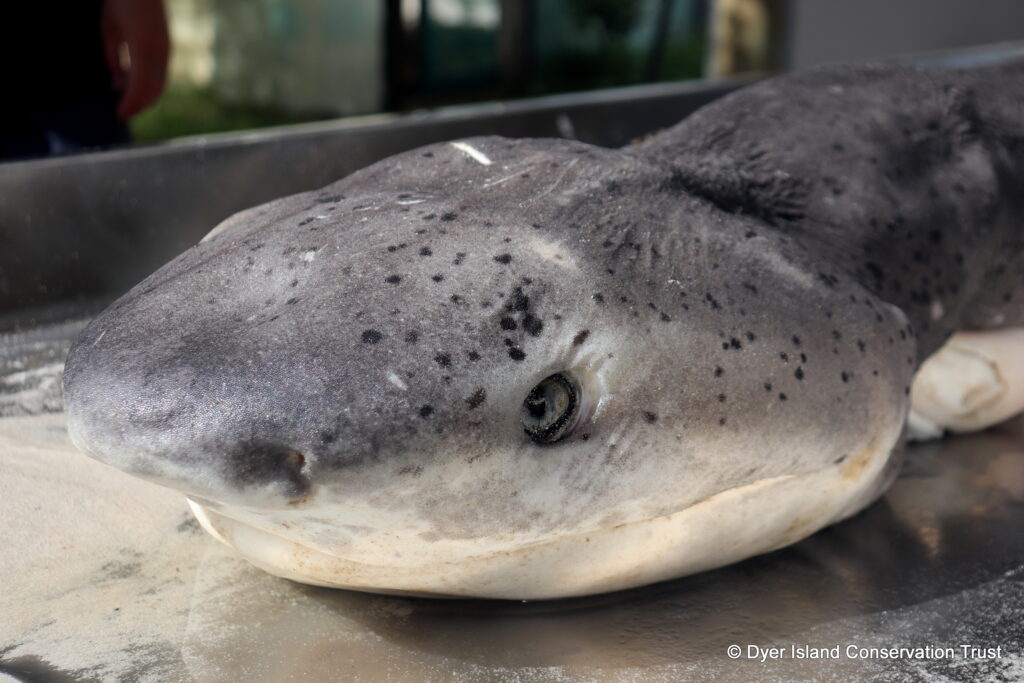
Broadnose sevengill sharks, commonly called cowsharks, are a species that hails from one of the oldest shark lineages, with an appearance closely resembling that of prehistoric species. Their presence within Gansbaai is not uncommon, with intermittent sightings around commercial shark cage diving vessels, otherwise occupying the shallow coastal waters of the bay and seeking refuge within kelp forest ecosystems. Wide-spread global distribution can be found within temperate continental waters, typically less than 100m deep.
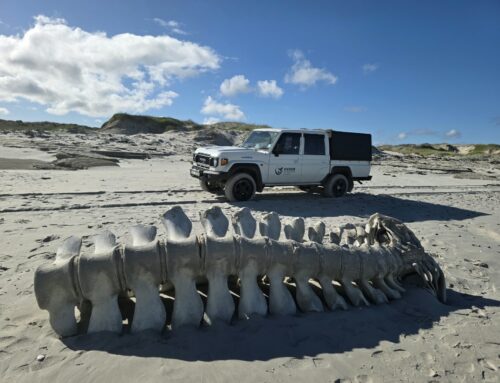
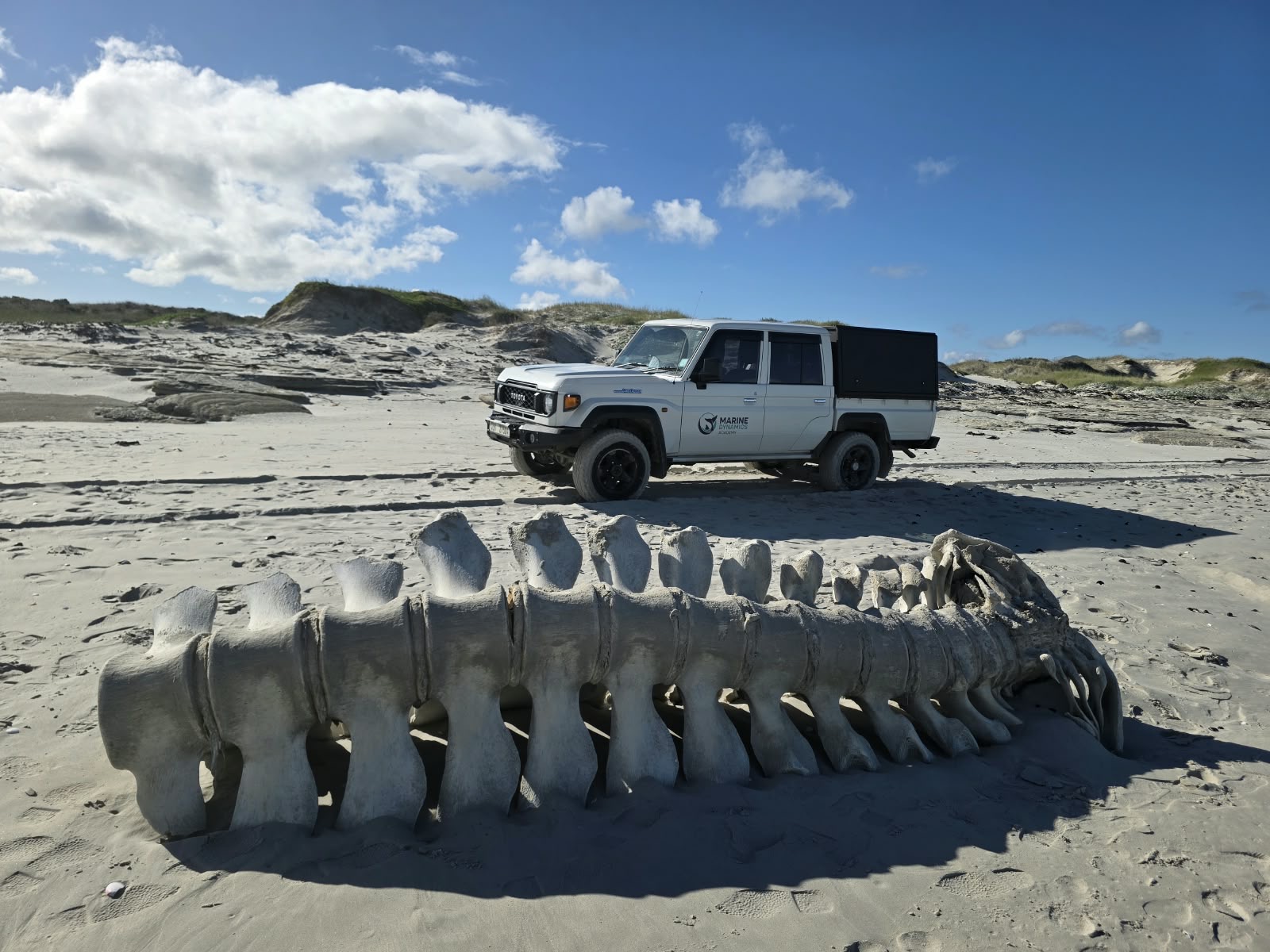
The occurrence of this particular stranding was one that the team of Marine Dynamics and DICT have become more familiar with. The trademark ventral slit, missing liver and rake marks pointed to one specific predator, the killer whale. As well as Great white sharks, the infamous Port and Starboard also target the Broadnose sevengill sharks, with an unmistakable predation technique of liver removal. Utilised by sharks for buoyancy, the liver holds high oil content and makes for a calorifically abundant meal for the killer whales. In 2023, Port and Starboard made it clear that Broadnose sevengill sharks were more than suitable as prey, with a total of 17 recovered by the DICT and Marine Dynamics team along Pearly Beach.
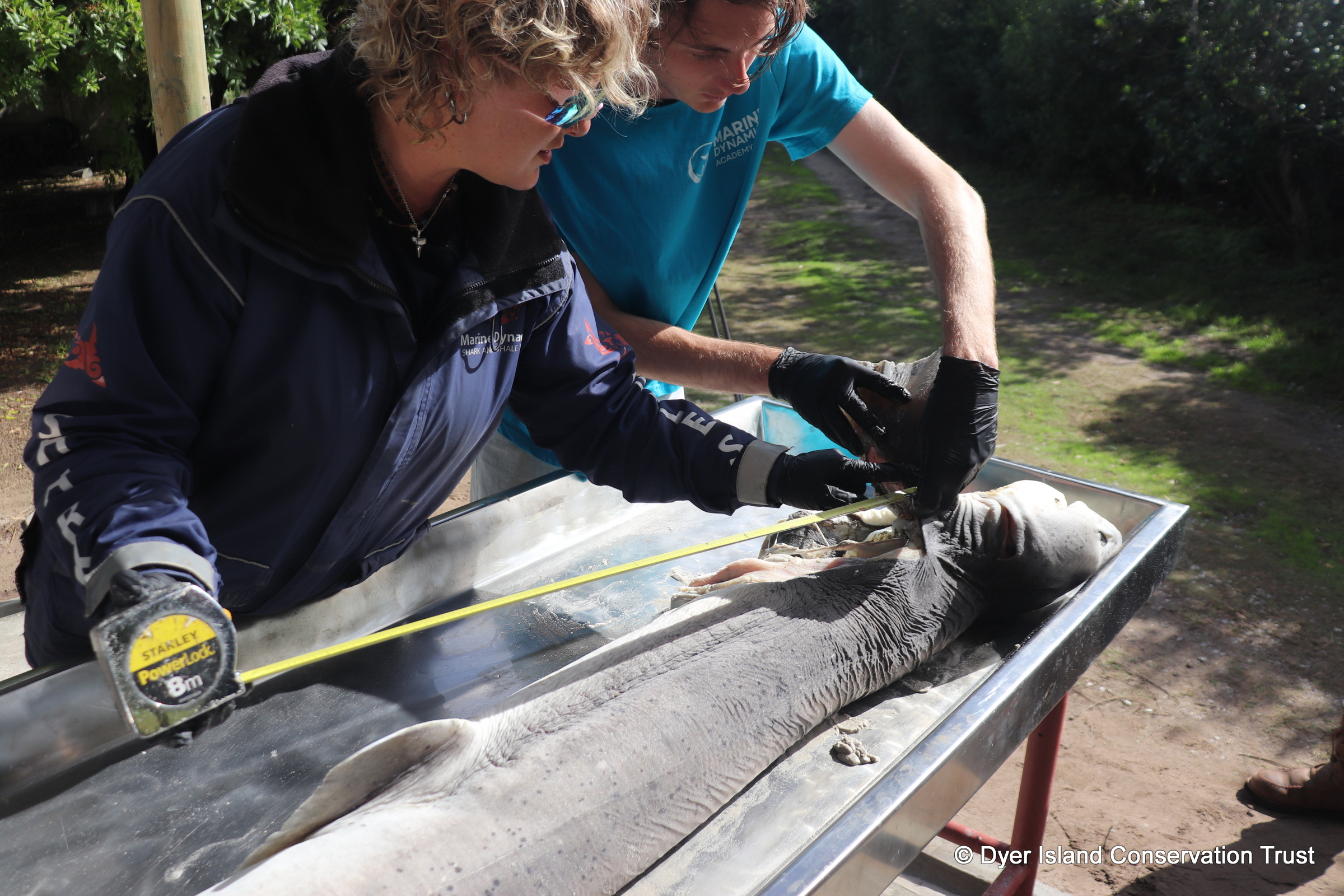
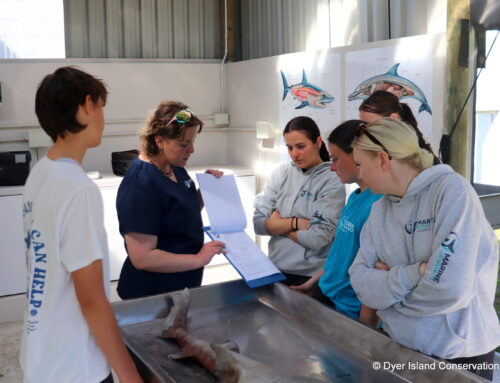
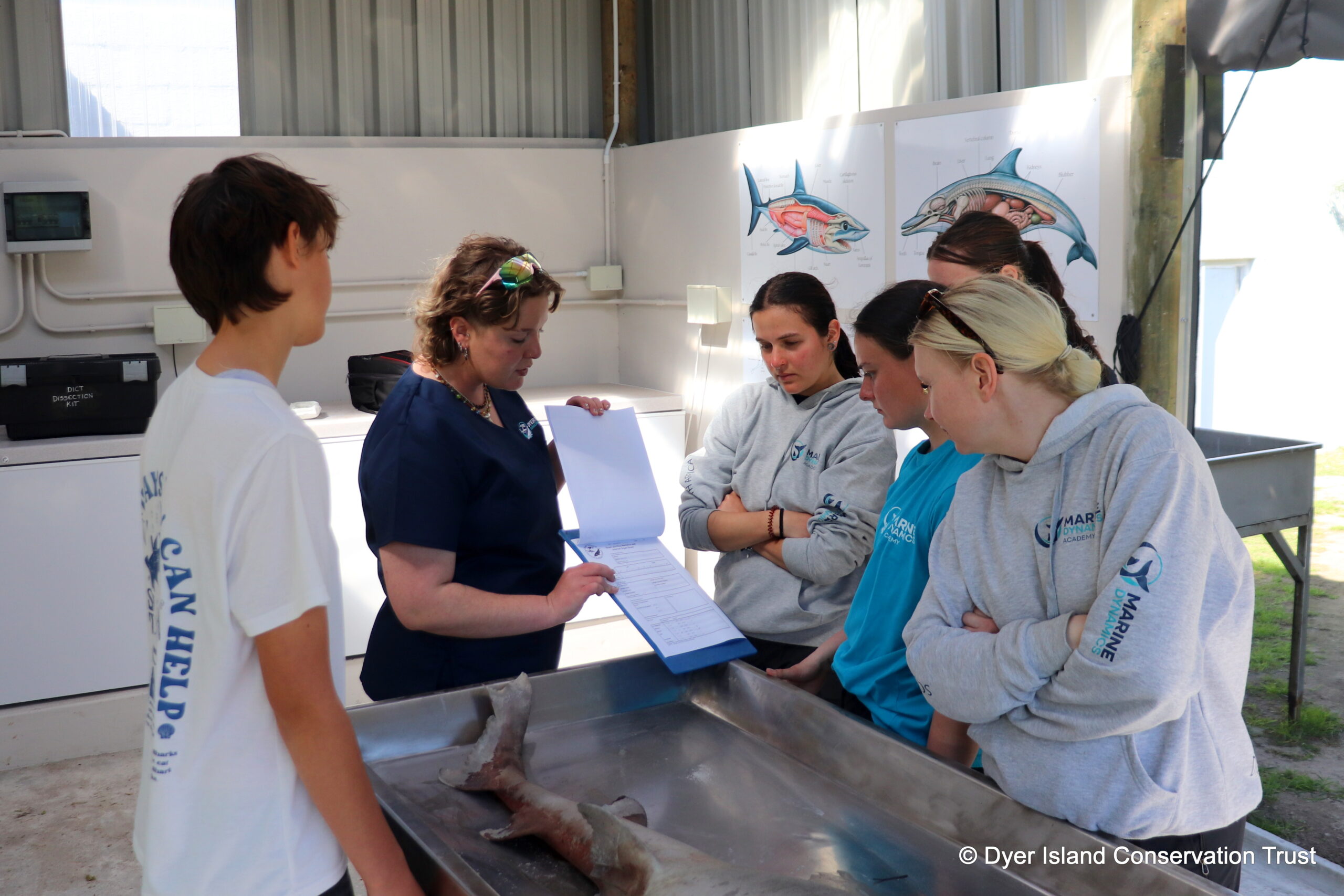
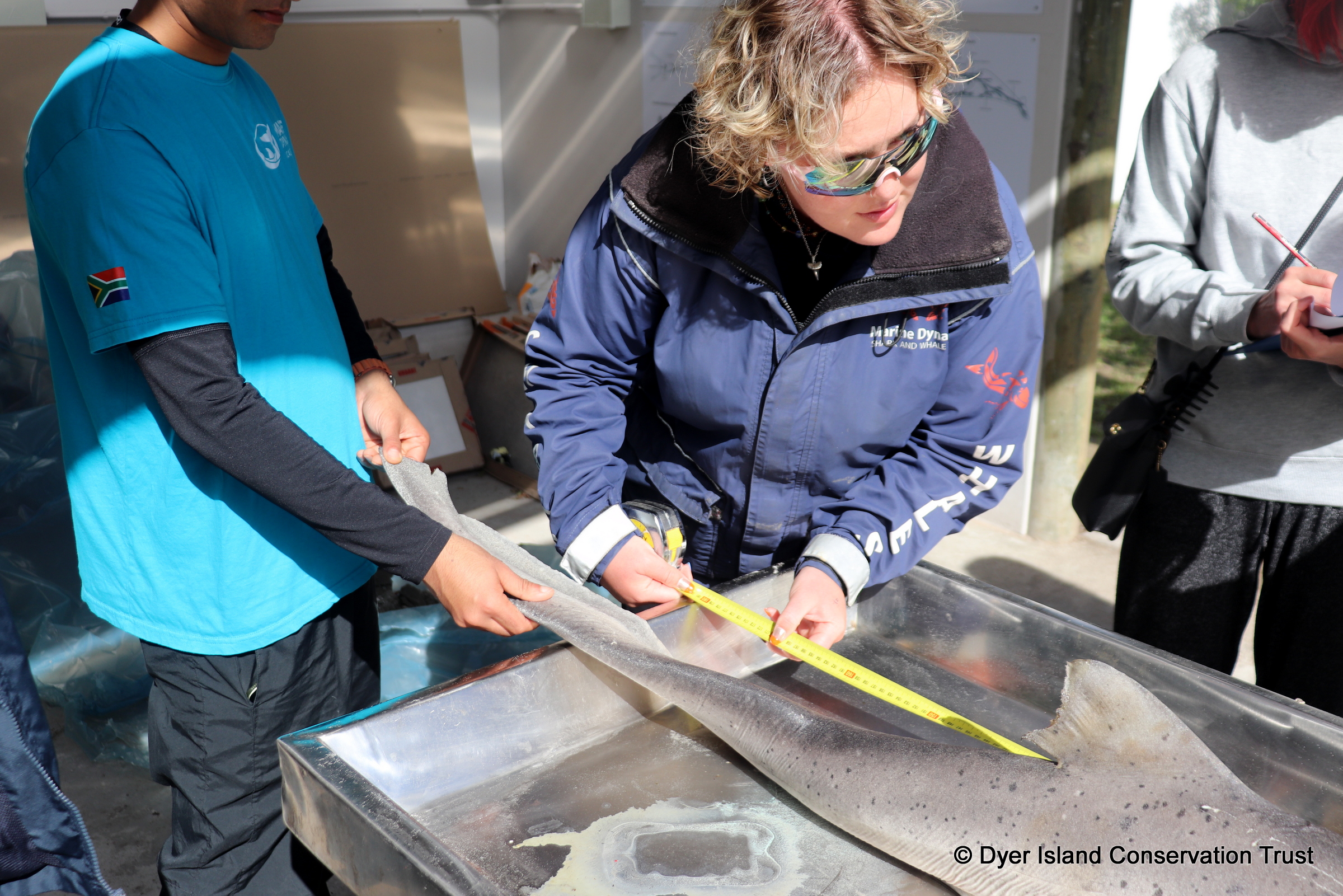
After retrieval, the shark was transported to the Marine Dynamics Academy Lodge for a full necropsy, led by Shark Biologist Amy Webber, assisted by Loraine and Senior Shark Guide Susy Alexandersen, with Marine Dynamics Academy volunteers attending. The individual was identified as a mature female, with a total length of 216.8cm, not far off their maximum achievable length of 296cm. Females of this species take longer to mature in comparison to males, typically between 11 and 21 years. Growing at an average rate of 4.5cm annually, this female was of a later age, with a total lifespan estimated to fall between 30 and 50 years.
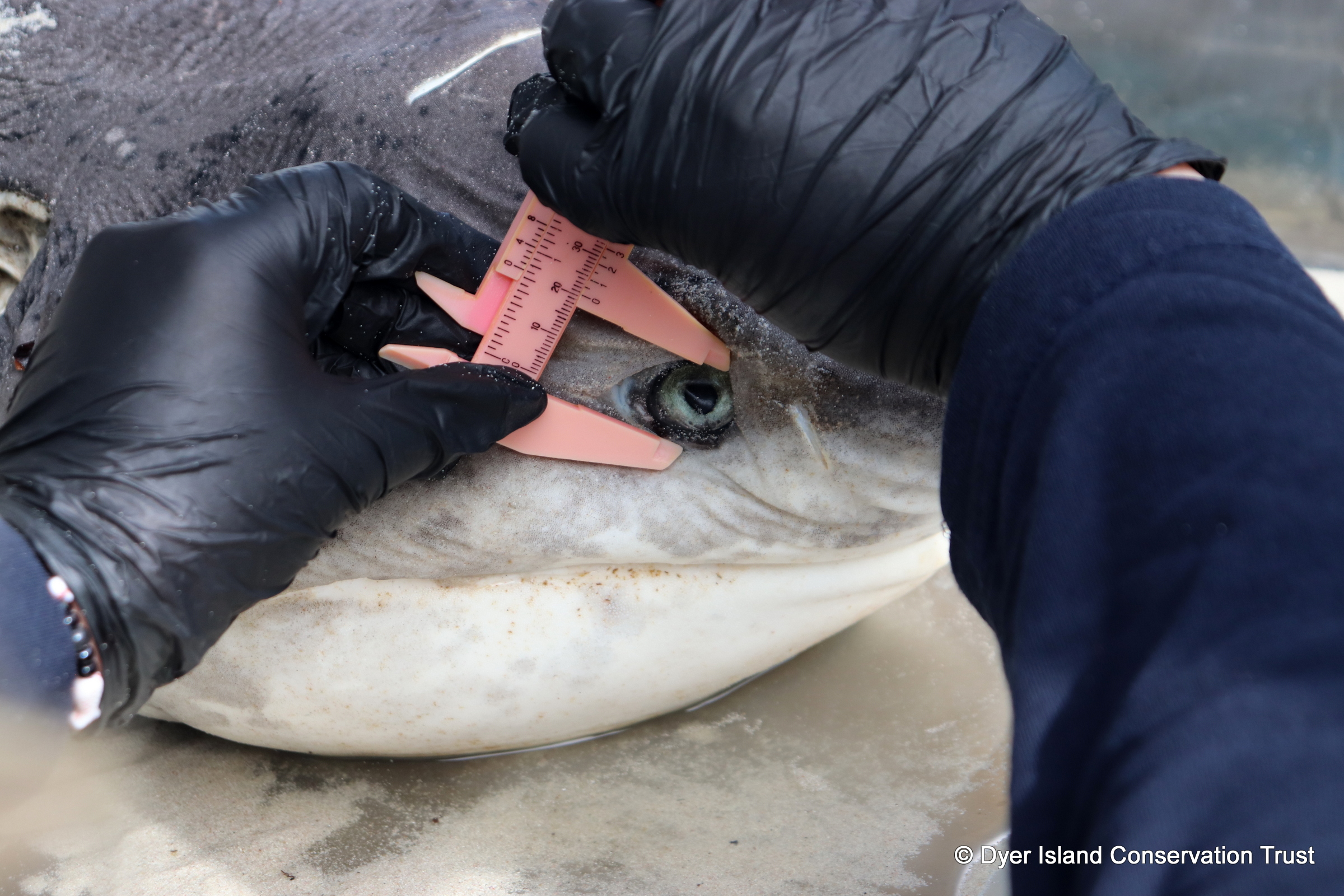
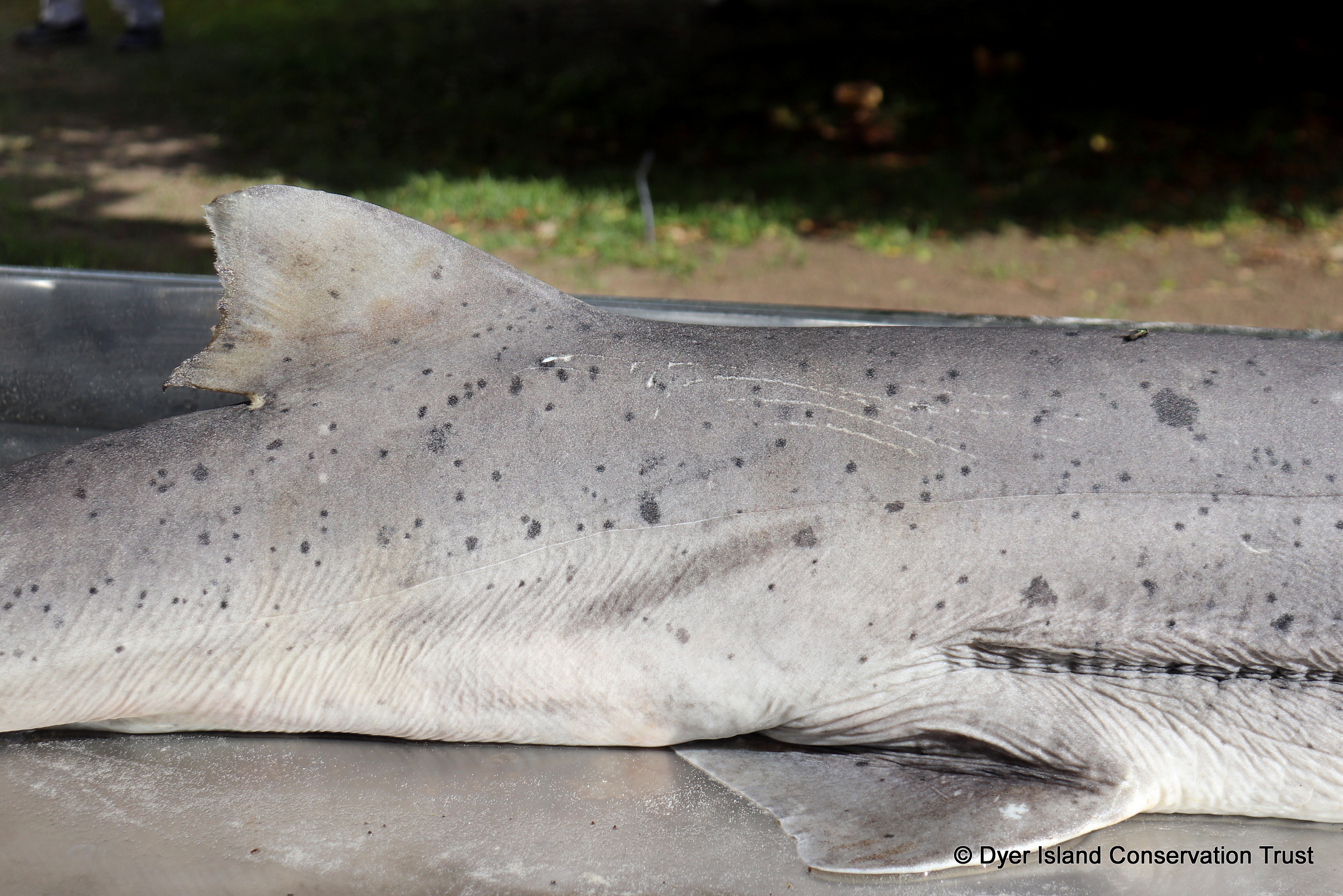
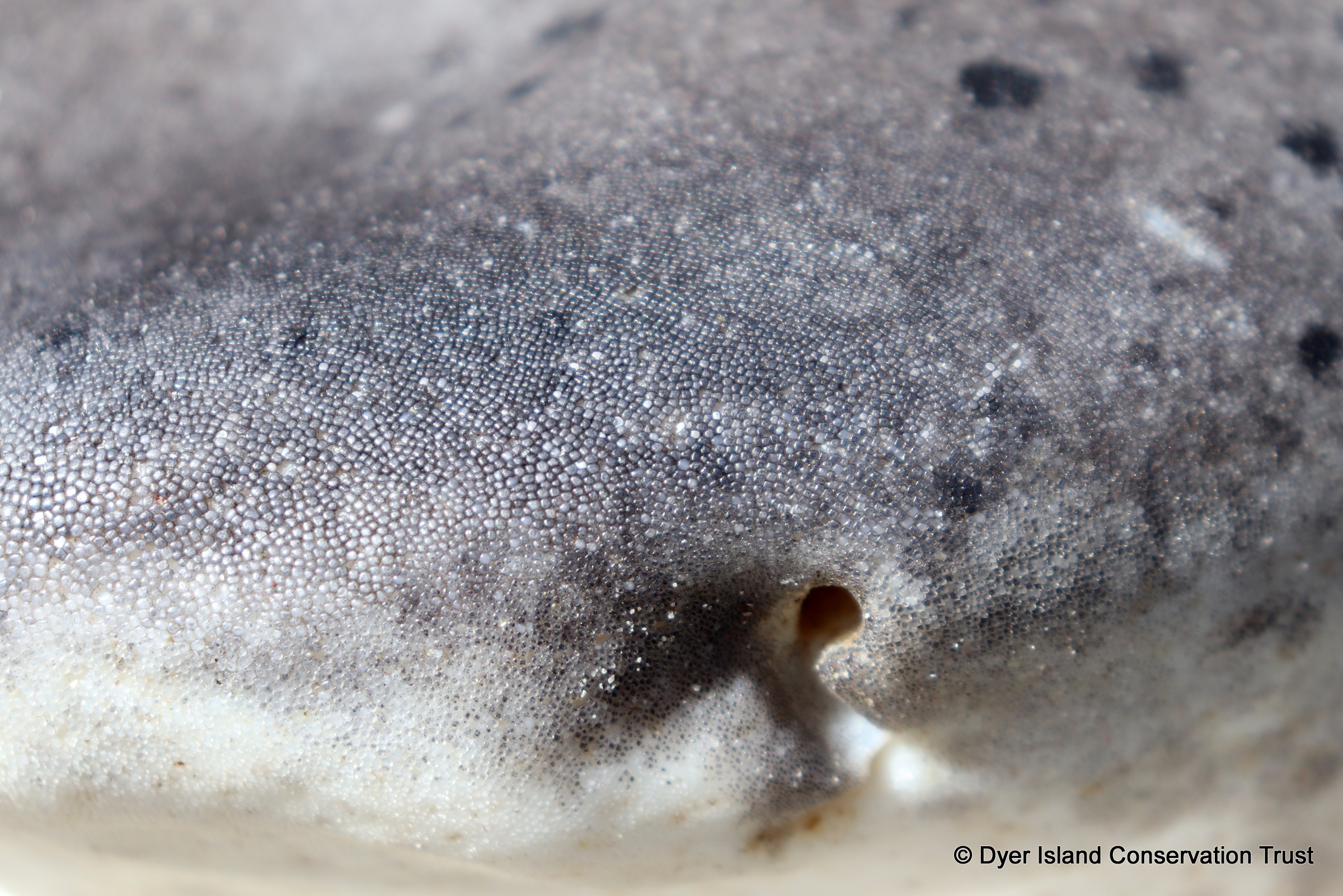
Unique features of this prehistoric species include the lack of a main dorsal fin, with a smaller dorsal situated two-thirds down the back of the body. Their skin, consisting of dermal denticles, is rough to the touch and patterned with black and white constellations; a feature unique to each individual, similar to human fingerprints. The dermal denticles provide a hardened exterior, effective against harsh conditions and external parasites, with damage to the layer caused by the orca tooth markings, described as rake marks.
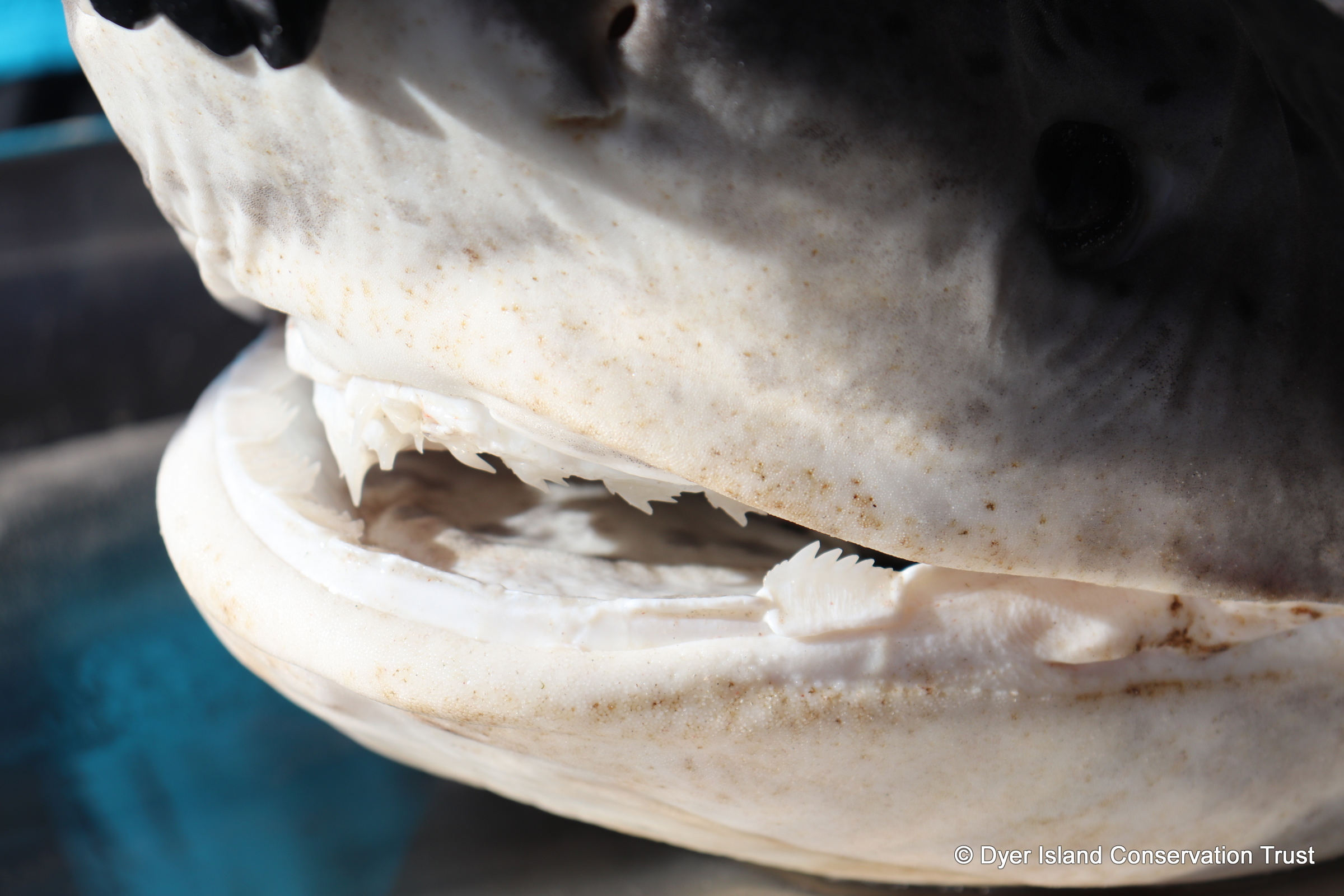
Despite the individual falling prey to the infamous orca pair, who were sighted in Hermanus the weekend prior to the stranding, these sharks are incredible predators in their own right. With sharp jagged teeth along the upper jaw and comb-shaped teeth along the lower jaw, these sharks are able to tear through prey, typically consuming inshore catsharks and shysharks, as well as cooperatively hunting on Cape fur seals. The stomach of this particular individual was empty, with just the stomach and spiral valve attached in the body cavity.
Although the killer whale pair are now considered a natural predator of the Broadnose sevengill sharks, the true danger lies within commercial fishing of the species for the use of meat, hide and liver oil, known as squalene. The direct targeting and indirect capture through non-selective fishing methods, such as trawling and demersal longlining, occur at a significantly higher rate. Rated as Vulnerable by the IUCN Red List, these Broadnose sevengill sharks are experiencing a global decline in population, a reality for many shark species throughout our oceans.
We would like to extend our thanks to Lee Swart for reporting the stranding. Without public diligence, we would not be able to take these rare moments to learn more about the sharks inhabiting our local waters, further expanding our understanding of their morphology and predator-prey interactions that are vital for the application of evidence-based conservation initiatives.
Resources:
iNaturalist: https://www.inaturalist.org/taxa/107194-Notorynchus-cepedianus
L. De Necker (2017): https://open.uct.ac.za/items/07530944-190a-4591-98a4-7059f4e7204f
Save Our Seas: https://saveourseas.com/worldofsharks/species/broadnose-sevengill-cowshark
T.M. Engelbrecht et al. (2020): https://www.tandfonline.com/doi/epdf/10.2989/1814232X.2020.1802776?needAccess=true