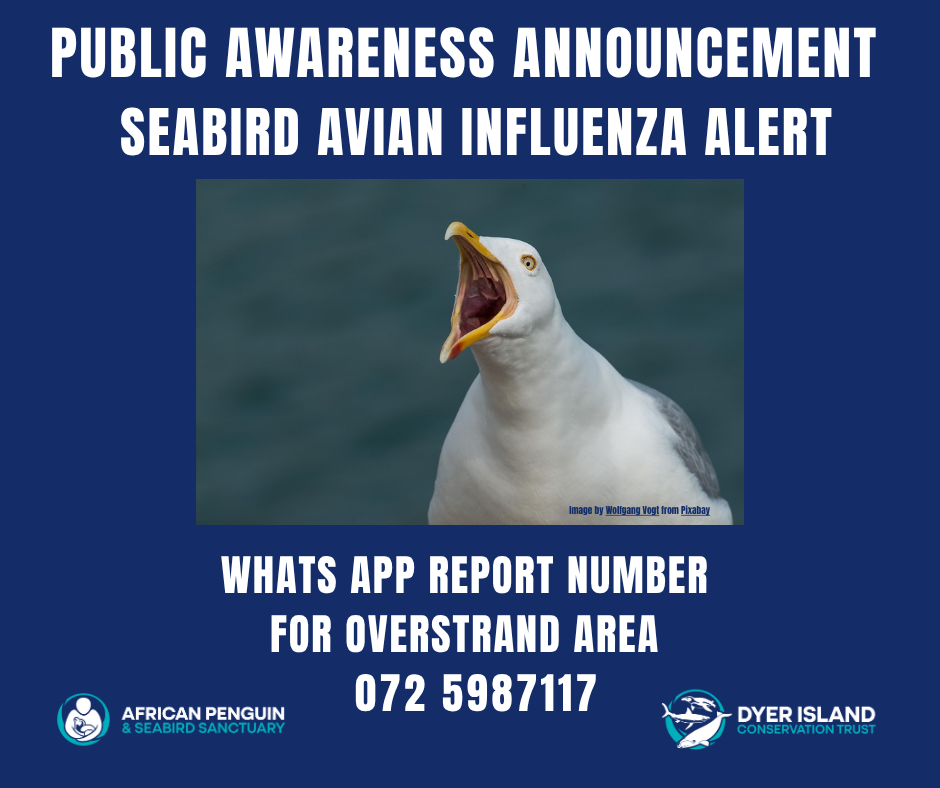
The highly pathogenic H5 strain of Avian Influenza has once again been detected in seabirds along the Western Cape coastline.
Seabirds affected thus far during the current outbreak: Hartlaub’s Gulls near Cape Town and Great White Pelicans near Malmesbury. These are the first detections of HPAI in wild birds in the Western Cape since April 2024 and the first reports of mass mortalities since late 2022.
What to look out for:
Infected birds may display neurological symptoms such as head tremors, twitching, and loss of coordination. They may appear dazed, unbalanced, or unusually tame. Affected birds may struggle to breathe, lose the ability to fly, or be seen flapping weakly on land or in shallow water.
What you can do:
If you come across any sick or dead seabirds on the beach:
- Do not touch the birds.
- Take a photo or short video, if possible.
- Note the location, number of birds, and species (if known).
- Report the sighting via WhatsApp with a location pin: 072 598 7117 or Email: [email protected]
Your report will help us monitor and manage the spread of this virus.
What is being done:
Seabird colonies and rehabilitation centres across the coastline are actively monitoring the situation. All necessary biosecurity and containment protocols have been implemented. Cross-sector collaboration is aiding further disease surveillance and research.
Can the disease be treated?
Unfortunately, there is no cure or treatment for Avian Influenza in wild birds. Culling or disturbing habitats is not effective and may worsen the situation.
How it spreads:
Avian Influenza spreads through direct contact between infected and healthy birds. The virus is found in the secretions from the mouth, nose, and eyes, and in the droppings of infected birds.
Risk to humans and pets:
The risk to humans is very low, but precaution is essential:
- If you spot a seabird in trouble, contact the rescue line for advice.
- Do not handle dead birds.
- Keep pets, especially dogs, away from carcasses.