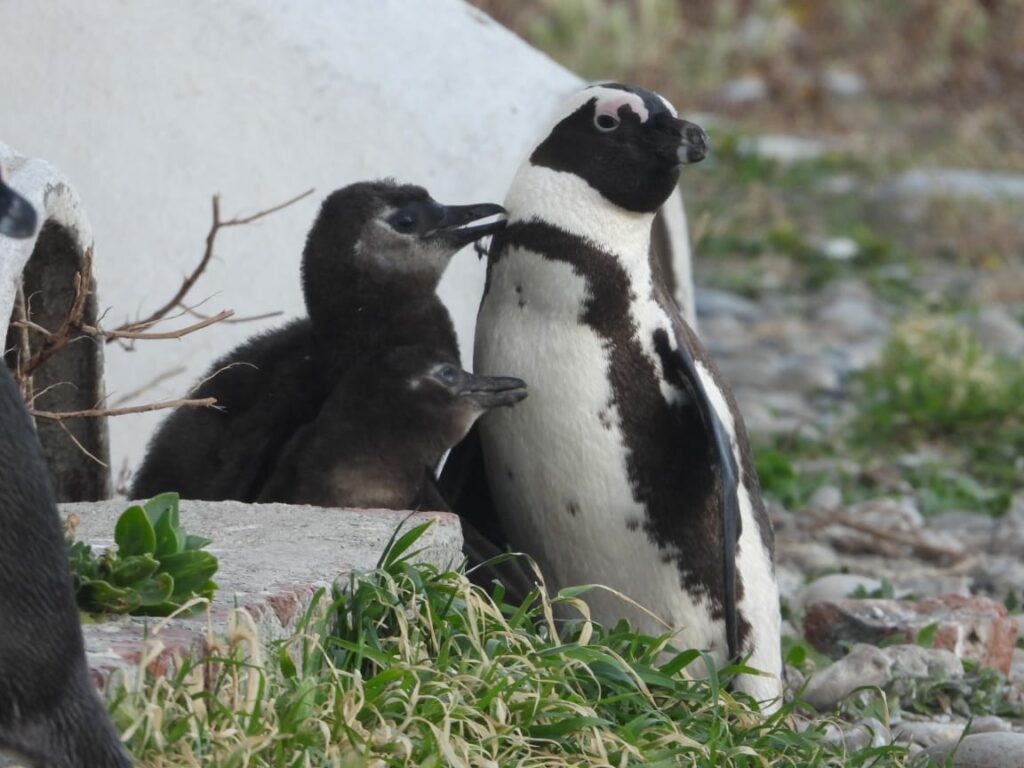
Gansbaai, South Africa – At this time of year, adult African Penguins on Dyer Island undergo their annual moult, a natural process in which they shed and regrow their feathers. During moulting, adults are not waterproof and cannot swim to find fresh fish for their chicks, leaving them unable to feed their young.
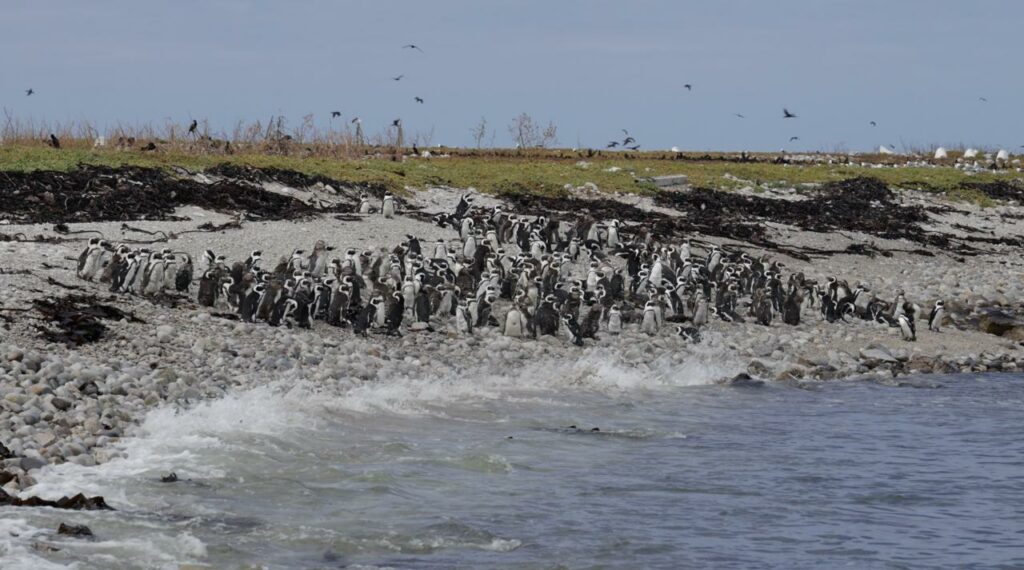
The penguin life cycle is essentially divided into two phases: breeding and moulting. The moulting phase begins shortly after the breeding season, and chicks are normally fledged before adults start to moult. If these phases overlap, adult penguins risk starvation, and parents may have to abandon their chicks before they are fully fledged.
African Penguins typically breed twice a year, laying two eggs per season, with both parents sharing the responsibility of feeding the chicks. Parents forage up to 30 kilometres from Dyer Island to find enough food for their young. Nature prioritises adult survival over chick survival, as the adults are the breeding individuals essential for maintaining the population. Unfortunately, this means that chicks left on the island during this period face a very high risk of death.
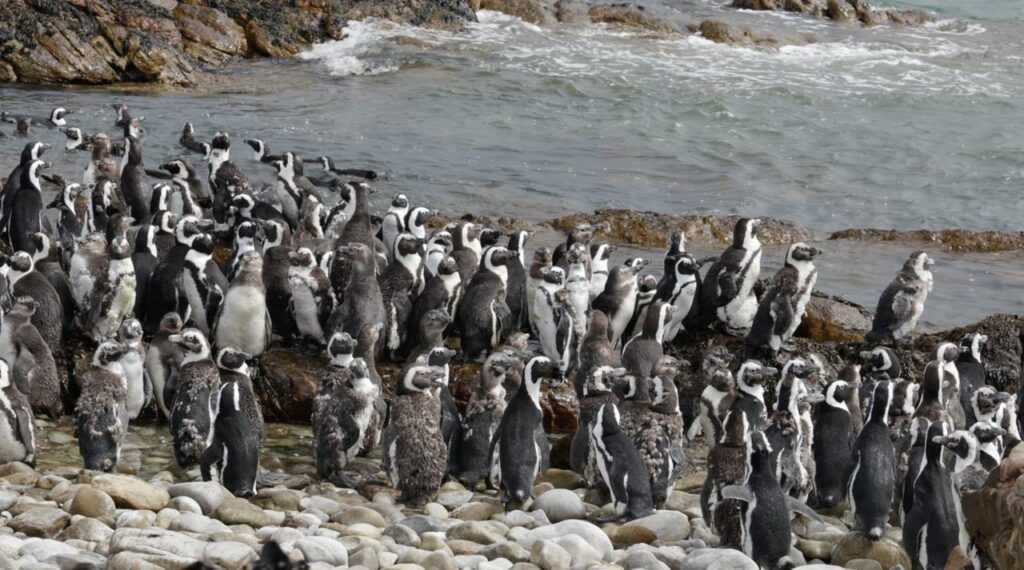
To protect these vulnerable chicks, the Dyer Island Conservation Trust, in partnership with CapeNature, intervenes. As Wilfred Chivell, CEO of Marine Dynamics and Founder of the Trust, explains:
“It’s a heartbreaking time of the year for me… Imagine parents working all day to gather enough food for their little ones, dodging fishing vessels, predation from seals, plastic and other pollution, only to return, completely exhausted, to an empty nest. I can’t believe what we have done to these animals that are so feisty.”
Wilfred often refers to the African Penguin as the honey badger of the ocean. But years of guano scraping, egg harvesting, overfishing, predation by gulls, seals and other animals on eggs, chicks and adults, as well as poor management at some colonies, have resulted in these “badgers” being obliterated!
Since last week, 32 chicks have been safely removed from Dyer Island.
Providing proper care for these chicks is resource-intensive:
• Each day, our chick crèche consumes six boxes of high-quality sardines—and that’s without counting breakfast and dinner for our permanent residents at the African Penguin and Seabird Sanctuary, says Xolani Lawu, Senior Bird Rehabilitator.
• Feeding requires firm sardines from trusted fish suppliers, costing approximately R150 per box. Penguins are highly selective and will not eat substandard or overly oily fish.
“Just this week, the African Penguin and Seabird Sanctuary spent just over R21 000 ensuring those fluffy baby bellies are full! That’s excluding our ten permanent residents at the Sanctuary, or any other running costs such as daily vitamins and medicine! This is going to be a very expensive festive season!” adds Xolani.
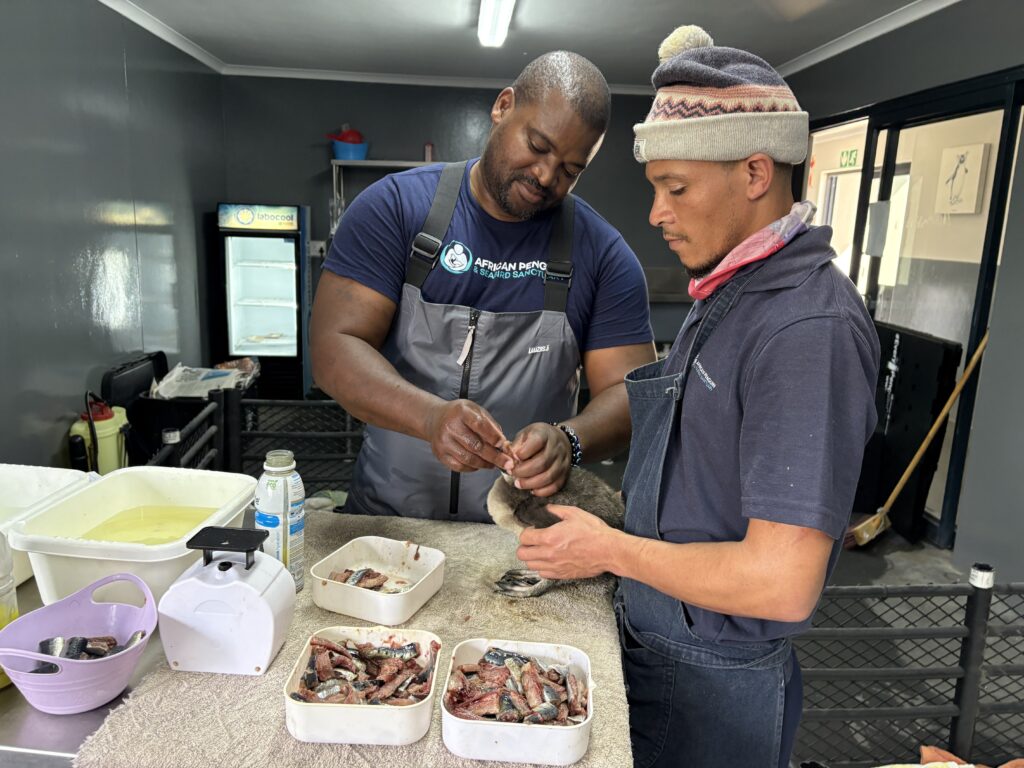
He explains that the chicks receive special care and enough food to grow healthy and strong during their stay at the sanctuary. Once they reach the required weight and are declared healthy, they will be released back on Dyer Island to rejoin their families. (If they do, we can’t say for sure—but for Wilfred’s sake, we like to think so…)
African Penguin colonies are declining at an alarming rate. The current population is only 2.5% of what it was 80 years ago.
“We are therefore at a point where every bird that we can save counts,” says Xolani.
When asked how the public can assist, Xolani said:
“At the APSS we are willing to do the hard work of cutting sardines into sushi-sized pieces, washing more towels than you can imagine, feeding all the begging little orphans, and scrubbing and disinfecting the sanctuary daily. But it is through the generosity of the public that we can do this work.”
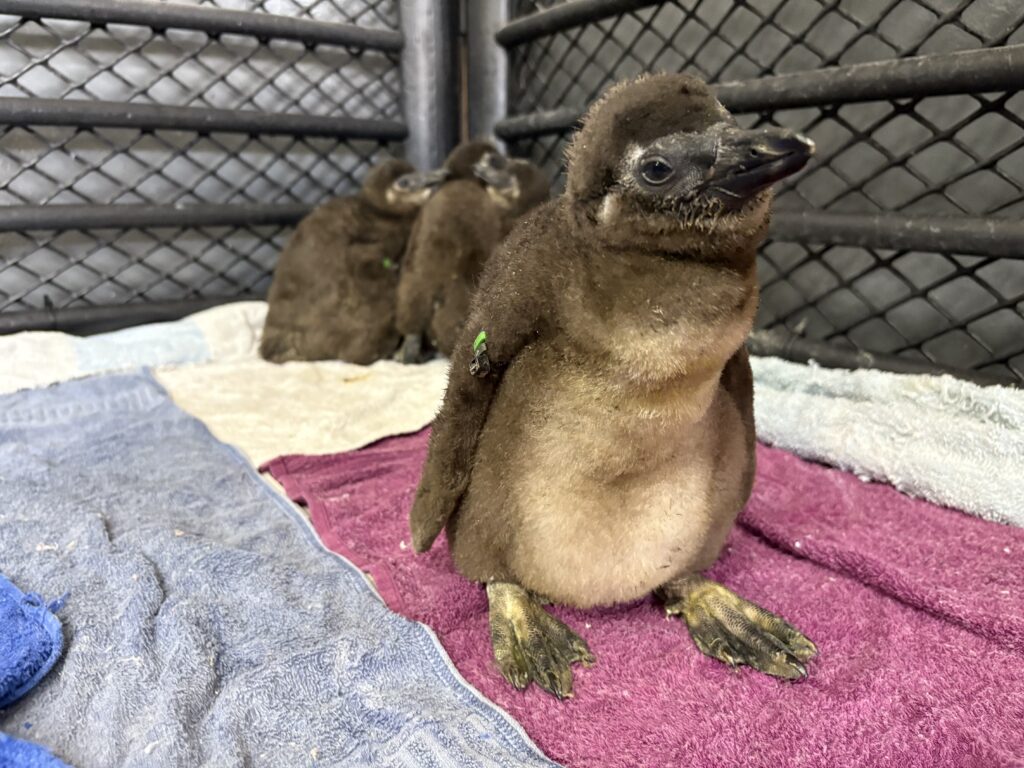
The public can contribute by donating to the Fishy Fund to help feed the penguins, visiting the African Penguin and Seabird Sanctuary, or by donating old towels and newspapers.
Donate to our #NOW Campaign:
#NOOW stands for Not On Our Watch, a campaign supported by various conservation organisations to stop the decline of the African Penguin and prevent its extinction in the wild: www.dict.org.za.
Or buy a Penguin Penthouse:
Artificial nests give penguins a fighting chance to breed successfully in the face of habitat loss, changing climate, and predation—a simple but vital intervention to help secure the future of the African Penguin. https://dict.org.za/donate/
“African Penguins are part of our heritage. They are charismatic creatures, and by getting to know more about them, you can help spread the word about the plight of our penguins,” Xolani said.
How to Donate
Account Type: Platinum Business Account
Account Number: 62568492343
Branch Name & Code: Hermanus, C.P. 247 / 200412
Swift Code: FIRNZAJJ
Reference: Fishy Fund
The African Penguin & Seabird Sanctuary, situated in Kleinbaai, is open daily from 09:00 to 16:00. Visitors can observe the penguins through one-way glass and support the cause by enjoying the coffee and cake on offer.
ENDS
Issued by: The African Penguin & Seabird Sanctuary – A Dyer Island Conservation Trust Project
General enquiries and interview opportunities:
Christine Wessels
📞 066 185 0860
📧 [email protected]