On Tuesday, 31 March 2026, the DICT team was alerted to a stranded ragged tooth shark (Carcharias taurus) near Struisbaai. Ragged tooth sharks, also known locally as “raggies,” are among the most recognisable shark species along the South African coastline. Despite their intimidating appearance, characterised by protruding, needle-like teeth, they are generally slow-moving and non-aggressive toward humans. While any shark stranding is concerning, this particular case carried an added layer of urgency. Just days earlier, on 18 March, the Two Oceans Aquarium in Cape Town had successfully released a ragged tooth shark named “Blue” in the same area.
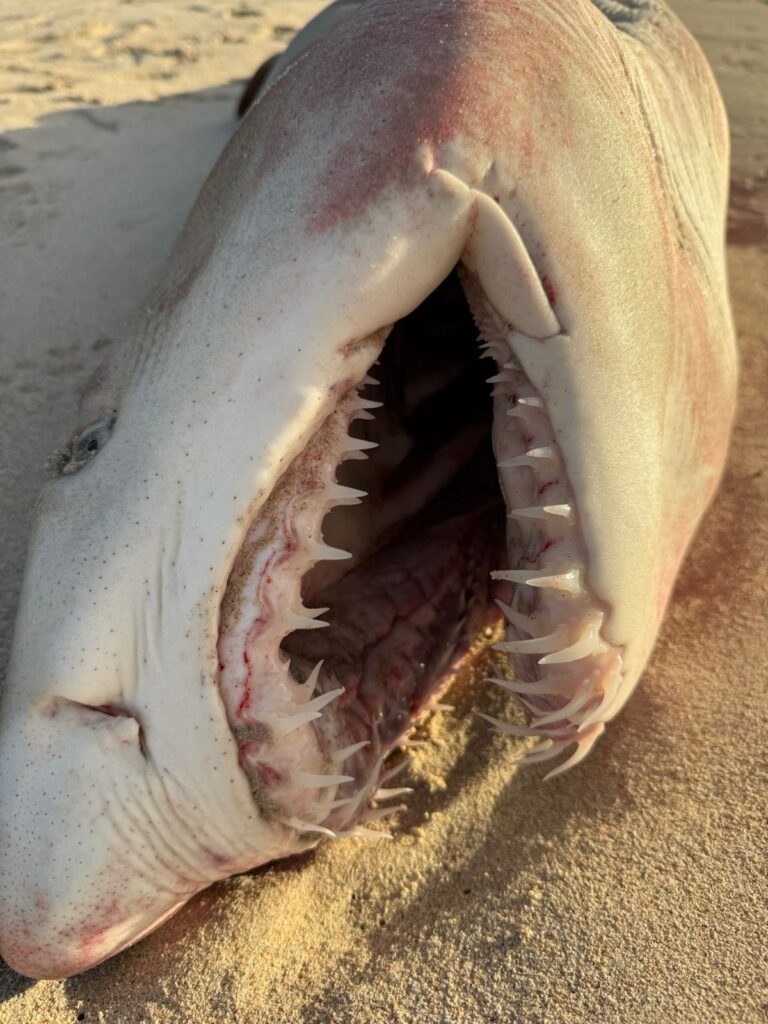
Stranded ragged tooth shark with its characteristic needle-like teeth
Blue’s story is one of long-term care and conservation success. She had spent eight years at the Aquarium after being rescued as a juvenile, weighing just 26.6 kg and measuring 183 cm in length. At the time of her release, she had grown into a healthy adult female, weighing approximately 201 kg and measuring over 3 metres. Prior to release, Blue was fitted with both an acoustic tag that allows researchers to track her movements through time and space, and a conventional spaghetti tag, which carries a unique identification number and contact details should she be encountered by fishers.
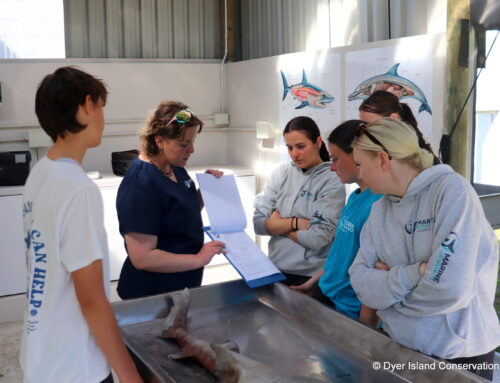
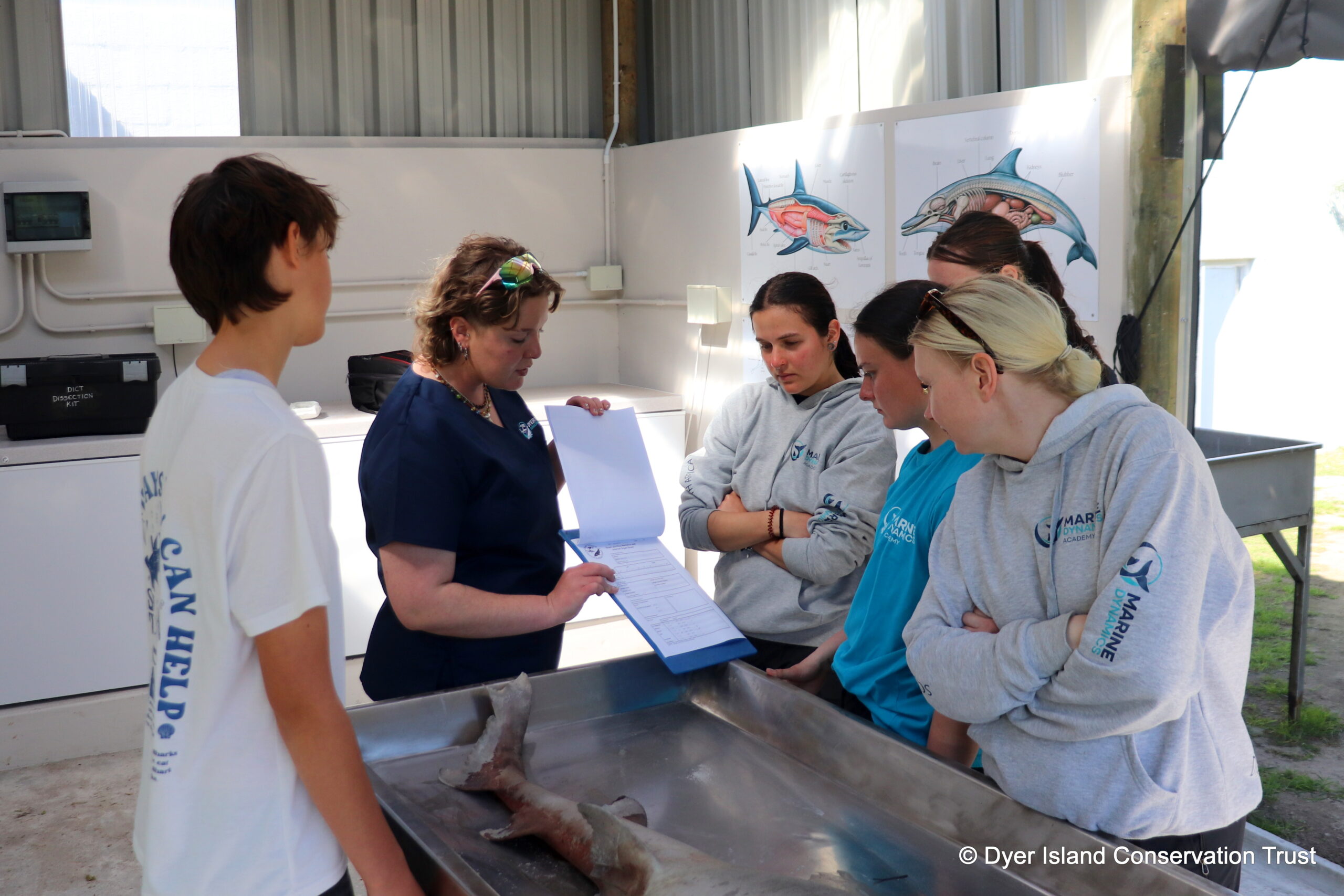
Given the proximity in both time and location, the immediate concern was whether the stranded individual could be Blue. Upon arrival, DICT’s Xolani Lawu conducted a thorough inspection, first checking for the presence of tags. Fortunately, no tags were found. While it is always disheartening to encounter a stranded shark, this finding brought a sense of relief as the absence of tags means it is highly likely that Blue remains safely at sea. In this context, the stranding, though unfortunate, represents a small win for conservation, suggesting that her release has, so far, been successful.
Strandings of large marine animals like ragged tooth sharks can occur for a variety of reasons, including illness, injury, environmental stress, or disorientation. Each event provides an opportunity for researchers to gather valuable data that can improve our understanding of these animals and the challenges they face in the wild. Even in death, these individuals can contribute to conservation through necropsies and sample collection.
However, rapid response to such strandings is critical. Unfortunately, it is not uncommon for key features, particularly ragged tooth shark jaws, to be removed by members of the public as souvenirs. This practice not only compromises valuable scientific information but is also illegal. In South Africa, sharks are protected under the Marine Living Resources Act, and the removal of any part of a stranded shark without the appropriate permits is strictly prohibited.
We urge members of the public who encounter stranded marine animals to report the sighting immediately to Dyer Island Conservation Trust at +27 (0)82 907 5607. Reports should include detailed descriptions, accurate locations and photographs if safe and possible. Responsible reporting ensures that trained personnel can respond promptly, maximising both conservation and research outcomes.
While this stranding serves as a reminder of the challenges faced by marine wildlife, it also highlights the importance of continued conservation efforts, collaboration, and public awareness. And for now, at least, there is reason to remain hopeful that Blue continues her journey in the wild exactly where she belongs.
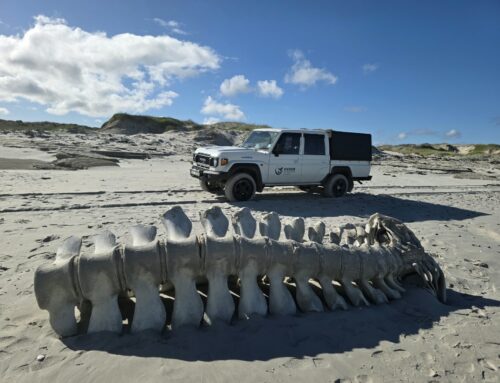
We at DICT would again like to thank Cape Town City Toyota for sponsoring the Dyer Island Conservation Trust team with our Hilux for rescue and retrieval missions. We are incredibly grateful for your continued support.
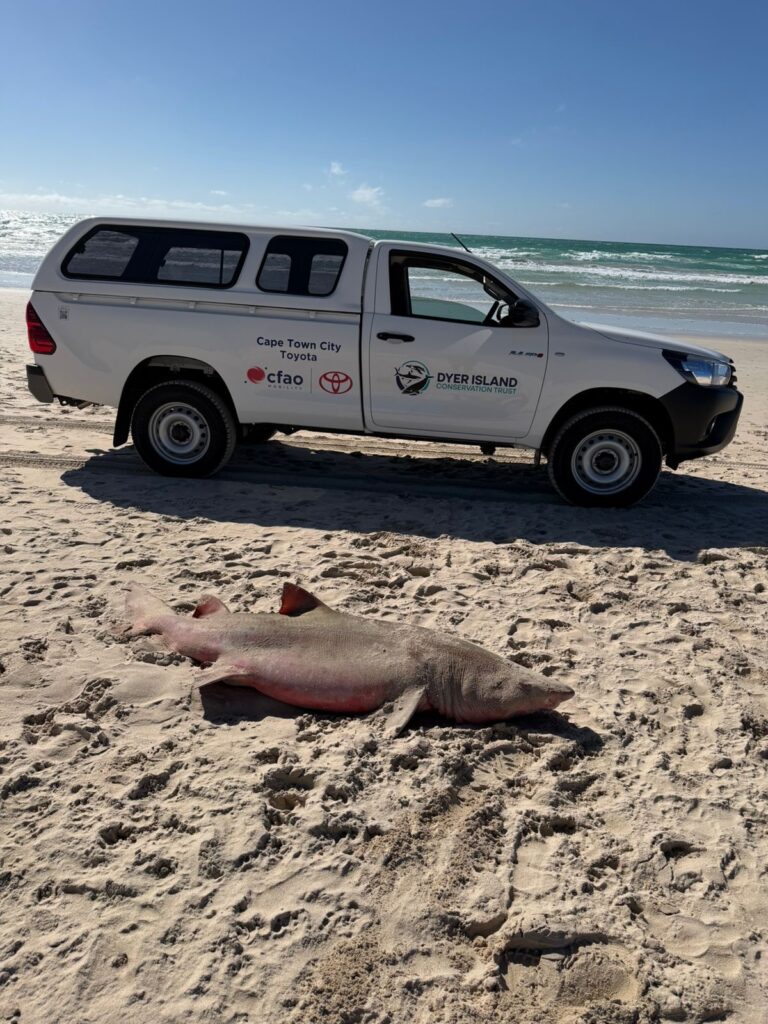
DICT’s rescue and retrieval Hilux generously sponsored by Cape Town City Toyota