On Sunday, 5 April, a Bryde’s whale was reported stranded at Suiderstrand. Nearby residents confirmed that the animal had not been present the previous day, suggesting it washed ashore either late in the evening of Saturday, 4 April, or in the early hours of Sunday morning.
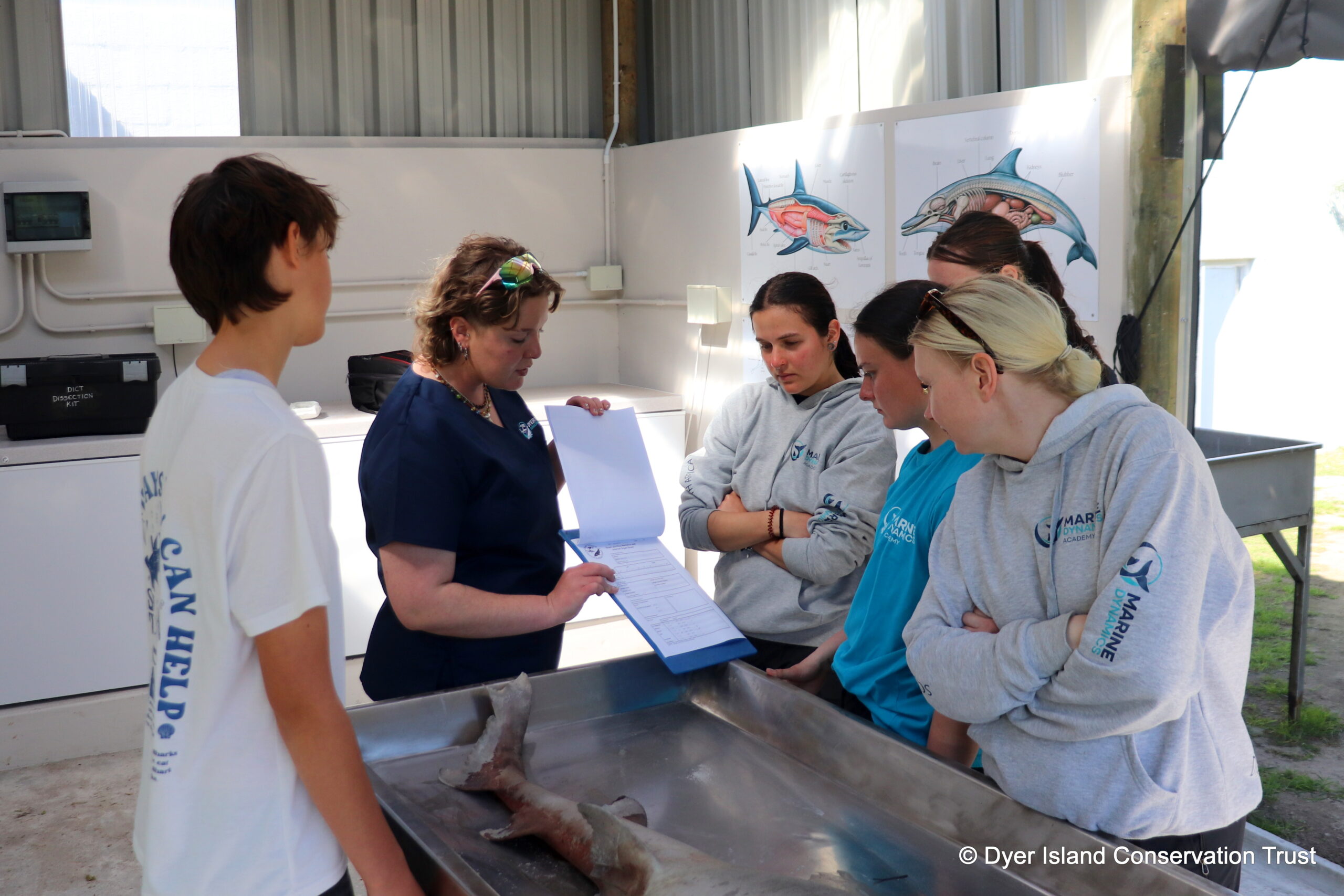
The response team included Dyer Island Conservation Trust’s Head of Research Dr Loraine Shuttleworth and Senior Whale Biologist Sandra Hörbst, as well as an intern and volunteer from the Marine Dynamics Academy, accompanied by Marine Dynamics CEO Wilfred Chivell.
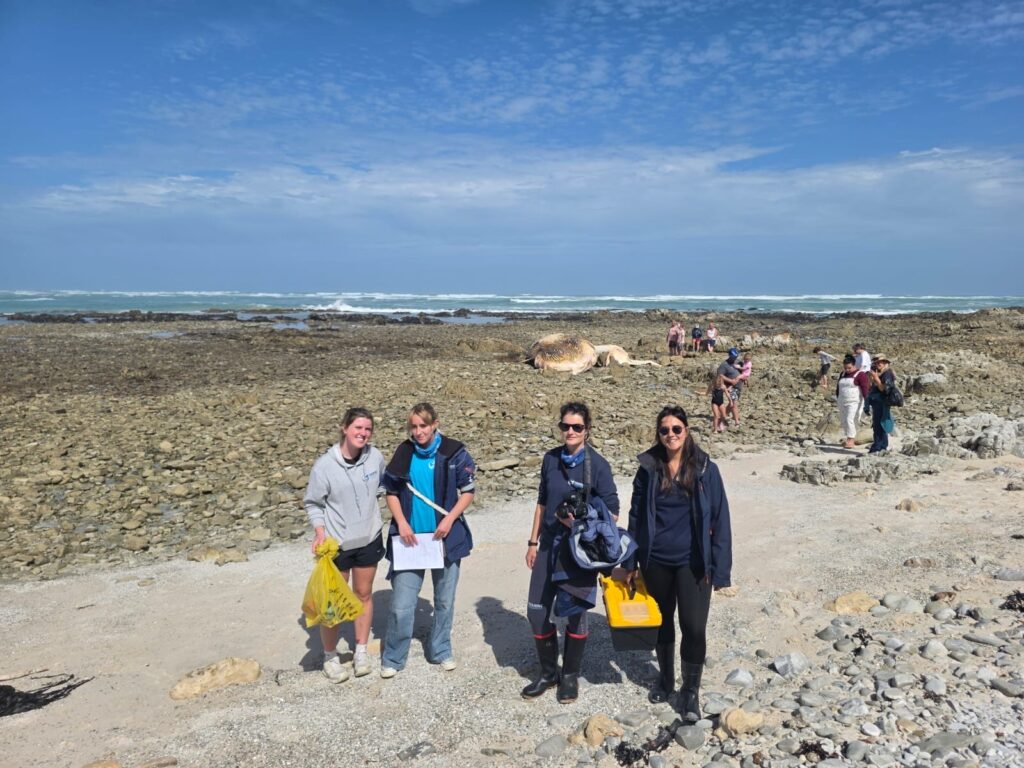
The stranding response team.
Upon arrival, the whale was already in an advanced state of decomposition. While it had only recently washed ashore, its condition indicated that it had likely died several days prior.
What made this stranding particularly notable was the apparent cause of death. In many stranding events, especially involving large whales, determining the cause of death can be challenging. This is because full necropsies are often difficult due to the sheer size of the animal, time constraints, and safety risks, particularly when carcasses are partially in the water.
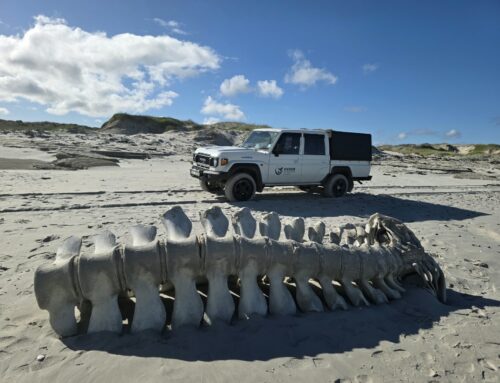
In this case, however, a necropsy was not required to identify the likely cause. The whale’s spine was severely damaged, with the body effectively folded in half. Exposed vertebrae were visibly shattered, indicating a high-impact trauma. Injuries of this magnitude are most consistent with a ship strike, as few other forces are capable of causing such extensive structural damage.
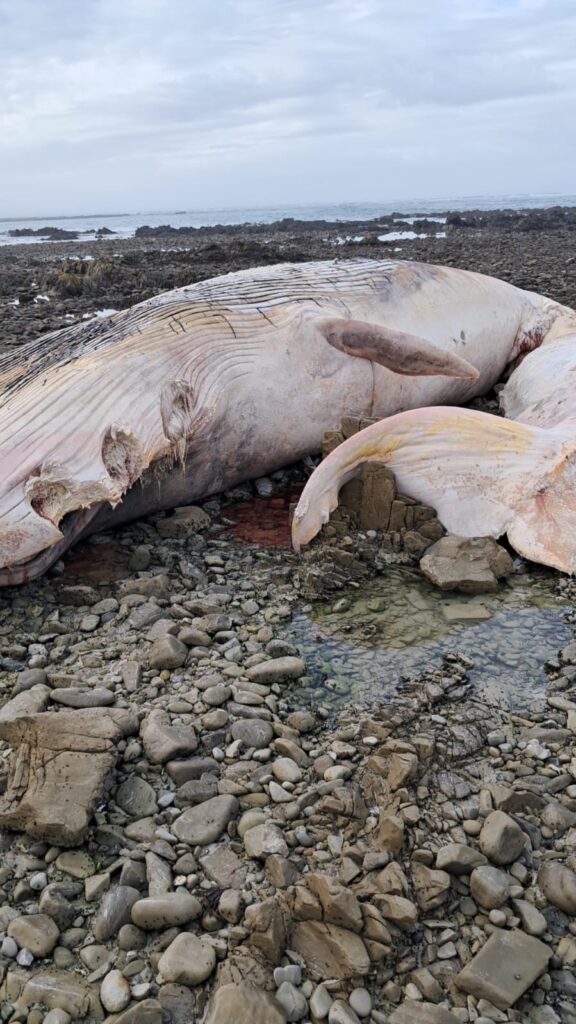
The folded body posture of the Brydes whale and shark bites clearly visible.
The team collected as many data points as possible under the circumstances. Despite the body’s condition, an estimated total length of approximately 13.6 m was recorded, placing the individual within the adult size range for the species (typically 12–15.5 m). Tissue samples were also collected for future lab analysis. Due to the whale’s upside-down position, it was not possible to access the baleen plates.
-
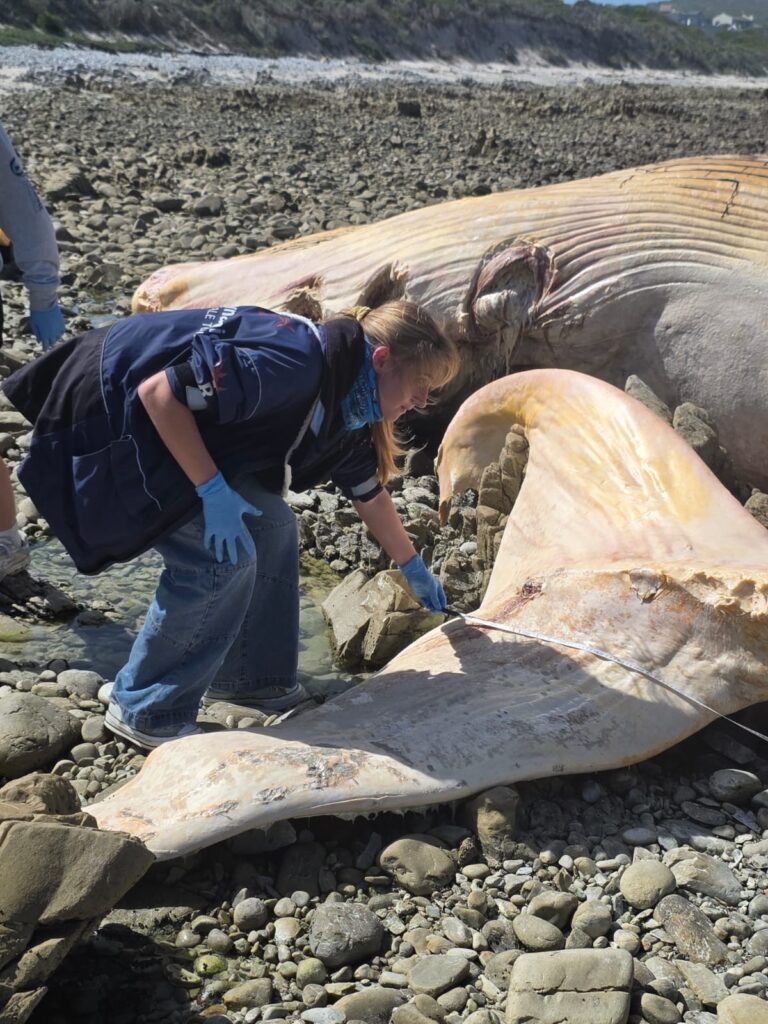
- Our volunteer assisting with taking measurements.
-
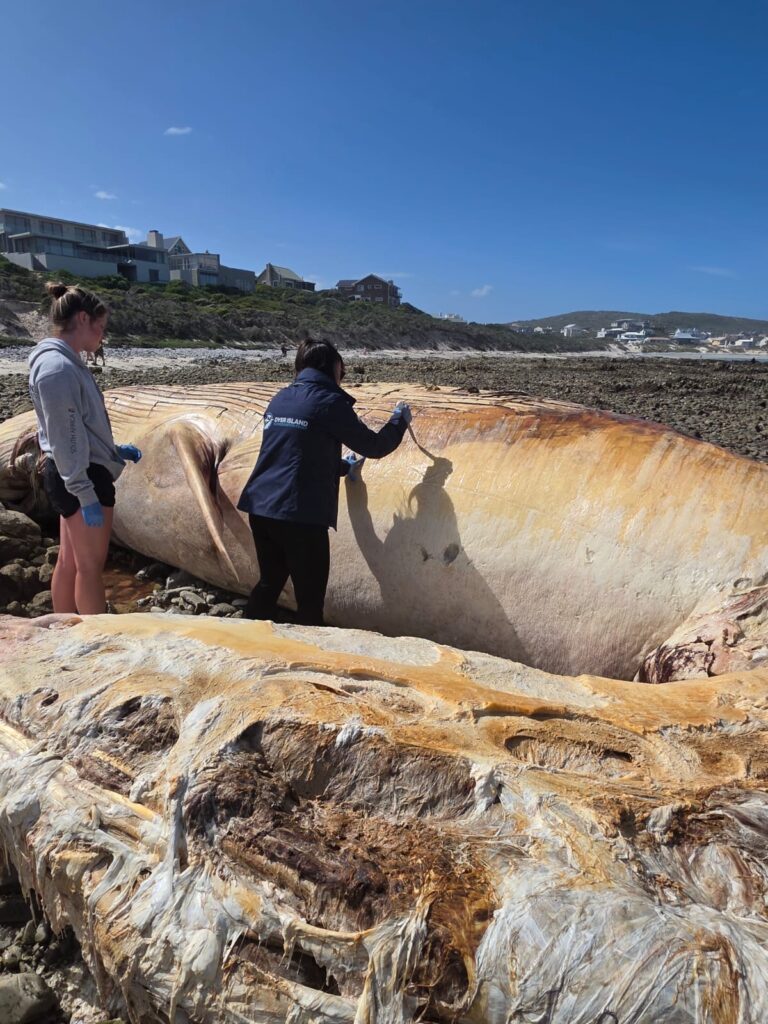
- Dr Loraine Shuttleworth taking tissue samples.
As decomposition progresses, the carcass will continue to play an important ecological role along the shoreline. Even before washing ashore, evidence of shark bites indicated that the whale had already begun supporting marine scavengers at sea. Now on land, it will provide a temporary but valuable food source for a range of coastal scavengers, including seabirds and invertebrates, contributing to local nutrient cycling within the ecosystem.
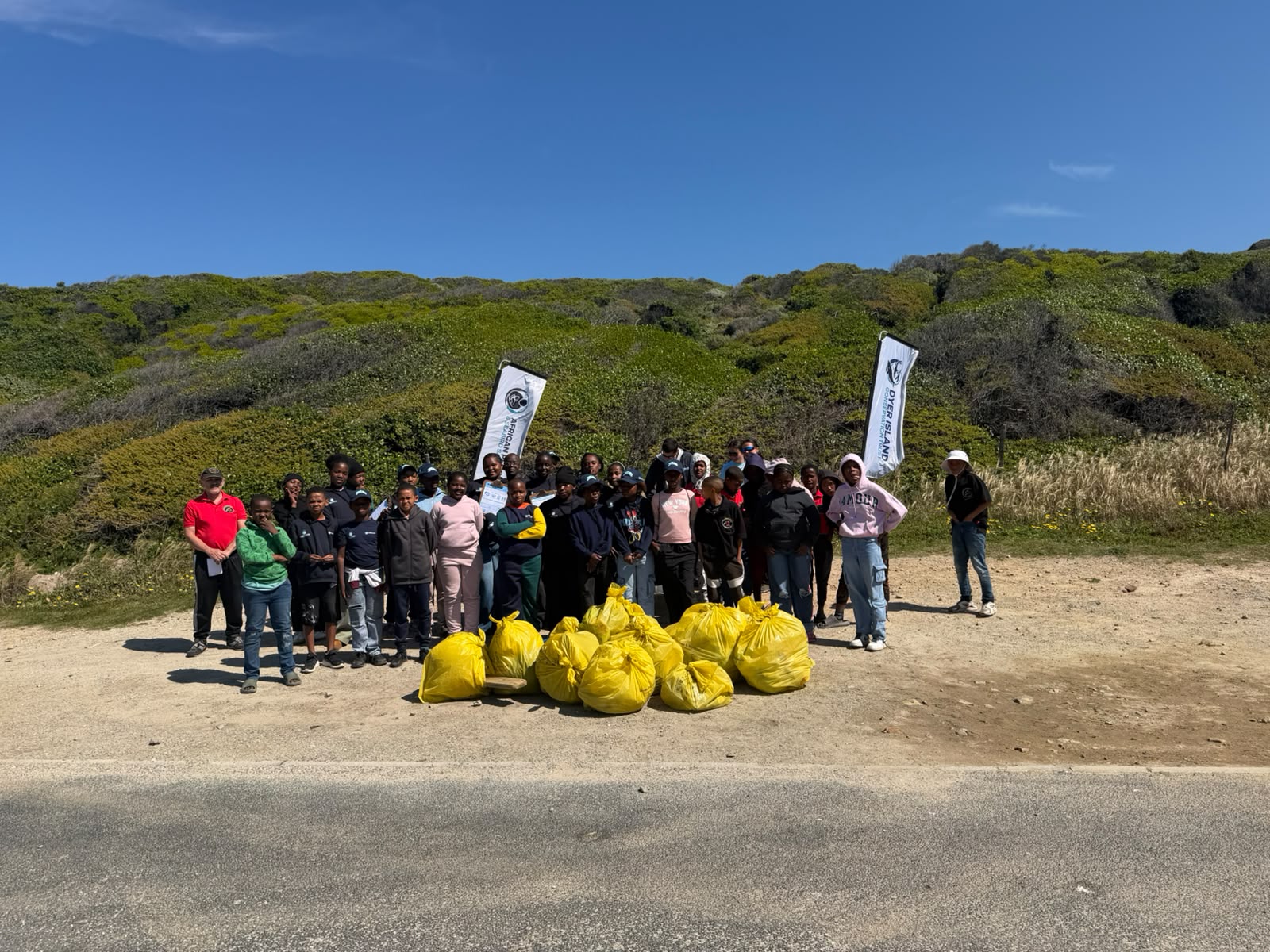
We extend our sincere thanks to the members of the public who reported this stranding, as well as those who remained on site while the team carried out their work. It was especially encouraging to see people take the time to ask questions, learn about the process, and engage with the science behind strandings. Such curiosity and willingness to understand plays an important role in conservation.
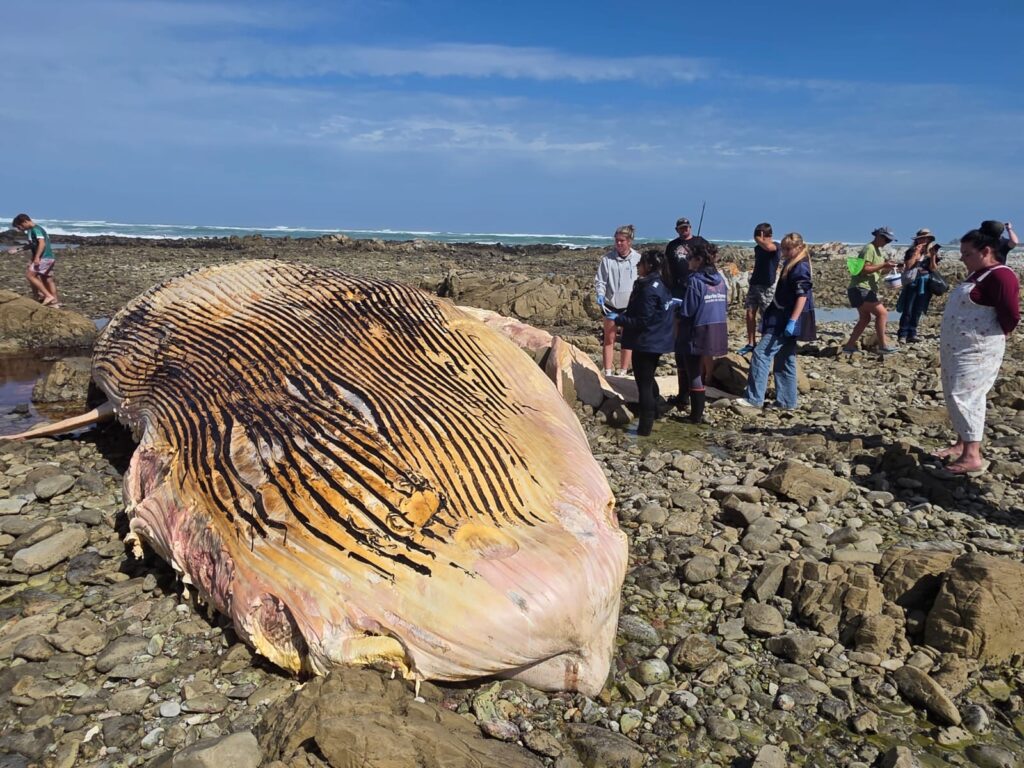
The stranded Brydes whale with our research team and members of the public gathered around.
Public awareness and involvement are vital. Without timely reports and an engaged community, our ability to respond effectively would be greatly limited. If you encounter a stranded marine animal, please report it to us at +27 82 907 5607. When reporting, remember to include an accurate location (a GPS pin is preferred), clear photographs, and as much detail as possible.