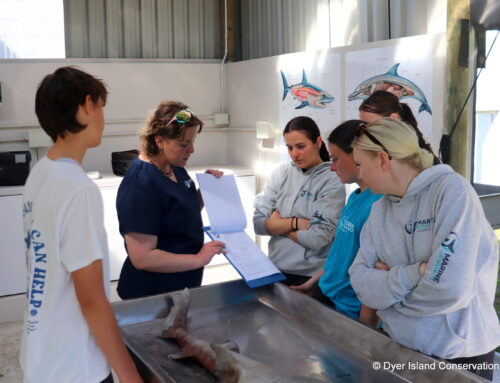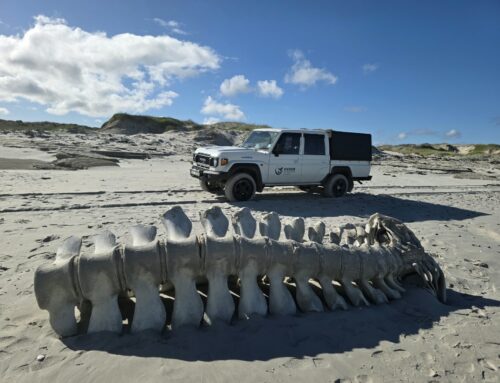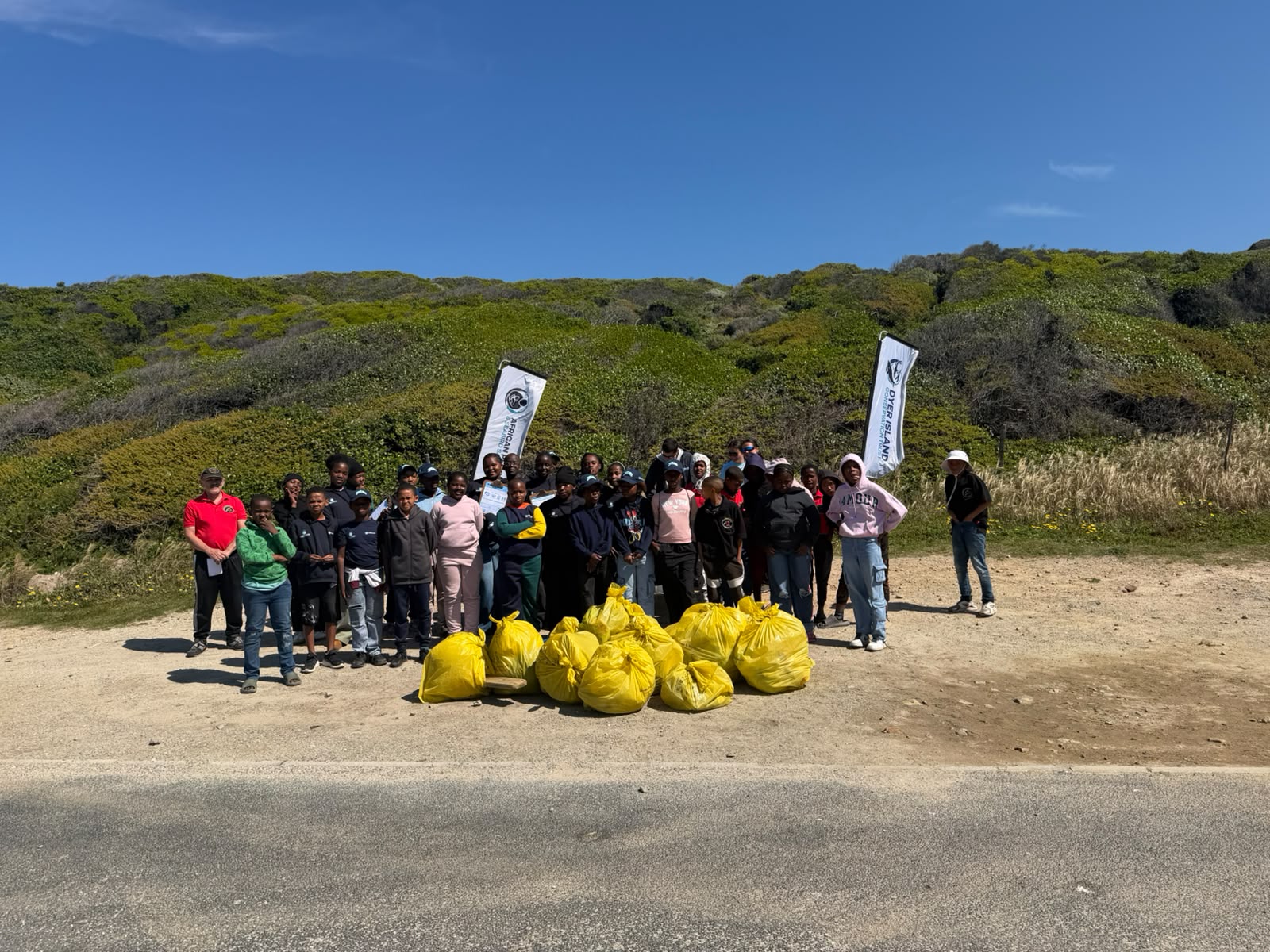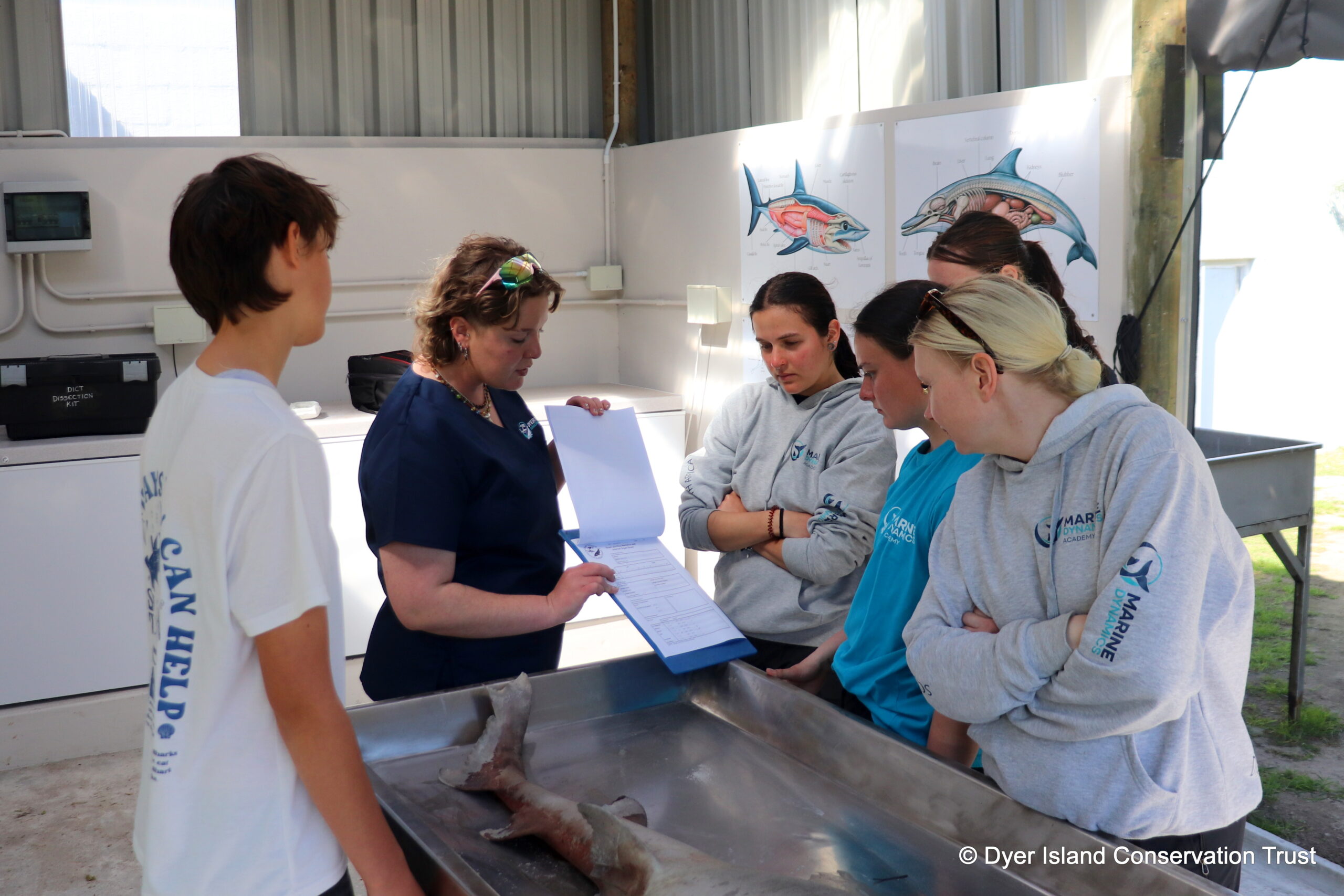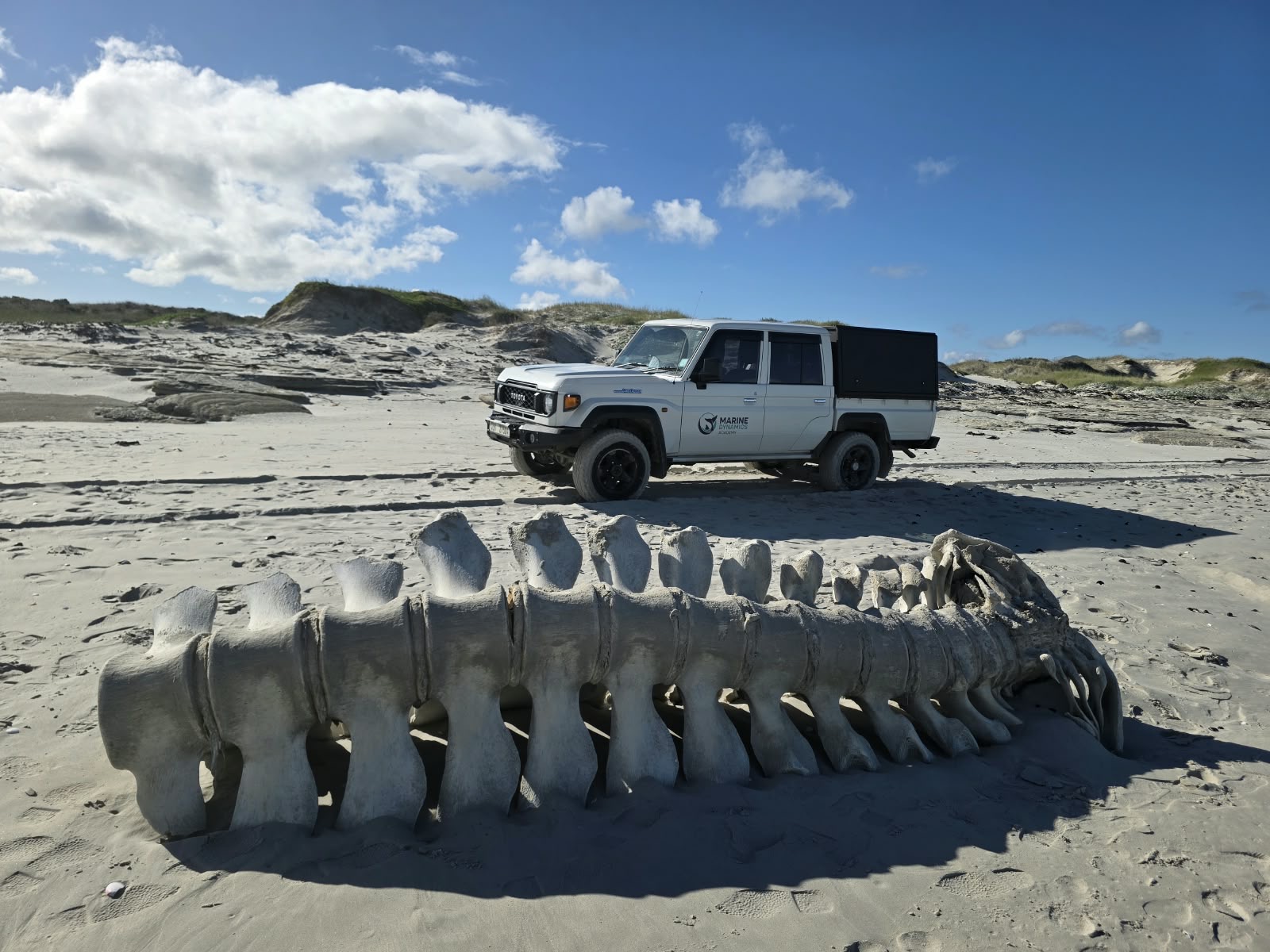
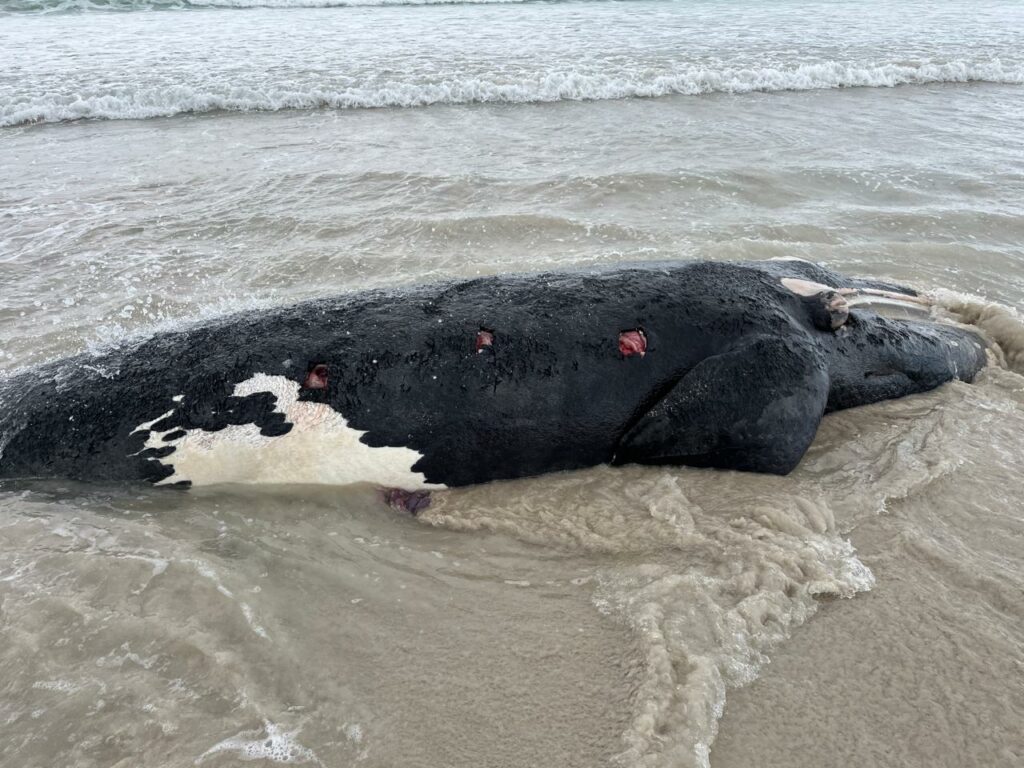
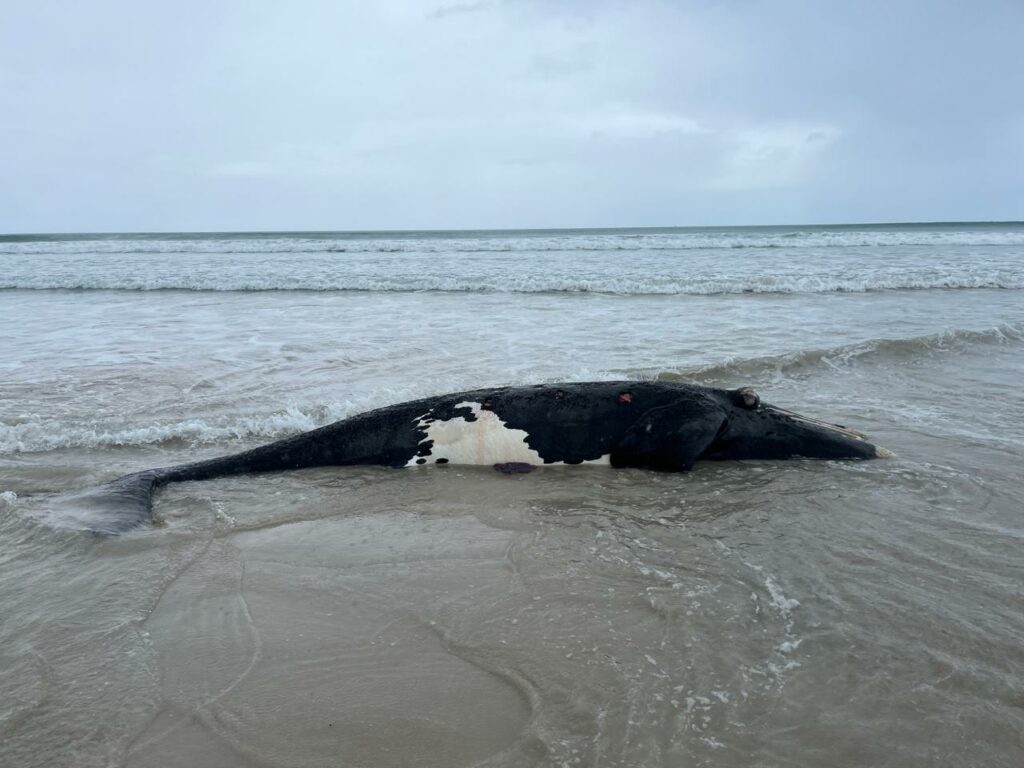
On the 08th of August, a southern right whale calf washed ashore near Struisbaai, prompting an immediate response from a dedicated team from Marine Dynamics and the Dyer Island Conservation Trust. The stranding was reported via the local marine stranding group, and with the tide rising quickly, the team had only a narrow window to act.
Despite the time constraints, they were able to measure the calf and collect important biological samples—data that will contribute to ongoing research into the health and population dynamics of these magnificent animals. The female calf, just 5.5 meters long, had clearly only recently been born. Evidence of a still-healing umbilicus confirmed she was only days old. At birth, Southern right whale calves can already reach up to 5 meters in length and weigh close to a ton.
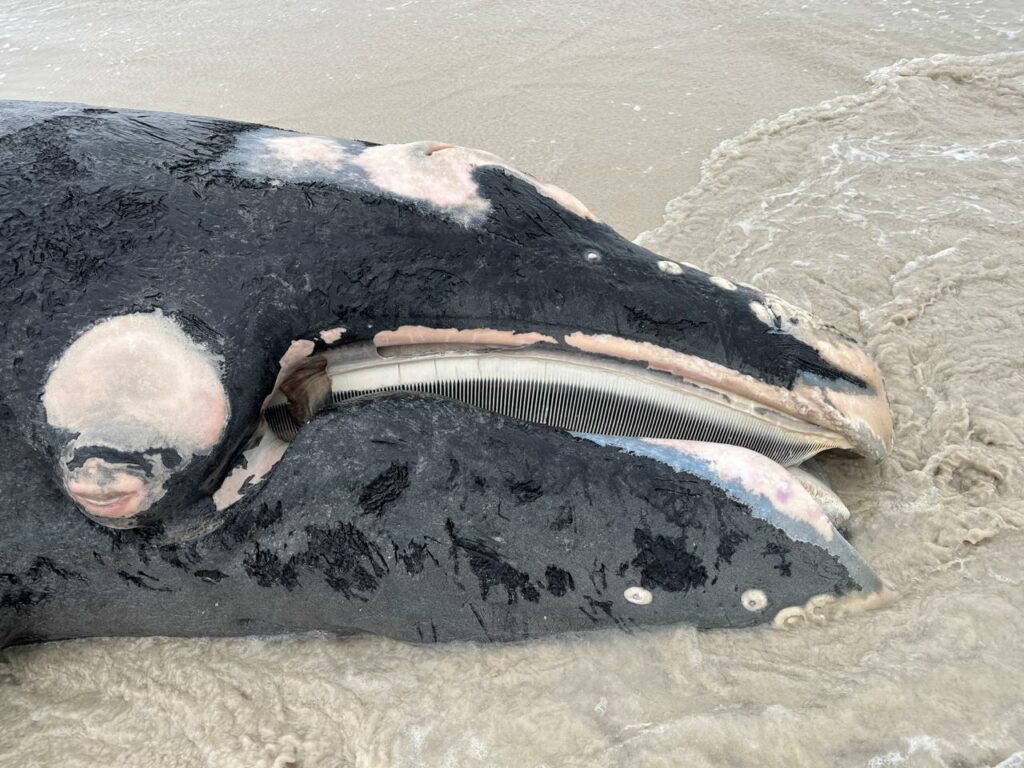
No obvious cause of death could be determined at the scene. While every stranding is heartbreaking, each one also presents a crucial opportunity to learn more about marine wildlife and the challenges they face.
The Southern Cape coastline is a vital breeding ground for Southern right whales. These gentle giants migrate to the area each year during winter and spring to calve and nurse their young, offering both locals and visitors a rare glimpse into one of nature’s most awe-inspiring life cycles.
A collaborative effort
Marine animal strandings in South Africa are managed through the South African National Stranding Network—a collaborative response system involving key partners such as:
- Dyer Island Conservation Trust
- Marine Dynamics
- Mammal Research Institute – Whale Unit
- CapeNature
- Department of Forestry, Fisheries and the Environment (DFFE)
- NSRI, among others.
Together, these organisations work tirelessly to respond to strandings across the Overberg region and beyond.
How You Can Help
If you come across a stranded marine animal in the Overstrand area, your quick action can be vital. Here’s what to do:
- Call the Dyer Island Conservation Trust team: +27 (0) 82 907 5607
- For penguin emergencies: Contact the Penguin Rescue Line at +27 (0) 72 598 7117
- Report details: Try to share the exact location and, if possible, include a clear photo.
Public awareness and swift reporting can make a real difference—not just in emergency response, but in the broader effort to understand and protect marine life along our shores.
Sandra Hörbst: Marine Biologist and Guide
Marine Dynamics
Dyer Island Conservation Trust